Mozart Family Rooms
Salzburg, Austria
Explore the Mozart Family Rooms at Mozart's Birthplace in Salzburg, Austria, discovering Wolfgang Amadeus Mozart's childhood home and family history.
Overview
Stepping into the Mozart Family Rooms at Mozart's Birthplace in Salzburg, Austria, offers a profound journey back to the very origins of a musical genius. Located at Getreidegasse 9, this unassuming yet historically significant building, known as the Hagenauerhaus, was where Wolfgang Amadeus Mozart first saw the light of day on January 27, 1756. The family resided on the third floor of this house from 1747 to 1773, a pivotal period that shaped young Wolfgang's early life and prodigious talents. Today, these rooms form the heart of a museum dedicated to preserving and presenting the domestic world of the Mozart family in 18th-century Salzburg.
Visitors can explore the authentic living conditions of the Mozart household, gaining intimate insights into the environment that nurtured Wolfgang, his older sister Maria Anna, affectionately known as 'Nannerl', and their parents, Leopold and Anna Maria Mozart. The museum, established in 1880 by the International Mozarteum Foundation, meticulously displays original artifacts, period furnishings, and compelling documents that tell the story of their daily lives, struggles, and triumphs. It is more than just a historical site; it is a portal to understanding the human side of a legendary composer, allowing one to connect with the essence of his formative years.
History & Cultural Background
The Hagenauerhaus itself boasts a history dating back to the 12th century, having once been part of the gardens of the Benedictine monks of St. Peter's. Over the centuries, it passed through various owners, including merchants and apothecaries. In 1703, it came into the possession of the Hagenauer family, who would become key figures in the Mozarts' lives. Johann Lorenz Hagenauer, a merchant and friend, rented the third-floor apartment to Leopold Mozart, Wolfgang's father, in 1747. This was to be the Mozart family's home for 26 years, witnessing the births of all seven of Leopold and Anna Maria's children, though only Wolfgang and Nannerl survived infancy.
The cultural backdrop of 18th-century Salzburg was one steeped in Baroque splendor and ecclesiastical influence, being an independent prince-archbishopric of the Holy Roman Empire. Music played a central role, especially within the court. Leopold Mozart himself was a respected musician in the Salzburg Royal Chamber, and he recognized and tirelessly cultivated his children's extraordinary musical gifts from a very young age. The close-knit family, despite their modest living quarters, embarked on extensive European tours, showcasing Wolfgang and Nannerl's prodigious talents to royalty and aristocrats across the continent. These experiences, often recounted through Leopold's letters to his landlord, painted a vivid picture of their challenging yet remarkable life on the road, funded in part by their landlord, Johann Lorenz Hagenauer, during one such tour.
What Makes It Special
What truly sets the Mozart Family Rooms apart is the tangible connection it offers to Wolfgang Amadeus Mozart's earliest years. Unlike many grand museums, this space provides an intimate, almost voyeuristic, glimpse into the domestic reality of an 18th-century middle-class family – albeit one that produced a musical prodigy. The apartment on the third floor, comprising a kitchen, living room, cabinet, bedroom, and office, has been preserved and recreated to evoke the family's presence.
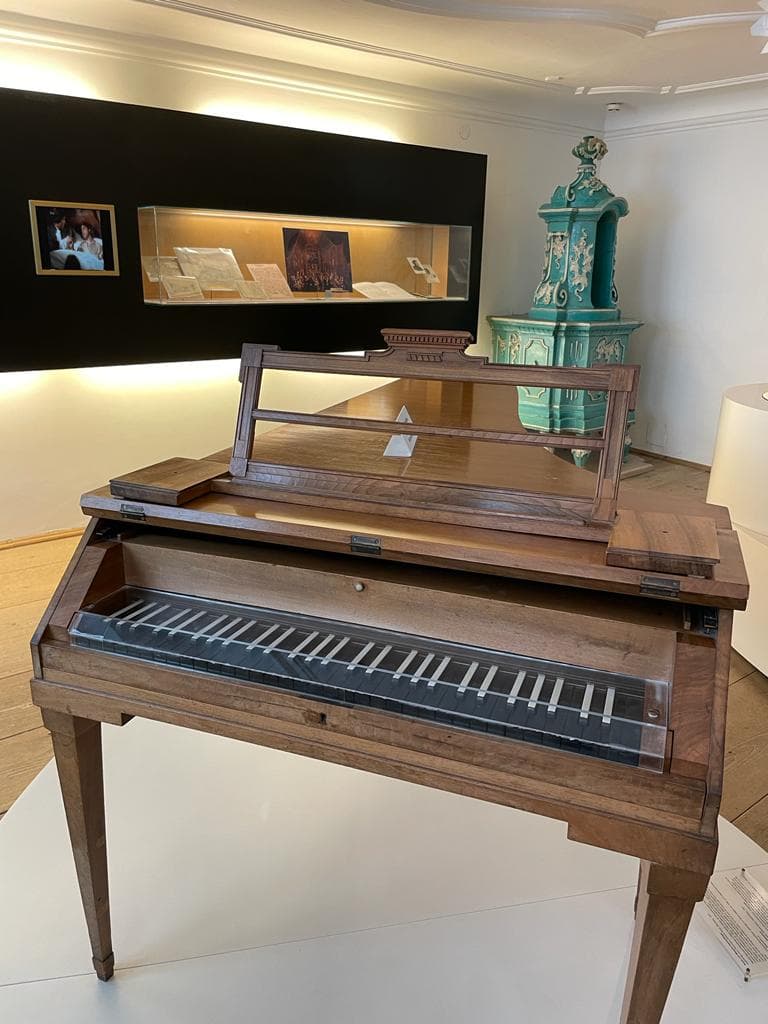
Among the most treasured exhibits are Mozart's childhood violin, a small instrument made by Salzburg court luthier Andreas Ferdinand Mayr, and family portraits that capture their likeness, including the famous unfinished portrait of 'Mozart at the Piano' by his brother-in-law Joseph Lange, and a family painting by Johann Nepomuk della Croce. These personal effects and historical instruments, along with original letters and documents, serve as powerful reminders of the human story behind the legendary composer. The second floor delves into Mozart's love for opera, featuring the clavichord on which he supposedly composed parts of 'The Magic Flute', while the first floor offers a reconstruction of general 18th-century life in Salzburg, contextualizing the family's world.
Stories, Fun Facts & Local Details
Imagine young Wolfgang, a 'Wunderkind', taking his first musical steps within these very walls. It was here that he composed his earliest works and developed the foundations of his unparalleled musical vocabulary. His father, Leopold, was instrumental in this, dedicating himself to nurturing his children's talents, often documenting their progress in his letters. One charming detail is that the doorways within the house are surprisingly small, reflecting the average stature of people in the 18th century, requiring visitors to duck their heads, giving a humorous sense of stepping back in time.
The museum also sheds light on the close relationship between the Mozarts and their landlord, Johann Lorenz Hagenauer. Letters from Leopold Mozart to Hagenauer during the family's extensive European tours provide fascinating insights into their travels, financial situations, and personal lives. These candid correspondences paint a picture of a family constantly on the move, facing both the adulation of European courts and the rigors of travel in the 1700s. The bustling Getreidegasse outside, with its unique wrought-iron guild signs, maintains much of the charm and character it possessed during Mozart's time, making a stroll along the street a delightful complement to the museum visit.
Visitor Perspective
A visit to the Mozart Family Rooms at Mozart's Birthplace is an essential pilgrimage for anyone interested in classical music, history, or simply the remarkable story of a child prodigy. The journey through the three floors offers an hour-long immersive experience, allowing visitors to visualize the lives of the Mozart family in a deeply personal way. While the house itself is not wheelchair accessible due to its historic nature, mobile phone text guides enhance the self-guided tour, providing rich narratives and contextual information for each exhibit.
Exploring the original rooms where Mozart was born and spent his childhood, surrounded by artifacts that he or his family owned, evokes a powerful sense of presence. It's a place where the legend of Mozart gives way to the reality of Wolfgang, the boy, who grew up within these modest confines, learning, practicing, and ultimately, creating music that would change the world. It's an experience that humanizes the maestro, offering a deeper appreciation for his genius and the family environment that fostered it. You leave with a richer understanding of the man behind the music, and a profound respect for the historical and cultural legacy preserved within these walls.
Coordinates: 13.04355, 47.8
View on Google Maps💬 How Travelers Describe This Place
Based on community votes
Must See
958Unique
728Interesting
481Beautiful
382Photogenic
183
Traveler Stories
Discover memorable experiences shared by travelers who have visited this place.
No traveler stories yet.
Be the first traveler to share what made this place memorable.

Tour
By
Spot
Discover amazing places around the world. Your journey starts here.
Explore
© 2026 TourBySpot. All rights reserved.