Mozart Family Exhibits
Salzburg, Austria
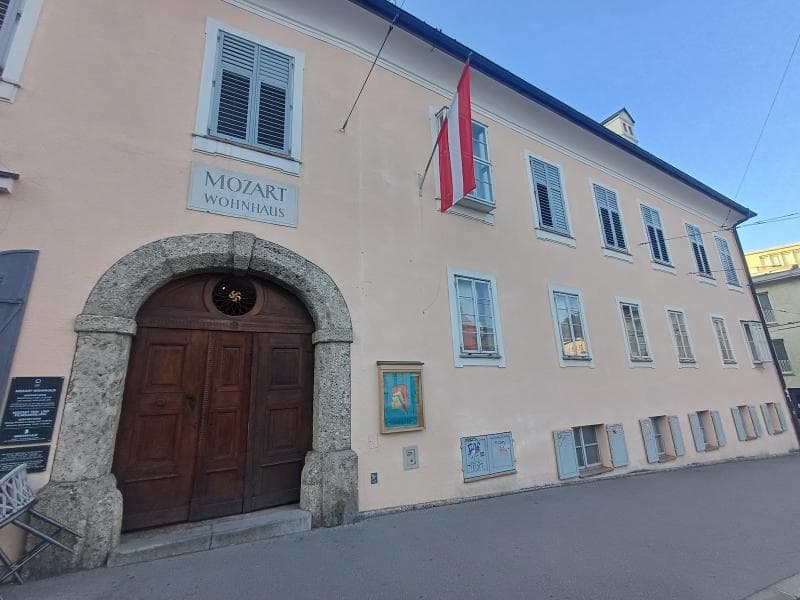
Explore the Mozart Family Exhibits at the Mozart Residence in Salzburg, Austria. Discover the family's history, their home, and Wolfgang's musical legacy.
Overview
Stepping into the Mozart Residence, also known as the Tanzmeisterhaus, offers a profound journey into the private and artistic world of Wolfgang Amadeus Mozart and his family. Located in Salzburg, Austria, this elegant townhouse served as the family's spacious home from 1773 to 1787, a significant period during which Wolfgang Amadeus composed many of his seminal works. Unlike his birthplace, which chronicles his early years, the Residence immerses visitors in the family's daily life, their social circles, and Wolfgang's creative development during his adult years in Salzburg. The museum is dedicated to preserving and presenting the rich legacy of the entire Mozart family, showcasing a wealth of authentic portraits, original documents, and musical instruments that once filled these very rooms.
The 'Mozart Family Exhibits' within the Residence are not merely static displays; they form a vibrant narrative of a family deeply intertwined with music and the cultural landscape of 18th-century Europe. Visitors can explore the eight-room apartment where the Mozarts lived, gaining insights into their routines, their travels, and their artistic endeavors. The experience is enhanced by multimedia presentations and a unique collection of artifacts that collectively paint a vivid picture of one of history's most celebrated musical families.
History & Cultural Background
The building at Makartplatz 8, originally known as the 'Tanzmeisterhaus' or Dance Master's House, boasts a history stretching back to 1617. Its name derived from Lorenz Spöckner, who offered dance lessons to the nobility there in the early 18th century, preparing them for courtly life. The Mozart family moved into a spacious eight-room apartment on the second floor in 1773, seeking more room than their previous dwelling, Mozart's Birthplace on Getreidegasse, could offer. This move marked a period of increasing prosperity and social engagement for the family.
During their fourteen years here, Wolfgang Amadeus Mozart composed numerous masterpieces, establishing himself as an independent and influential composer. His father, Leopold Mozart, continued to live in the residence even after Wolfgang moved to Vienna in 1781, and his mother, Anna Maria, passed away in 1778. Leopold Mozart himself died here in 1787. Tragically, two-thirds of the building was destroyed during an air raid in World War II in 1944. However, through meticulous reconstruction based on original plans, the Mozart Residence was gloriously reopened to the public as a museum on January 26, 1996, lovingly restored to its former splendor.
What Makes It Special
What truly distinguishes the Mozart Family Exhibits is their deep dive into the lives of all family members, not solely focusing on Wolfgang Amadeus. The International Mozarteum Foundation proudly houses the world's largest collection of authentic portraits of the Mozart family within these walls, offering a rare glimpse into their appearances and personalities. Beyond paintings, the museum displays original instruments, including Wolfgang's own pianoforte, which resonate with the echoes of past melodies. Handwritten letters and manuscripts provide intimate connections to their thoughts and creative processes, revealing the meticulous methods behind Mozart's genius and the intellectual exchanges of the era.
A notable highlight is the 'Magic Flute House', a small wooden structure now situated in the residence's courtyard. This house is where Mozart is said to have composed parts of his famous opera 'The Magic Flute' while living in Vienna. Moved to Salzburg in 1873 by the Mozarteum Foundation and extensively renovated, it stands as a charming, tangible link to one of his most beloved works.
Stories, Fun Facts & Local Details
The Mozart Residence brings to life the intricate dynamics of the Mozart family. Here, you can learn about Leopold Mozart, Wolfgang's father, not just as a musician but as a dedicated manager and pedagogue who meticulously documented his son's early career. The letters exchanged between family members, particularly during their extensive European tours, paint a vivid picture of their close bonds and the challenges of travel in the 18th century.
A fun fact for visitors is the journey of the 'Magic Flute House'. Originally located in Vienna, it was carefully transported to Salzburg by the Mozarteum Foundation. Imagine a shed from Vienna, where one of the greatest operas was conceived, finding its new home in Salzburg. It's a testament to the enduring reverence for Mozart's legacy and a unique piece of history that has literally traveled to be part of the exhibition. The museum also features a multi-vision show and rotating special exhibitions, such as 'Mozart & Mozarts,' which delve into fascinating topics like Mozart iconography and the history of portrait painting, often unraveling mysteries of authenticity.
Visitor Perspective
A visit to the Mozart Residence typically takes about an hour, providing a comprehensive yet engaging experience. As you wander through the carefully preserved rooms, you can almost hear the strains of music and the chatter of the Mozart household. The museum is thoughtfully laid out with modern interpretive materials, including audio guides, that help contextualize the exhibits and deepen your appreciation for Mozart's life and times.
The residence offers barrier-free access via the Theatergasse entrance, ensuring that it is welcoming to all visitors. It's a place where history feels remarkably present, allowing you to connect personally with the environment that shaped a musical genius. Whether you are a music aficionado or simply a curious traveler, the Mozart Family Exhibits provide an intimate and authentic glimpse into the lives of the Mozarts, leaving you with a profound understanding of their cultural impact on Salzburg and the world.
Coordinates: 13.043685507871526, 47.80257773426615
View on Google Maps💬 How Travelers Describe This Place
Based on community votes
Beautiful
722Must See
698Photogenic
595Interesting
358Unique
19
Traveler Stories
Discover memorable experiences shared by travelers who have visited this place.
No traveler stories yet.
Be the first traveler to share what made this place memorable.

Tour
By
Spot
Discover amazing places around the world. Your journey starts here.
Explore
© 2026 TourBySpot. All rights reserved.