Monument Pillars
Tbilisi, Georgia
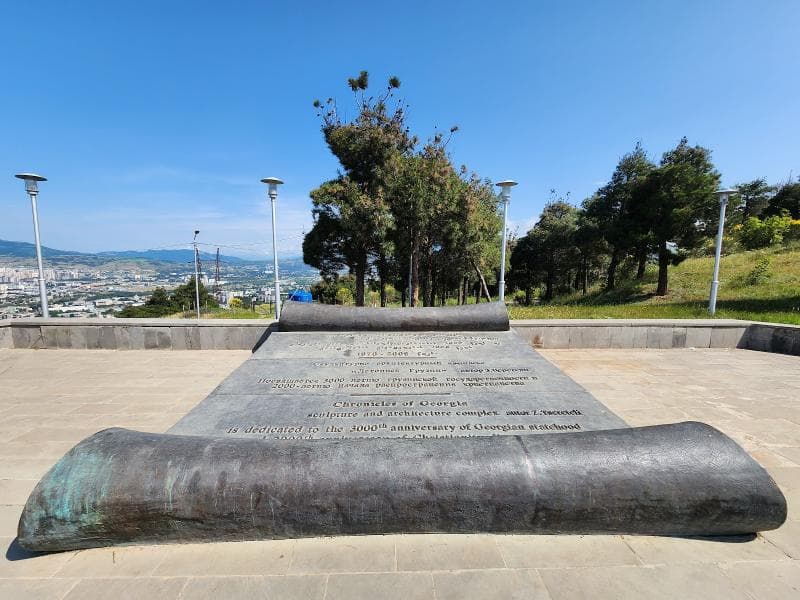
Explore the towering Monument Pillars of the Chronicle of Georgia in Tbilisi, Georgia. Discover its rich history, intricate reliefs, and panoramic views.
Overview
Perched majestically atop Keeni Hill overlooking the vast expanse of the Tbilisi Sea, the Monument Pillars, formally known as the Chronicle of Georgia, stand as a profound and imposing tribute to the nation's enduring history and deep-rooted spiritual heritage. This monumental structure, sometimes colloquially referred to as 'Tbilisi's Stonehenge' due to its towering, enigmatic stone columns, is a sight of colossal scale and intricate detail. It serves as a visual narrative, unfolding millennia of Georgian statehood and the pivotal role of Christianity in its formation. The monument, while designed to captivate with its grandeur, also offers a tranquil retreat from the bustling city, inviting contemplation amidst its powerful artistic expressions and sweeping panoramic views.
History & Cultural Background
The Chronicle of Georgia was conceived by the renowned Georgian sculptor and architect Zurab Tsereteli, with construction commencing in 1985 during the final years of the Soviet era. The monument was envisioned to commemorate two significant anniversaries: 3,000 years of Georgian statehood and 2,000 years of Christianity in the country. While work began in the mid-1980s, the monument was never fully completed, a characteristic that some suggest adds to its mystique, portraying history as an ongoing narrative. Its strategic location on a prominent hill allowed for the creation of a monumental complex without the limitations of an urban setting. During a period when national identity was being redefined within the Soviet framework, Tsereteli's creation acted as a powerful cultural statement, reasserting Georgia's historical depth and Christian Orthodox foundations. Following Georgia's independence in 1991, the monument gained renewed significance, becoming an explicit symbol of national sovereignty.
What Makes It Special
The core of the Chronicle of Georgia consists of 16 colossal pillars, each towering approximately 30 to 35 meters in height. These massive columns, constructed from stone and adorned with intricate bronze and copper sculptural reliefs, are arranged in a semi-circular formation, creating an awe-inspiring presence. Each pillar is a 'pictorial history book,' meticulously carved to depict various chapters of Georgia's past. The upper sections of the reliefs are dedicated to kings, queens, heroes, and pivotal moments from Georgian secular history, celebrating the nation's imperial past and literary achievements. The lower segments portray scenes from the life of Christ and figures instrumental in Georgia's religious history, including the 13 Assyrian Fathers who spread Christianity. This dual thematic approach intertwines the sacred with the secular, creating a profound visual tapestry that reflects Georgia's unique identity.
Stories, Fun Facts & Local Details
Beyond the impressive pillars, the site holds additional layers of meaning. Adjacent to the main monument stands a significant grapevine cross of Saint Nino, a revered figure credited with bringing Christianity to Georgia. Next to it, the Annunciation Church, though more contemporary, contributes to the spiritual ambiance of the complex. The Chronicle of Georgia is an open-air monument, meaning there are no gates or fixed visiting hours, allowing for 24/7 access without an entrance fee, which is a delightful detail for curious travelers. It is situated on Mount Keeni (also known as Gori Kenis), providing unparalleled panoramic views. On one side, visitors can gaze upon the vast expanse of the Tbilisi Sea, an artificial reservoir vital to the city. On the other, the city's northern districts and its mix of Soviet-era architecture unfold, creating a striking contrast between historical artistry and modern urban sprawl.
Visitor Perspective
Visiting the Monument Pillars is an immersive experience that begins with the journey itself. Located a short distance from Tbilisi's city center, usually a 25 to 35-minute drive, reaching the hilltop often involves climbing a series of wide stairs to the main level of the monument. Once there, the sheer scale of the columns is immediately striking, demanding attention and inviting close inspection of the detailed reliefs. The area is generally uncrowded, offering a peaceful and reflective atmosphere, allowing visitors to connect deeply with the narratives carved in stone. The monument's location also makes it an exceptional spot for photography, especially during the late afternoon or sunset, when the natural light casts dramatic hues across the stone and bronze, illuminating the intricate artistry. Bringing water and wearing comfortable shoes are recommended, as the site is exposed and involves some walking. This 'hidden gem' provides a unique perspective on Tbilisi and a profound understanding of the Georgian spirit.
Coordinates: 44.810438, 41.770503
View on Google Maps💬 How Travelers Describe This Place
Based on community votes
Must See
913Photogenic
748Interesting
499Beautiful
337Unique
94
Traveler Stories
Discover memorable experiences shared by travelers who have visited this place.
No traveler stories yet.
Be the first traveler to share what made this place memorable.

Tour
By
Spot
Discover amazing places around the world. Your journey starts here.
Explore
© 2026 TourBySpot. All rights reserved.