Mont Blanc Bridge Views
Geneva, Switzerland
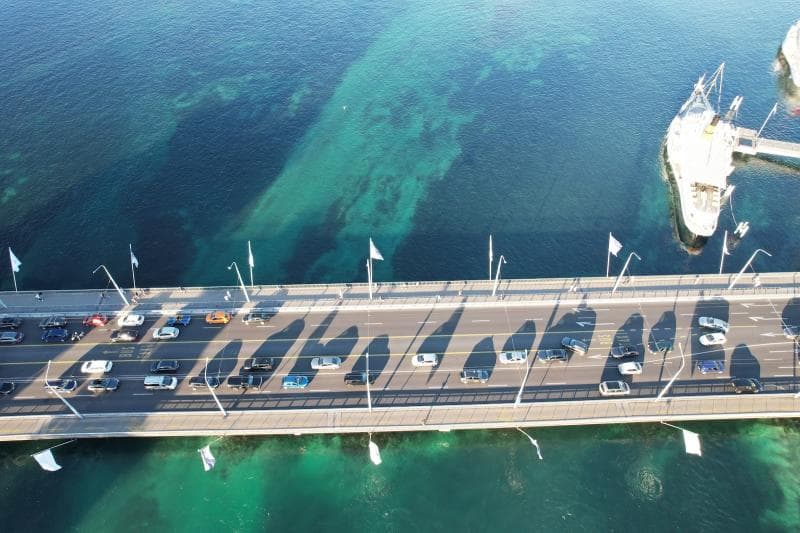
Discover the Mont Blanc Bridge Views in Geneva, Switzerland, offering stunning panoramas of Lake Geneva, the Jet d'Eau, and the majestic Alps.
Overview
The Mont Blanc Bridge Views offer an unparalleled panorama of Geneva's iconic landmarks and natural splendor. Located in the heart of Geneva, Switzerland, the Pont du Mont-Blanc serves as a vital artery connecting the city's left and right banks, where the vast expanse of Lake Geneva gracefully narrows to become the Rhône River. From this central vantage point, visitors are treated to breathtaking vistas that encapsulate the essence of this vibrant Swiss city. The view encompasses the powerful Jet d'Eau, spraying water high into the sky, the serene waters of Lake Geneva, and on clear days, the majestic, snow-capped peak of Mont Blanc itself, after which the bridge is named. This spot is not just a crossing but a destination in itself, inviting travelers to pause and soak in the harmonious blend of urban life and natural beauty.
History & Cultural Background
The Pont du Mont-Blanc boasts a rich history dating back to its inauguration in 1862. It was originally constructed to facilitate transit between the burgeoning city's two banks. Initially built with metal sheets, the bridge underwent significant renovation in the early 1900s, being reinforced with concrete to accommodate heavier traffic, including a double tram track. Its naming after Mont Blanc, the highest massif in the Alps, underscores the profound connection Geneva has with its stunning alpine surroundings.
Nearby, the Jet d'Eau, a defining symbol of Geneva, has its own intriguing past. It began its life in 1886 not as a decorative fountain, but as a crucial safety valve for a hydraulic power plant at Usine de la Coulouvrenière. When the workshops closed for the evening, the system's excess pressure needed release, leading to the creation of the original 30-meter high jet. Its unexpected popularity led to its relocation to its present, more prominent position in the Geneva harbor in 1891, specifically to celebrate the Federal Gymnastics Festival and the 600th anniversary of the Swiss Confederation. The modern Jet d'Eau, installed in 1951, reaches an impressive height of 140-150 meters, propelling 500 liters of water per second at speeds of 200 km/h.
What Makes It Special
What truly sets the Mont Blanc Bridge Views apart is the extraordinary convergence of natural grandeur and human ingenuity. It is arguably the best single location to simultaneously appreciate several of Geneva's most famous attributes. Standing on the bridge, one experiences the unique sensation of being at the 'end' of Lake Geneva, where its waters begin their journey as the Rhône River.
The bridge itself is a piece of living history, adorned with flags that change for special occasions, adding a vibrant touch to its sturdy architecture. On Swiss National Day, the flags of all 26 Swiss cantons proudly fly along its length. But the true magic lies in the unobstructed perspective it offers of the Jet d'Eau. Watching this colossal fountain shoot skyward against the backdrop of the city and the distant mountains creates a truly memorable scene. On a perfectly clear day, the snow-capped silhouette of Mont Blanc crowns the entire vista, offering a visual symphony that captures the spirit of Switzerland.
Stories, Fun Facts & Local Details
Many visitors might not know that the magnificent Jet d'Eau, now a global icon, owes its existence to an accidental discovery of its aesthetic appeal. What started as a functional necessity to prevent industrial overpressure became a beloved landmark, generating 'so much enthusiasm and excitement' among locals and tourists alike.
The Mont Blanc Bridge is a focal point for many Genevan festivities. It serves as a prime viewing spot for fireworks displays during city festivals and is part of the route for events like the Lake Parade. For pedestrians, a unique underground passage was inaugurated in 2001 beneath the first arch on the right bank, featuring a steel floating pontoon, allowing passage without navigating heavy traffic. This attention to both functionality and visitor experience highlights Geneva's thoughtful urban planning. The area immediately surrounding the bridge, particularly the Quai du Mont-Blanc, forms part of a magnificent six-kilometer pedestrian promenade, lined with plane trees and offering inviting green spaces perfect for a leisurely stroll or relaxation by the lake.
Visitor Perspective
For the curious traveler, a visit to the Mont Blanc Bridge for its panoramic views is an essential Geneva experience. It's easily accessible and offers a free, dynamic spectacle throughout the day. While the bridge can experience heavy traffic, especially during peak hours, the pedestrian walkways provide ample space to enjoy the surroundings. The best time to visit for optimal views of Mont Blanc is typically on a clear day, often in the summer months, though any time offers a compelling view of the Jet d'Eau.
Standing on the bridge, one feels connected to the pulse of the city, observing boats gliding across the lake, the constant spray of the Jet d'Eau, and the distant majesty of the Alps. It's a place for reflection, for capturing stunning photographs, and for simply soaking in the beauty of one of Europe's most elegant cities. The gentle mist from the Jet d'Eau, especially when walking along the nearby jetty, adds a sensory dimension to the visual feast, making the 'Mont Blanc Bridge Views' a truly immersive and unforgettable part of any Geneva itinerary.
Coordinates: 6.1487, 46.2059
View on Google Maps💬 How Travelers Describe This Place
Based on community votes
Unique
445Interesting
416Must See
289Beautiful
141Photogenic
33
Traveler Stories
Discover memorable experiences shared by travelers who have visited this place.
No traveler stories yet.
Be the first traveler to share what made this place memorable.

Tour
By
Spot
Discover amazing places around the world. Your journey starts here.
Explore
© 2026 TourBySpot. All rights reserved.