Monitor Lizard Habitat
Bangkok, Thailand
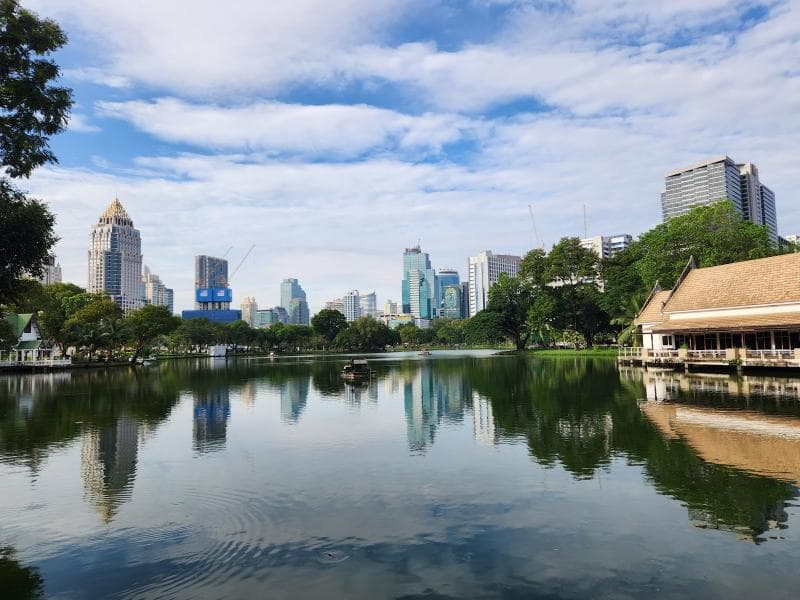

Discover the Monitor Lizard Habitat in Lumphini Park, Bangkok, Thailand, home to hundreds of fascinating Asian water monitors.
Overview
Deep within the vibrant urban landscape of Bangkok, Thailand, lies Lumphini Park, a sprawling green oasis often referred to as the city's 'green lungs'. More than just a park, it is a sanctuary where city life and nature harmoniously coexist, most notably through its resident population of monitor lizards. These fascinating reptiles, primarily Asian water monitors (Varanus salvator), have become an iconic and integral part of the park's ecosystem and allure.
Visitors to Lumphini Park are often delighted and sometimes surprised to encounter these large, prehistoric-looking creatures basking in the sun along the lake shores, gracefully swimming through the waterways, or even occasionally ambling across pathways. Far from being a mere roadside attraction, the 'Monitor Lizard Habitat' within Lumphini Park offers a unique opportunity to observe these magnificent animals in a relatively natural setting, right in the heart of a bustling metropolis.
History & Cultural Background
Lumphini Park itself boasts a rich history, established in the 1920s by King Rama VI. It was named after Lumbini, the birthplace of the Buddha in Nepal, reflecting its intended purpose as a place of peace, reflection, and public recreation. Initially conceived as a site for Bangkok's first international fair and exhibition, the king later transformed the royal land into Thailand's first public park, a gift to the people.
The monitor lizards, locally known as 'hia', have likely coexisted with the city's waterways for centuries. While the Thai term 'hia' can sometimes carry a negative connotation, local folklore also associates these creatures with good fortune and prosperity. Stories suggest that if a monitor lizard enters one's home, it heralds wealth. This blend of historical significance for the park and the long-standing, albeit sometimes complex, cultural relationship with the monitor lizards adds layers of intrigue to their presence.
What Makes It Special
The Monitor Lizard Habitat in Lumphini Park is special due to the sheer accessibility and visibility of these remarkable creatures. Unlike wildlife found in remote jungles, hundreds of Asian water monitors freely roam within this urban park, offering an unparalleled close-up encounter for visitors. These are not small reptiles; the Asian water monitor is the world's second-largest lizard species, capable of reaching lengths over three meters and weighing upwards of 50 kilograms.
Their presence is not just a spectacle; they play a crucial ecological role. As active carnivores and scavengers, they feed on fish, birds, rodents, and carrion, effectively acting as the park's natural clean-up crew. By consuming organic waste and controlling rodent populations, they help maintain the park's health and prevent water contamination in the lakes and canals. Their semi-aquatic nature means they are adept swimmers, using their powerful tails to navigate the water, and they are also skilled climbers.
Stories, Fun Facts & Local Details
These 'Bangkok Dragons,' as some affectionately call them, have adapted remarkably well to city life. They are often seen sunbathing during the cooler morning hours to regulate their cold-blooded body temperature, a common sight for early morning joggers and Tai Chi practitioners. While their size might appear intimidating, they are generally accustomed to human presence and rarely aggressive unless provoked or feeling threatened.
One interesting detail is their classification as a protected species in Thailand, highlighting their ecological importance despite occasional attempts to manage their population. In 2016, approximately 100 lizards were relocated from the park to wildlife sanctuaries due to concerns about overpopulation, though a significant number remained, acknowledging their role in attracting tourists. Visitors are always advised to maintain a respectful distance and, crucially, never to feed them, as this can alter their natural behavior and lead to unnecessary interactions.
Visitor Perspective
For many travelers, spotting a monitor lizard is a highlight of their Lumphini Park visit, transforming a leisurely stroll into an unexpected wildlife adventure. The best times to see them are often in the mornings or late afternoons when they are most active. You might find them near the water's edge, swimming in the lakes, or even resting under trees. The park's central location makes it easily accessible via Bangkok's public transport systems, such as the BTS Skytrain or MRT. It provides a welcome respite from the city's hustle and bustle, offering not just a glimpse into Bangkok's natural side, but also a chance to witness a unique urban ecosystem where humans and these ancient reptiles share space. It's an experience that truly connects one with the wild heart beating within this vibrant city.
Coordinates: 100.54167, 13.73056
View on Google Maps💬 How Travelers Describe This Place
Based on community votes
Must See
797Interesting
695Unique
396Beautiful
286Photogenic
22
Traveler Stories
Discover memorable experiences shared by travelers who have visited this place.
No traveler stories yet.
Be the first traveler to share what made this place memorable.

Tour
By
Spot
Discover amazing places around the world. Your journey starts here.
Explore
© 2026 TourBySpot. All rights reserved.