Monet’s “Blue Water Lilies”
Paris, France
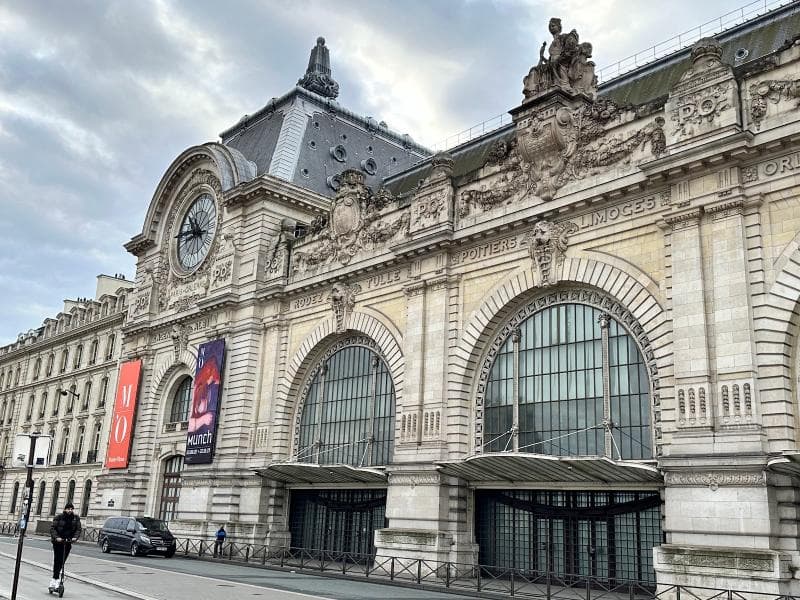
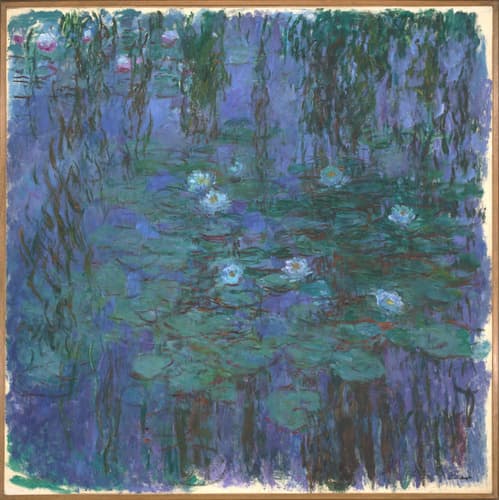
Discover Monet’s 'Blue Water Lilies' (Nymphéas bleus) at the Musée d'Orsay in Paris, France. Explore this iconic Impressionist masterpiece.
Overview
Nestled within the magnificent Beaux-Arts architecture of the Musée d'Orsay in Paris, France, visitors can discover one of Claude Monet's compelling later works: 'Blue Water Lilies' (original title: 'Nymphéas bleus'). This iconic oil on canvas, created between 1916 and 1919, is a quintessential example of Monet's profound exploration of light, color, and nature during his celebrated 'Water Lilies' series. Housed in room 34, this painting offers a mesmerizing glimpse into the artist's dedication to capturing the ever-changing essence of his beloved garden pond at Giverny.
History & Cultural Background
Claude Monet (1840-1926), a titan of French Impressionism, embarked on his monumental 'Water Lilies' series (Nymphéas) in the late 1890s, continuing this artistic pursuit until his death. These works became the sole focus of his artistic production for the last three decades of his life, deeply inspired by the water garden he cultivated at his property in Giverny from 1893. The 'Blue Water Lilies' at the Musée d'Orsay falls within a particularly prolific period for Monet, between 1916 and 1919, when he was immersed in creating large-scale canvases. During these years, even amidst the backdrop of World War I, Monet found solace and endless inspiration in his pond, describing it as a piece of nature that became his 'greatest masterpiece.'
The Musée d'Orsay itself holds significant cultural weight. Formerly the Gare d'Orsay, a grand railway station built for the 1900 Universal Exposition, it was transformed into a museum in 1986. It now houses the world's largest collection of Impressionist and Post-Impressionist art, making it a fitting home for Monet's innovative work.
What Makes It Special
'Blue Water Lilies' stands apart through its unique compositional choices and evocative atmosphere. Unlike earlier landscape paintings, Monet eliminated the horizon and sky, focusing entirely on a close-up, seemingly shapeless surface of the pond. This creates an immersive experience, drawing the viewer directly into the reflections and the aquatic flora. The square format of the canvas further emphasizes this neutrality and boundless quality, giving the fragment an infinite, limitless feeling.
Monet's brushwork in this piece is remarkably free and detached from literal representation. Up close, the strokes can appear almost abstract, challenging the viewer to mentally piece together the suggested landscape. The painting is characterized by its predominant soft blue, green, and purple tones, which contribute to its serene yet profound effect. This artistic approach, with its unfinished borders and emphasis on the painted surface, even resonated with post-World War II artists exploring 'abstract landscapes.'
Stories, Fun Facts & Local Details
Monet often expressed his deep connection to his garden, famously stating, 'Apart from painting and gardening, I am good for nothing.' This personal devotion is palpable in 'Blue Water Lilies,' which radiates a meditative quality born from years of close observation. A fascinating aspect of Monet's later 'Water Lilies' paintings, including potentially this one, relates to his vision. After undergoing cataract surgery later in his life, it's believed that his perception of color changed, with some later works exhibiting bluer tones due to an ability to see ultraviolet light. This personal journey with sight adds another layer of interpretation to the blues and purples dominant in the painting.
While the Musée d'Orsay proudly displays 'Blue Water Lilies' and other significant Monet works, it's worth noting that the broader 'Water Lilies' series is distributed across various museums. The famous large-scale murals of the series, for instance, are the permanent collection of the Musée de l'Orangerie, just across the Seine. The Musée d'Orsay, however, provides a crucial context for understanding Monet's evolution within the wider Impressionist movement.
Visitor Perspective
Standing before 'Blue Water Lilies' at the Musée d'Orsay is an experience designed to transport the viewer. The painting's considerable size and singular focus on the water's surface create an almost hypnotic effect, encouraging a moment of quiet contemplation amidst the bustling museum. Without a defined horizon, the artwork invites personal interpretation and an immersive engagement with color and light. Visitors often find themselves drawn into the subtle interplay of reflections and the organic flow of the water lilies, feeling as if they are peering directly into Monet's tranquil pond. The museum's overall design, with its former train station ambiance, adds a unique grandeur to the artistic journey, making the discovery of masterpieces like 'Blue Water Lilies' an unforgettable part of any visit to Paris.
Coordinates: 2.326497, 48.859926
View on Google Maps💬 How Travelers Describe This Place
Based on community votes
Interesting
683Photogenic
642Must See
536Beautiful
251Unique
88
Traveler Stories
Discover memorable experiences shared by travelers who have visited this place.
No traveler stories yet.
Be the first traveler to share what made this place memorable.

Tour
By
Spot
Discover amazing places around the world. Your journey starts here.
Explore
© 2026 TourBySpot. All rights reserved.