Monastery Islands
Podgorica, Montenegro
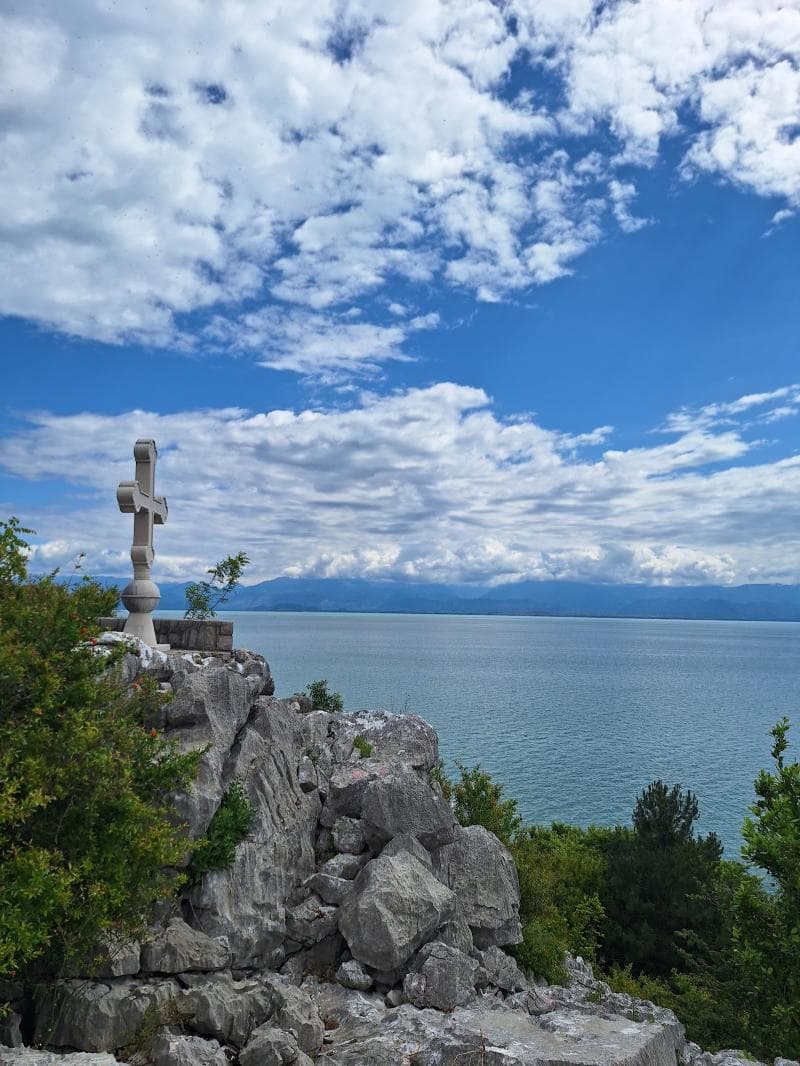
Discover the ancient Monastery Islands of Lake Skadar National Park near Podgorica, Montenegro. Explore medieval Orthodox sanctuaries, rich history, and stunning natural beauty.
Overview
Nestled within the breathtaking expanse of Lake Skadar National Park, near Podgorica, Montenegro, lie the enchanting Monastery Islands. This collection of islets, often referred to as 'The Holy Mountain of Zeta', holds a spiritual and historical significance that dates back centuries, offering a tranquil escape into Montenegro's rich past. Lake Skadar itself, the largest lake in the Balkans, is a natural wonder straddling the border with Albania, celebrated for its unique biodiversity, including being a haven for over 280 bird species like the rare Dalmatian pelican. The islands dotting this vast freshwater lake are not merely picturesque landforms; they are living testaments to medieval Orthodox heritage, housing ancient monasteries that served as vital cultural and religious centers. Visitors embarking on a journey across these calm waters are transported to a realm where nature's serenity meets profound spiritual history.
History & Cultural Background
The Monastery Islands of Lake Skadar are steeped in the annals of Montenegrin history, primarily linked to powerful medieval dynasties such as the Balšić and Crnojević families. These families, particularly influential in the region of Zeta, were prolific founders and patrons of these sacred sites, many of which emerged during the 14th and 15th centuries. Each monastery tells a unique story of its foundation and evolution:
- Vranjina Monastery (St. Nicholas): Established around 1233, possibly by Saint Sava or his disciple Ilarion, Vranjina is considered the oldest monastery on Lake Skadar. Its strategic location led to numerous attacks, notably its transformation into a Turkish fortress in 1843, before being rebuilt in 1886.
- Starčevo Monastery: Located on Starčeva Gorica island, this monastery was founded in 1377 by Father Makarije, a hermit whose 'old man' (starac) moniker gave the island its name. It rose to prominence as a significant scriptorium, a center for transcribing and binding religious texts.
- Beška Monastery: On Beška Island, this complex features two churches. The Church of St. George was built in the late 14th century by Đurađ II Balšić, Lord of Zeta, while the smaller Church of the Holy Mother was a legacy of his wife, Jelena Balšić, built in 1440. Jelena Balšić, a significant figure of her time, is also buried here. Today, it's run by nuns dedicated to cultivation and spiritual life.
- Moračnik Monastery: Founded between 1403 and 1417 by Balša III, this monastery on Moračnik Island was dedicated to the Virgin Mary and notable for its distinctive four-story defensive tower. It played a role in local conflicts, heroically defended during the Montenegrin-Ottoman war of 1853.
- Kom Monastery: Built between 1415 and 1427 by the Crnojević family, Kom Monastery on Ondrijska Gora features well-preserved 15th and 16th-century frescoes and houses the graves of four Crnojević dynasty members. It holds historical importance as the place where Petar II Petrović-Njegoš, a celebrated Montenegrin ruler and poet, was ordained as a bishop.
What Makes It Special
The Monastery Islands offer an unparalleled blend of historical depth, architectural marvels, and natural beauty. Their isolation, often accessible only by boat, has helped preserve their mystical aura and authentic charm. The monasteries themselves, with their stone walls and ancient frescoes, are living museums, each showcasing distinct medieval Balkan architectural styles and artistic traditions. The dedication of the monastic communities, like the nuns of Beška who cultivate herbs, and the resident monks who welcome visitors at places like Moračnik and Kom, adds a contemporary spiritual dimension to these historical sites. Furthermore, the juxtaposition of these sacred structures against the stunning backdrop of Lake Skadar's wetlands, mountains, and diverse wildlife creates a truly unique and evocative landscape.
Stories, Fun Facts & Local Details
Beyond their formal histories, these islands are rich with captivating stories and local legends. At Starčevo Monastery, one can reflect on the life of Father Makarije, the hermit whose ascetic existence gave the island its name, and also consider the final resting place of Božidar Vuković Podgoričanin, a renowned 16th-century printer. The memory of Jelena Balšić, a powerful medieval queen who chose Beška Monastery as her final resting place and funded its second church, resonates strongly. Kom Monastery carries the significant detail of being the ordination site for Petar II Petrović-Njegoš, a figure central to Montenegrin national identity. The dramatic defense of Moračnik Monastery by three local brothers in 1853 against overwhelming Ottoman forces stands as a testament to the local valor intrinsically linked to these sacred places.
Visitor Perspective
Visiting the Monastery Islands is an immersive experience that begins with a scenic boat journey across Lake Skadar, typically departing from towns like Virpazar. These tours offer not just transport, but an opportunity to appreciate the sheer scale and beauty of the National Park, often gliding through fields of water lilies and observing diverse birdlife. Upon arrival, the serene atmosphere of these ancient sites is palpable, offering a profound sense of peace and a connection to centuries of spiritual devotion. It's like stepping back in time, away from the hustle of the modern world. Travelers are advised to dress modestly as a sign of respect for these active religious sites. Exploring these islands provides a deep insight into Montenegro's soul, revealing layers of history, faith, and unspoiled nature, making it an unforgettable part of any Montenegrin adventure.
Coordinates: 19.229444, 42.164722
View on Google Maps💬 How Travelers Describe This Place
Based on community votes
Must See
897Interesting
657Beautiful
498Unique
481Photogenic
299
Traveler Stories
Discover memorable experiences shared by travelers who have visited this place.
No traveler stories yet.
Be the first traveler to share what made this place memorable.

Tour
By
Spot
Discover amazing places around the world. Your journey starts here.
Explore
© 2026 TourBySpot. All rights reserved.