Monas Tower Observation Deck
Jakarta, Indonesia
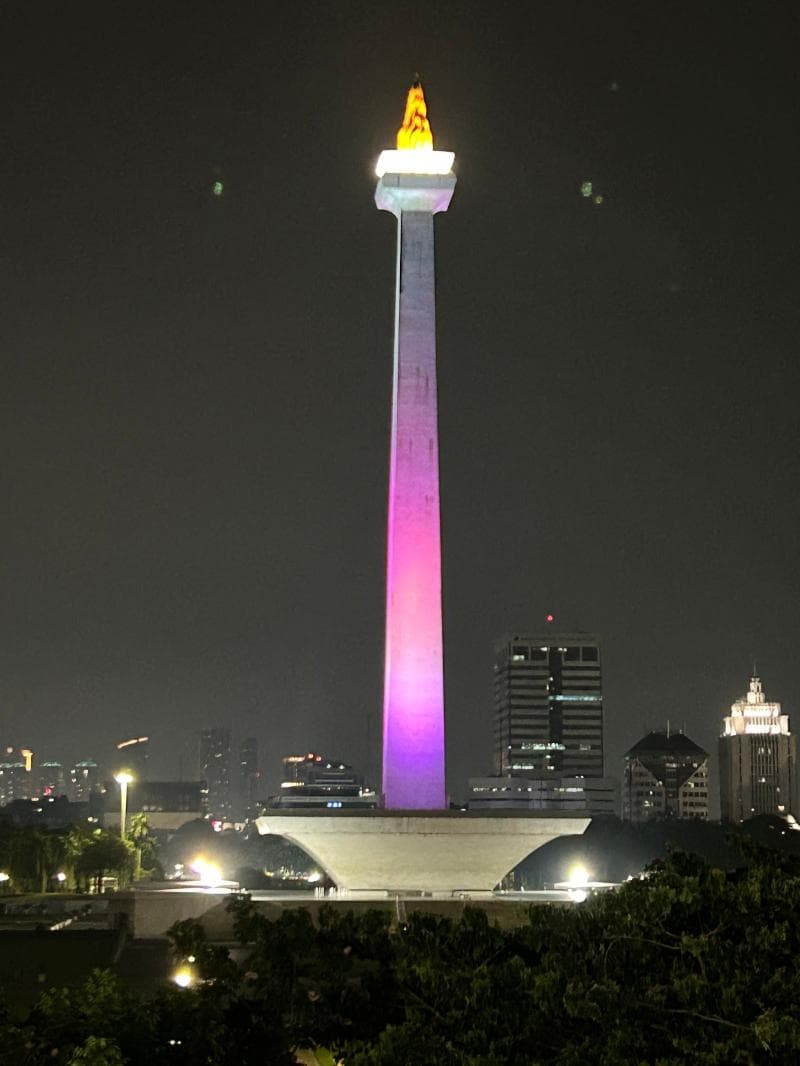
Ascend the Monas Tower Observation Deck in Jakarta, Indonesia, for panoramic city views and a deep dive into Indonesia's fight for independence.
Overview
Perched majestically in the heart of Jakarta, Indonesia, the Monas Tower Observation Deck offers an unparalleled perspective of the bustling capital. Located within the sprawling National Monument (Monumen Nasional, abbreviated Monas), this iconic obelisk stands as a powerful symbol of Indonesia's hard-won independence and national pride. Rising to a total height of 132 meters, Monas dominates the city skyline, its gleaming spire capped by a golden flame that captures the essence of the nation's enduring spirit.
The observation deck, situated at 115 meters above ground level, provides visitors with panoramic vistas, showcasing Jakarta's dynamic urban landscape, its towering skyscrapers, and, on clear days, even distant mountains and the Java Sea. While the view is undoubtedly a major draw, a visit to the Monas Tower is much more than just a scenic overlook; it's an immersive journey into Indonesia's rich history and cultural identity. The monument's base houses a museum filled with dioramas and artifacts, detailing the nation's struggle for freedom.
History & Cultural Background
The vision for the National Monument originated with Indonesia's first President, Sukarno, who sought to create a landmark commemorating the country's struggle for independence from Dutch colonial rule. Construction officially began on August 17, 1961, coinciding with the 16th anniversary of Indonesia's Proclamation of Independence. The monument was finally opened to the public in 1975, a testament to years of national effort.
Monas is imbued with profound symbolism. Its design encapsulates the ancient Javanese philosophical concept of 'Lingga' and 'Yoni', representing masculinity and femininity, balance, fertility, and eternal life. This also draws a comparison to traditional Indonesian rice-pounding tools: the 'alu' (pestle) and 'lesung' (mortar), symbolizing prosperity. Furthermore, its dimensions are deeply symbolic of Indonesia's independence date, August 17, 1945: the height from the base to the goblet is 17 meters, representing the date; the width of the square goblet is 45 by 45 meters, signifying the year; and the height from the history museum to the base of the goblet is 8 meters, denoting August as the eighth month.
What Makes It Special
The most striking feature of the Monas Tower is its Flame of Independence, a magnificent bronze structure atop the obelisk. Initially covered with 35 kilograms of gold foil, this layer was increased to 50 kilograms in 1995 to mark the 50th anniversary of Indonesian independence. This golden flame vividly symbolizes the unyielding spirit of the Indonesian people in their fight for freedom.
Beyond the observation deck's expansive views, the monument's lower levels house the National History Museum. Here, 51 meticulously crafted dioramas narrate Indonesia's history, from its prehistoric origins through various kingdoms, colonial struggles, and eventually, independence. Visitors can also experience the Hall of Independence, located within the 'goblet' part of Monas, where the original manuscript of the Proclamation of Indonesian Independence is preserved behind gold-plated doors, accompanied by an audio recording of President Sukarno reading the proclamation.
Stories, Fun Facts & Local Details
One fascinating detail surrounding the golden flame concerns the contribution of Teuku Markam, a prominent businessman from Aceh, who reportedly donated a significant portion of the gold used to coat the flame. His patriotic gesture helped realize the monument's grand vision. The area surrounding Monas, now known as Merdeka Square, has undergone several name changes throughout history, including Gambir Square, Ikada Square, and Monas Park, reflecting Jakarta's evolving narrative.
Interestingly, despite its towering presence, the observation deck at 115 meters is still 17 meters below the actual tip of the golden flame, a design choice that adds to its mystique. The monument's architectural style, a blend of traditional Indonesian motifs and modernist influences, makes it a unique visual landmark. The entire Monas complex sits within an 80-hectare park, serving as a vital green lung for the city where locals gather for recreation, jogging, and picnics, creating a vibrant community space amidst the urban sprawl.
Visitor Perspective
Ascending to the Monas Tower Observation Deck is a highlight for many visitors to Jakarta. The journey to the top involves an elevator ride, which has a capacity of about 11 people, leading to a platform that can accommodate approximately 50 people at a time. Due to its popularity, especially on weekends and holidays, long queues are common. Travelers often advise arriving early in the morning, ideally before 8:00 AM, to minimize wait times and enjoy clearer views before the city's haze sets in.
While the panoramic views are a significant draw, it's important to set expectations; Jakarta's atmospheric conditions can sometimes lead to hazy visibility. However, even on such days, the sheer scale of the city spread beneath is impressive. For convenience, visitors need to acquire a JakCard to pay for entry tickets, as cash payments are typically not accepted. The path from the entrance gate to the monument can be long and exposed, so bringing a hat and water is recommended for a comfortable experience. Despite the potential crowds, the Monas Tower Observation Deck remains a profoundly moving destination, offering a unique blend of historical insight and breathtaking views of Indonesia's vibrant capital.
Coordinates: 106.827139, -6.175389
View on Google Maps💬 How Travelers Describe This Place
Based on community votes
Photogenic
846Must See
564Beautiful
201Unique
121Interesting
87
Traveler Stories
Discover memorable experiences shared by travelers who have visited this place.
No traveler stories yet.
Be the first traveler to share what made this place memorable.

Tour
By
Spot
Discover amazing places around the world. Your journey starts here.
Explore
© 2026 TourBySpot. All rights reserved.