Model of the Grand Mosque and Kaaba
Mecca, Saudi Arabia
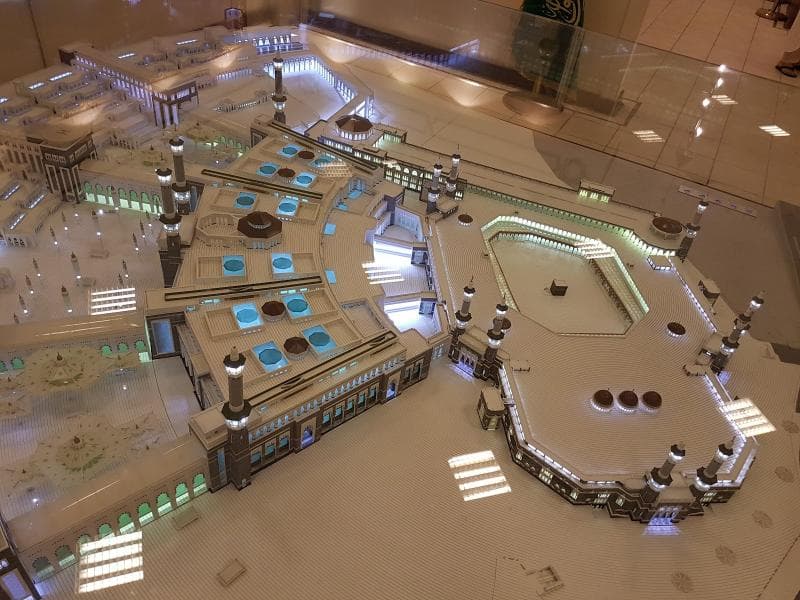
Explore the detailed model of the Grand Mosque and Kaaba at the Exhibition of the Two Holy Mosques Architecture in Mecca, Saudi Arabia, revealing centuries of architectural history.
Overview
Step into a captivating journey through time at the Exhibition of the Two Holy Mosques Architecture in Mecca, Saudi Arabia, where one of the most prominent displays is a meticulously crafted model of the Grand Mosque and the sacred Kaaba. This remarkable sub-spot within the museum offers visitors a unique perspective on the evolution and grandeur of Islam's holiest sites. Situated in the Umm al-Joud area, not far from the Kiswa factory, the exhibition serves as a vital cultural and historical landmark.
The Exhibition of the Two Holy Mosques Architecture is dedicated to showcasing the architectural history of both the Grand Mosque (Masjid al-Haram) in Mecca and the Prophet's Mosque (Masjid an-Nabawi) in Madinah. The model of the Grand Mosque and Kaaba is a central exhibit, providing a comprehensive visual narrative of how these revered structures have been built, expanded, and maintained over centuries. It's an immersive experience designed to enlighten pilgrims and curious travelers alike about the profound significance and enduring legacy of these sacred spaces.
History & Cultural Background
The Exhibition of the Two Holy Mosques Architecture, established in February 2000 during the reign of King Fahd bin Abdulaziz, was conceived to preserve and present the rich architectural heritage of Islam's two most important mosques. The Grand Mosque, encompassing the Kaaba, has undergone countless transformations throughout history, each reflecting the needs of a growing Muslim population and the artistic styles of different eras. The model inside the museum encapsulates this extensive history, tracing architectural developments from early Islamic periods through to the massive modern expansions of the Saudi era.
The Kaaba, a cubic building at the center of the Grand Mosque, holds immense spiritual significance as the most sacred site in Islam, toward which all Muslims pray. Its depiction in a detailed architectural model allows for an understanding of its construction and its integration within the larger Grand Mosque complex. This presentation serves not just as a historical record but also as an educational tool, making the complex history and architectural evolution accessible to all.
What Makes It Special
What makes the model of the Grand Mosque and Kaaba particularly special is its ability to distill centuries of architectural development into a tangible, observable form. It's described as a 'detailed scale model' and a 'three-dimensional architectural model' that brings to life the intricate details of Masjid al-Haram and the holy Kaaba. For many, seeing the Grand Mosque in person can be an overwhelming experience due to its sheer scale and the multitudes of pilgrims. The model offers a rare opportunity to appreciate the architectural complexities, the phases of expansion, and the harmonious integration of various elements without the distractions of a bustling holy site.
This exhibit is crucial for those interested in Islamic art, history, and engineering. It highlights the dedication and craftsmanship that have gone into preserving and enhancing these holy sites. The model serves as a static yet dynamic representation, showcasing how the sacred architecture has evolved to accommodate millions of worshippers while maintaining its spiritual essence and iconic design.
Stories, Fun Facts & Local Details
While specific 'fun facts' directly about the model are not widely documented, its very existence tells a story of reverence and meticulous preservation. Imagine the countless hours of dedication involved in recreating the vast Grand Mosque and the Kaaba in miniature, ensuring every arch, minaret, and courtyard is accurately represented. The model often illustrates historical features that may no longer be visible in the contemporary mosque due to successive expansions, offering glimpses into past architectural styles and layouts. It allows visitors to trace how the mosque developed over time, for example, the various stages of expansion undertaken by different caliphates and the significant projects during the Saudi era, which have dramatically increased its capacity.
A visit to this exhibit offers a quiet moment for contemplation and education, allowing for a deeper appreciation of the living history embedded within the stones of the Grand Mosque. It underscores the continuous efforts to serve pilgrims and preserve the sanctity of these blessed locations, making the complex history of Mecca's spiritual heart understandable and visually engaging.
Visitor Perspective
For visitors, observing the model of the Grand Mosque and Kaaba is an illuminating experience. It demystifies the immense scale of the actual site and helps to contextualize its spiritual and architectural journey. Many find that seeing the model enhances their understanding and appreciation of the real Grand Mosque, especially if they have visited or plan to visit. It allows for a cognitive mapping of the complex layout of the Grand Mosque, making the experience of circumambulating the Kaaba or navigating the vast courtyards more comprehensible.
The exhibition, with its array of artifacts and detailed models, provides a serene and insightful look into the craftsmanship and devotion that have shaped the heart of the Islamic world for over a millennium. It's an educational journey that deepens one's understanding of the historical and cultural significance of Mecca, offering a peaceful space for reflection away from the main pilgrimage crowds. It allows for a unique connection to the origins of Islamic culture and the enduring legacy of the Two Holy Mosques.
Coordinates: 39.754652, 21.434587
View on Google Maps💬 How Travelers Describe This Place
Based on community votes
Must See
797Interesting
695Unique
396Beautiful
286Photogenic
22
Traveler Stories
Discover memorable experiences shared by travelers who have visited this place.
No traveler stories yet.
Be the first traveler to share what made this place memorable.

Tour
By
Spot
Discover amazing places around the world. Your journey starts here.
Explore
© 2026 TourBySpot. All rights reserved.