Mihrab & Minbar
Istanbul, Turkey
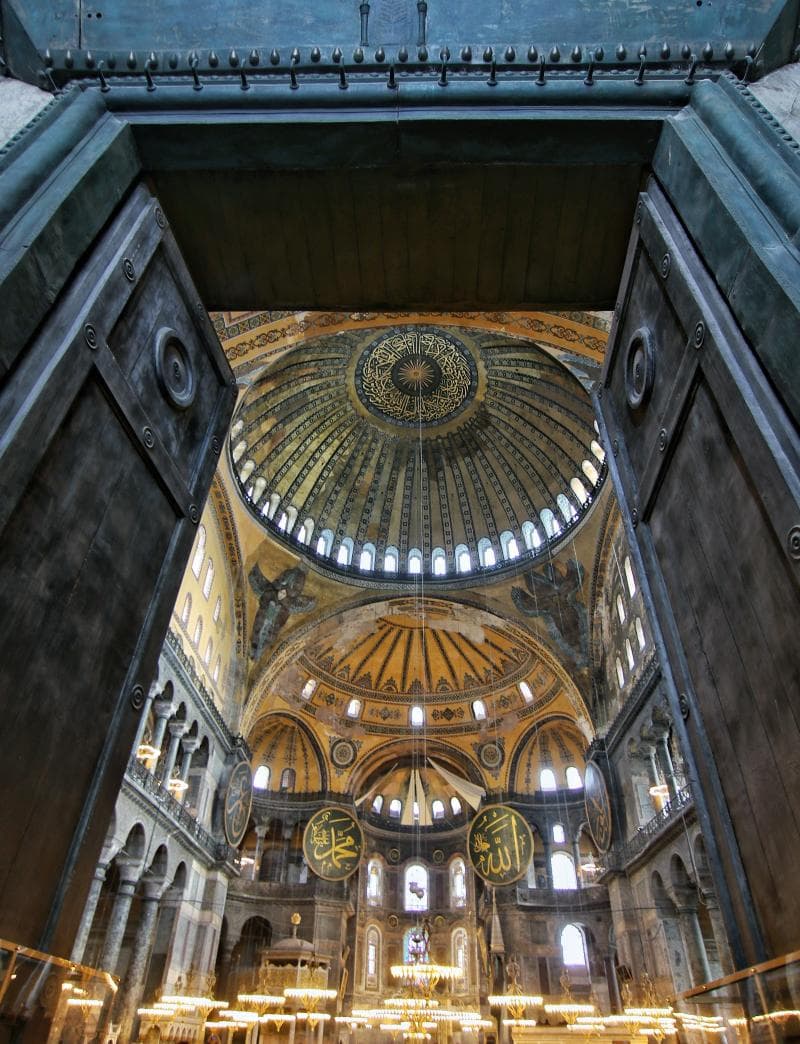
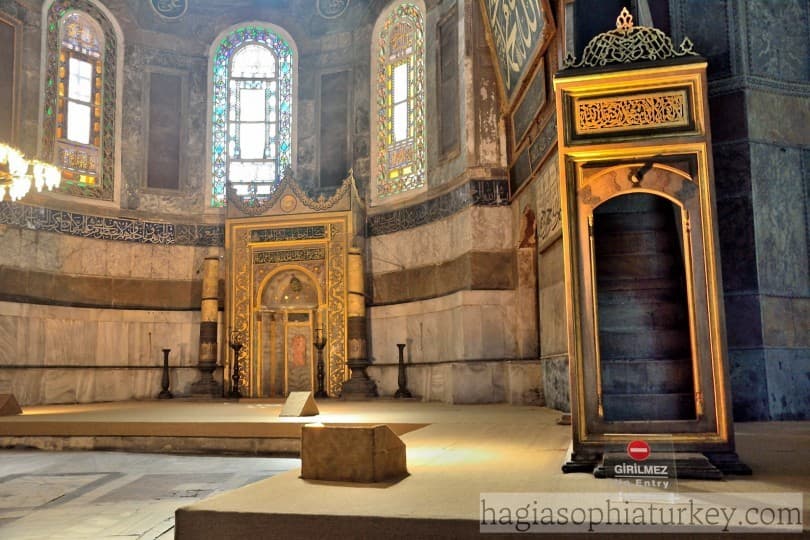
Explore the Mihrab & Minbar in Hagia Sophia, Istanbul, Turkey. Discover the rich history, cultural blend, and architectural significance of these sacred elements.
Overview
Stepping into the grand expanse of Hagia Sophia in Istanbul, Turkey, one cannot help but be captivated by its layered history. Among its most striking features, signifying its profound transformation from an Orthodox cathedral to a mosque, are the Mihrab and Minbar. These sacred Islamic elements, meticulously integrated into the Byzantine masterpiece, narrate a compelling story of cultural convergence and religious evolution. They stand not as replacements, but as profound additions that redirected the spiritual focus of an already hallowed space.
The Mihrab, a beautifully adorned niche, indicates the Qibla – the precise direction of the Kaaba in Mecca, towards which Muslims turn for prayer. Adjacent to it, the Minbar rises gracefully, a pulpit from which the imam delivers the Friday sermon, guiding the congregation. Together, these structures serve as central focal points for worship, anchoring the vast interior of Hagia Sophia and inviting contemplation on its remarkable journey through time.
History & Cultural Background
The story of the Mihrab and Minbar within Hagia Sophia begins in 1453, a pivotal year when Constantinople fell to the Ottoman Turks under Sultan Mehmed II. What was once the principal cathedral of the Byzantine Empire was converted into an imperial mosque. This conversion necessitated the introduction of essential elements for Islamic worship. Sultan Mehmed II, in his wisdom, ordered that the sanctity of the building be preserved, with its spiritual direction simply reoriented.
The Mihrab was therefore installed in the eastern apse, the semi-domed recess where the Christian altar once stood. This placement, while symbolic, meant it was slightly off-center from the main axis of the Byzantine structure to accurately align with Mecca. The Minbar, a later addition, with the one seen today largely attributed to Sultan Murad III in the late 16th century, further solidified the mosque's function. These elements were not imposed in a manner that defaced the original Byzantine art and architecture; instead, the Ottomans designed them in harmony, revering Hagia Sophia as a divine inheritance.
What Makes It Special
The Mihrab and Minbar at Hagia Sophia are special not only for their religious function but also for their exquisite craftsmanship and symbolic significance. The Mihrab is typically fashioned from finely veined marble, often embellished with intricate gilded calligraphy quoting verses from the Qur'an. Above it, delicate stained glass windows from the reign of Sultan Abdülmecid capture and refract sunlight, casting shimmering light onto the apse walls.
The Minbar stands as an 'architectural poem in stone,' exemplifying Ottoman refinement. Its tall, slender form, made of carved white marble, features refined geometry and leads up a narrow staircase to a platform. What truly distinguishes these features is their seamless integration into the pre-existing Byzantine shell. They embody a 'seamless discussion between faiths,' where a masterpiece of one civilization became the sacred heart of another, yet maintaining structural and aesthetic coherence.
Stories, Fun Facts & Local Details
One fascinating detail about the Mihrab is its slightly off-center placement. When Hagia Sophia was converted into a mosque, the Ottoman architects faced the challenge of orienting the Mihrab towards Mecca (southeast) within a building originally oriented towards the east. To maintain the structural integrity of the apse, the Mihrab was positioned slightly to the right of the building's central axis, a subtle asymmetry that adds to the layered uniqueness of the interior.
The Minbar, typically used by the imam for the Friday sermon, represents a physical and spiritual elevation. Its stairway leads to a platform from which the sermon is delivered, often with the imam stopping midway to symbolize humility before God. The meticulous design of these elements demonstrates the Ottoman Empire's respect for the existing structure, avoiding any major alterations that would compromise the original Byzantine grandeur. Visitors can observe how the craftsmanship of the Ottoman additions subtly connects with the Byzantine marble, creating a continuous narrative of art and faith.
Visitor Perspective
For the curious traveler, encountering the Mihrab and Minbar within Hagia Sophia is a powerful experience that transcends mere observation. These elements are not just historical artifacts; they are active components of a living mosque, deeply revered and utilized for daily prayers. As you stand before them, you can feel the centuries of devotion that have permeated the space, from Byzantine emperors to Ottoman sultans and modern-day worshippers.
The soft light, the intricate details of the marble and calligraphy, and the profound sense of history evoke a strong emotional connection. It is a moment to appreciate the enduring spirit of human artistry and faith, witnessing how one sacred space has adapted and embraced different expressions of spirituality over fifteen centuries. Observing these architectural testaments to change and continuity provides a deeper understanding of Istanbul's identity as a bridge between cultures and eras.
Coordinates: 28.9792432, 41.0079493
View on Google Maps💬 How Travelers Describe This Place
Based on community votes
Beautiful
685Interesting
472Must See
446Unique
399Photogenic
92
Traveler Stories
Discover memorable experiences shared by travelers who have visited this place.
No traveler stories yet.
Be the first traveler to share what made this place memorable.

Tour
By
Spot
Discover amazing places around the world. Your journey starts here.
Explore
© 2026 TourBySpot. All rights reserved.