Metropolis Building
Madrid, Spain
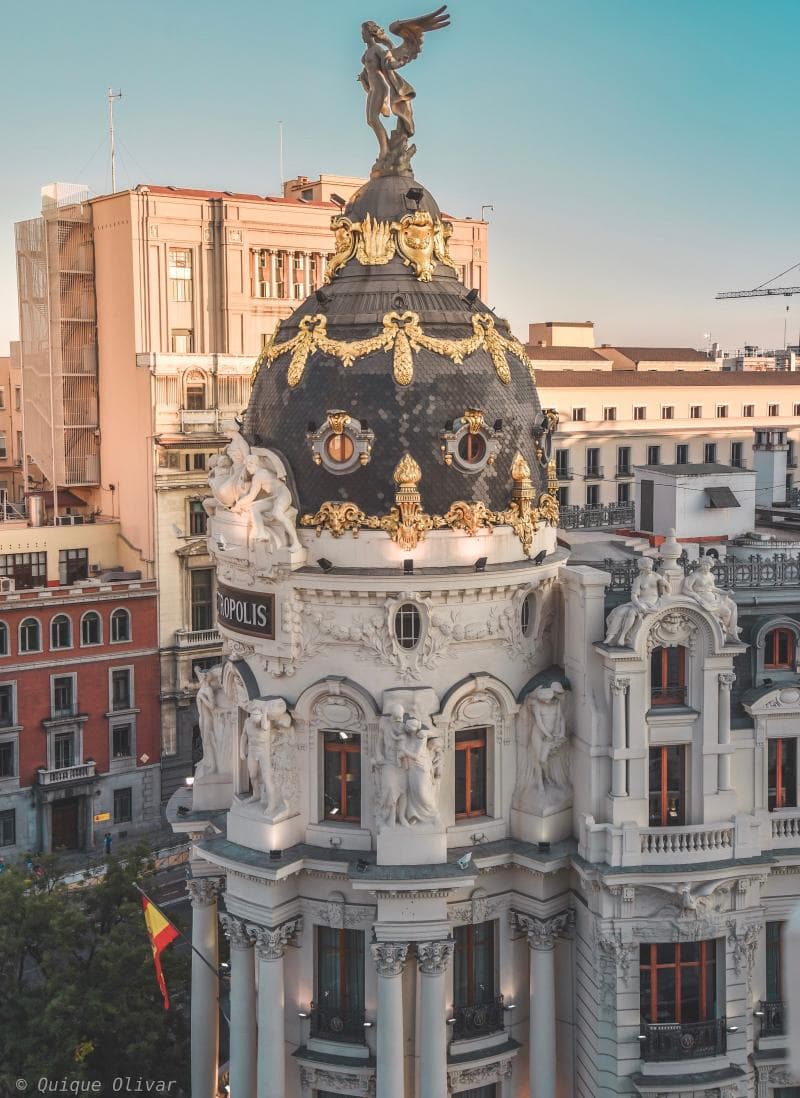
Discover Madrid's iconic Metropolis Building on Gran Vía, a Beaux-Arts masterpiece. Explore its rich history, unique architecture, and cultural significance in Spain.
Overview
The Metropolis Building, or Edificio Metrópolis, stands as a grand architectural jewel at the crucial intersection of Calle de Alcalá and Gran Vía in Madrid, Spain. More than just a building, it serves as a symbolic gateway to the iconic Gran Vía, a bustling artery of the city. Its striking Beaux-Arts architecture, characterized by French influences, elaborate ornamentation, and a magnificent dome, has made it one of Madrid's most photographed and recognizable landmarks. Visible from various points in the city, especially from Plaza de Cibeles, the Metropolis Building embodies Madrid's early 20th-century modernization and cosmopolitan spirit.
History & Cultural Background
The story of the Metropolis Building begins in 1905 when the insurance company La Unión y el Fénix acquired the site, launching an international competition for its new headquarters. French architects Jules and Raymond Février won the competition, with Spanish architect Luis Esteve overseeing the execution. Construction commenced in 1907, and the building was inaugurated on January 21, 1911, marking a significant moment in Madrid's urban development, as it coincided with the creation of the first stretch of Gran Vía. For a decade, at 45 meters high, it held the distinction of being Madrid's tallest building.
A significant change occurred in 1972 when Metrópolis Seguros, another insurance company, purchased the building, which then adopted its current name. This change also brought a notable alteration to the building's iconic silhouette: the original bronze statue of a phoenix and Ganymede, the symbol of La Unión y el Fénix, was removed and relocated to their new headquarters. It was replaced by the gilded Winged Victory statue, sculpted by Federico Coullaut-Valera Mendigutia, which now gracefully crowns the dome.
What Makes It Special
The Metropolis Building is a masterpiece of Beaux-Arts design, showcasing a lavish facade rich in detail and classical motifs. Its lower levels feature a base of green granite, contrasting with the ornate upper floors adorned with Corinthian columns and intricate ironwork. Allegorical statues, symbolizing Spain's key economic sectors of the time such as Commerce, Industry, Mining, and Agriculture, are strategically placed atop twin columns. The building's most distinguishing feature is its rounded corner tower, capped by a magnificent black slate dome. This dome is embellished with delicate gilded accents and tracery, reportedly made of over 30,000 24-carat gold leaves, and is crowned by the majestic Winged Victory statue.
Stories, Fun Facts & Local Details
The site where the Metropolis Building now stands was once informally known as 'casa del ataúd' (coffin house) by locals, due to the narrow frontage of the properties that had to be demolished for its construction. The replacement of the original phoenix statue in the 1970s was a moment of local controversy, as the phoenix had become a familiar part of Madrid's skyline. However, the new Winged Victory statue quickly gained its own iconic status. Each evening, over 200 spotlights illuminate the building, transforming it into a dazzling spectacle against the night sky and enhancing its golden details. This illumination makes it a favored subject for photographers and a truly enchanting sight for visitors.
Visitor Perspective
While the Metropolis Building traditionally served as an office space with no public interior access, its exterior has always been its primary draw for visitors. Travelers can admire its stunning facade and iconic dome from the street level, making it a perfect spot for photography at any time of day, but especially magical when illuminated at night. Located in the heart of Madrid, it is easily accessible by foot or public transport, with metro stations nearby.
As of January 2026, the building has undergone a significant transformation, opening its doors to the public as Club Metrópolis. This new incarnation includes a boutique hotel and several haute cuisine restaurants, offering a unique opportunity for guests and patrons to experience the interior of this historic landmark. This change allows for an even deeper appreciation of its grandeur, blending its historical significance with contemporary luxury.
Coordinates: -3.697222, 40.418889
View on Google Maps💬 How Travelers Describe This Place
Based on community votes
Unique
934Must See
879Beautiful
741Interesting
276Photogenic
30
Traveler Stories
Discover memorable experiences shared by travelers who have visited this place.
No traveler stories yet.
Be the first traveler to share what made this place memorable.

Tour
By
Spot
Discover amazing places around the world. Your journey starts here.
Explore
© 2026 TourBySpot. All rights reserved.