Merdeka Square
Jakarta, Indonesia
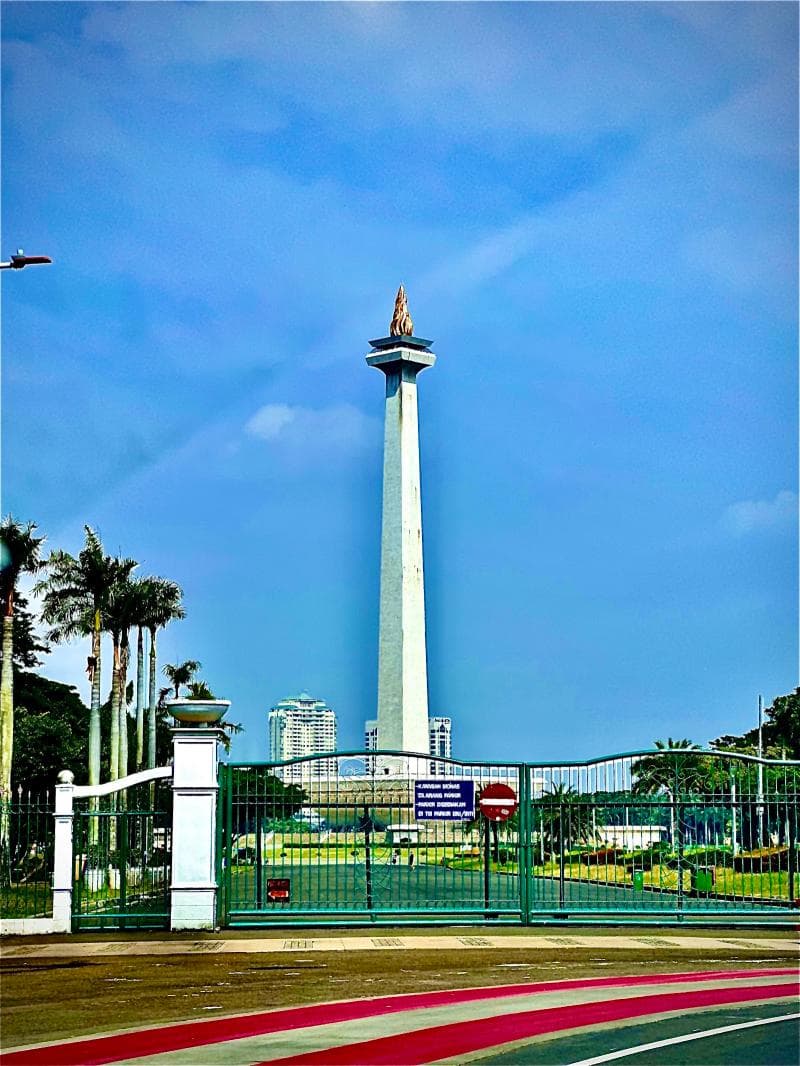
Explore Merdeka Square in Jakarta, Indonesia, a grand symbol of national independence. Discover its iconic National Monument, rich history, and vibrant local life.
Overview
Merdeka Square, known locally as Lapangan Merdeka or Medan Merdeka, stands as the vibrant heart of Jakarta, Indonesia. This expansive urban space, measuring approximately one square kilometer (100 hectares), is recognized as one of the largest city squares globally. It is far more than just a public park; it is a profound symbol of Indonesia's arduous journey to independence and a focal point for national pride, cultural celebrations, and civic life. At its very center majestically rises the National Monument, or Monas, an iconic obelisk that dominates the city's skyline.
The square itself is thoughtfully designed, featuring a cross-shaped pattern created by four diagonal streets that converge at the Monas. It is broadly divided into two zones: Taman Medan Merdeka, offering lush garden spaces with trees, reflecting ponds, musical fountains, and even a deer enclosure, and Ruang Agung, the grand, open area immediately surrounding the monument, deliberately kept free of visual obstructions to emphasize Monas's commanding presence. Merdeka Square is enveloped by crucial governmental and cultural institutions, including the Merdeka Palace, the National Museum of Indonesia, the Supreme Court, and various ministries, underscoring its central role in the nation's life.
History & Cultural Background
The history of Merdeka Square is as rich and complex as Indonesia's own narrative. Its origins trace back to the Dutch colonial era in the 19th century, when it was known as Koningsplein, or 'King's Square.' During this period, it served as a grand ceremonial and administrative space for official events and public gatherings, reflecting colonial power.
As Indonesia's struggle for sovereignty intensified, the square became deeply intertwined with the nationalist movement. Following the declaration of Indonesian independence in 1945, the square was renamed Lapangan Merdeka (Freedom Field) and transformed into a significant venue for political rallies and demonstrations. It was here that President Sukarno, Indonesia's first president, envisioned a national monument that would stand as a lasting testament to the nation's fight for freedom and symbolize unity for future generations. The construction of the National Monument began on August 17, 1961, the 16th anniversary of Indonesia's independence, and was eventually completed and opened to the public in 1975. This transformation cemented Merdeka Square's role as a living tribute to Indonesia's arduous journey from colonial rule to a vibrant, independent nation.
What Makes It Special
At the heart of Merdeka Square, the National Monument (Monas) is undoubtedly its most striking feature. Rising 132 meters (433 feet) into the sky, this impressive obelisk is crowned with a magnificent flame, which is coated in 50 kilograms of gold, symbolizing the unwavering spirit and aspiration of the Indonesian people for independence.
Inside the base of Monas, visitors can explore the National History Museum, which houses a fascinating collection of dioramas depicting Indonesia's long and often challenging history, from prehistoric times through the struggle for independence. Ascending to the observation deck near the top of Monas offers breathtaking panoramic views of Jakarta, a truly memorable experience. Beyond Monas, Merdeka Square is distinguished by its vast, well-maintained green spaces, musical fountains, and a charming deer enclosure, providing tranquil spots for relaxation amidst the bustling city. The surrounding colonial-era buildings and modern governmental structures further add to the square's unique architectural landscape, making it a compelling blend of history and contemporary life.
Stories, Fun Facts & Local Details
The very name 'Merdeka' translates to 'freedom' or 'independence' in Indonesian, immediately revealing the square's profound national significance. A captivating detail about Monas is its design, conceived by architects Friedrich Silaban and R.M. Soedarsono, who incorporated traditional Indonesian philosophical elements. The obelisk and its base are said to represent the Lingga and Yoni, ancient symbols of fertility and balance, embodying the unity between male and female, and heaven and earth.
Merdeka Square is not just a monument but a dynamic space where the pulse of Indonesian life can be felt. It frequently hosts national events, military parades, and civic demonstrations, with the annual Independence Day celebrations on August 17th being a particularly grand spectacle. For locals, especially on weekends, the square transforms into a beloved recreational hub where families gather for picnics, children fly kites, and people engage in sports like jogging and cycling, offering a wonderful glimpse into daily Jakarta life.
Visitor Perspective
Visiting Merdeka Square offers a rich experience that can easily fill several hours. The square grounds are generally open daily, providing ample opportunity for leisurely strolls, people-watching, and appreciating the surrounding historical architecture. The National Monument itself has specific operating hours, typically from 8:00 AM to 4:00 PM for day visits to the museum and observation deck, with special evening hours on certain days.
While entry to Merdeka Square is free, there is a modest fee to access the Monas museum and ascend to the observation deck. Its central location in Jakarta makes it highly accessible by various modes of public transport, including TransJakarta buses and the MRT, making it an excellent starting point for exploring other nearby attractions like the National Museum and Istiqlal Mosque. To make the most of your visit, consider going in the early morning or late afternoon to avoid the midday heat. Guided tours are also available to provide deeper insights into the square's extensive history and landmarks.
Coordinates: 106.82722, -6.17528
View on Google Maps💬 How Travelers Describe This Place
Based on community votes
Beautiful
836Unique
797Photogenic
396Interesting
286Must See
255
Traveler Stories
Discover memorable experiences shared by travelers who have visited this place.
No traveler stories yet.
Be the first traveler to share what made this place memorable.

Tour
By
Spot
Discover amazing places around the world. Your journey starts here.
Explore
© 2026 TourBySpot. All rights reserved.