Memorial Structures
Astana, Kazakhstan
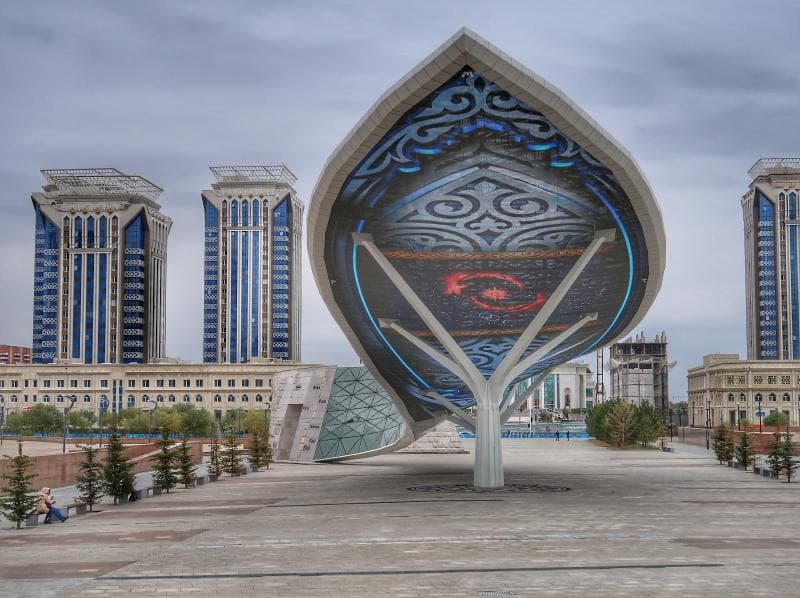
Explore the Kazakh Eli Monument in Independence Square, Astana, Kazakhstan. Discover its rich history, cultural symbolism, and stunning architecture.
Overview
At the heart of Astana, Kazakhstan's vibrant capital, lies Independence Square, a grand civic space dominated by the magnificent Kazakh Eli Monument. This towering memorial structure is not merely a piece of architecture but a profound symbol of the nation's hard-won sovereignty and its aspirations for the future. Opened in 2009, the monument serves as the focal point of the square, an open public center designed to embody the spirit of modernity and national pride.
The centerpiece is a majestic 91-meter-tall snow-white stele, famously crowned with a gilded figure of the mythical Samruk bird. The monument's impressive scale and intricate details invite visitors to explore its historical narratives etched in bronze, offering a tangible connection to Kazakhstan's rich past and its journey to independence.
History & Cultural Background
The creation of Independence Square and the Kazakh Eli Monument marked a significant milestone in Astana's urban development following its designation as the capital in 1997. The ceremonial opening of the 'Kazakh Eli' ensemble took place in October 2009, with architects Sarsenbek Zhunisov and Zhanbyrshi Nurkenov credited for merging deep symbolism with modern design. The monument's name, 'Kazakh Eli,' translates to 'The Land of Kazakhs,' reflecting its core purpose as a symbol of the country's national unity and sovereignty.
The height of the stele, precisely 91 meters, is a deliberate choice, symbolizing the year 1991 when Kazakhstan gained state independence from the Soviet Union. This numerical symbolism anchors the monument firmly in the nation's pivotal historical moment. The design of the complex, incorporating elements of white marble, granite, bronze, and gold, reflects a blend of traditional Kazakh motifs and contemporary architectural vision, creating an impressive architectural space that stands for the basic values of Kazakhstani statehood.
What Makes It Special
The Kazakh Eli Monument distinguishes itself through its powerful symbolism and artistic execution. The gilded Samruk bird atop the stele is a central element, representing a mythical creature from Kazakh folklore that is a guardian and messenger of prosperity. This imagery encapsulates the nation's hopes for a bright and prosperous future. Below this, at the monument's base, lie four intricately crafted bronze bas-reliefs, each telling a vital story from Kazakhstan's history.
These bas-reliefs depict themes such as 'The First President and the people', 'Kaharmandyk' (Courage), 'Zhasampazdyk' (Creation), and 'Bolashak' (Future), offering a comprehensive narrative of the country's journey from its ancient roots to its independent modern state. One bas-relief notably features the figure of the first president, Nursultan Nazarbayev, taking an oath with his hand on the Constitution, symbolizing the supremacy of law. The surrounding arc-shaped marble colonnade, 120 meters long with 28 nine-meter-high columns, further enhances the monument's solemn grandeur and acts as a visual embrace of the square's expansive territory.
Stories, Fun Facts & Local Details
Independence Square and the Kazakh Eli Monument are more than just landmarks; they are living spaces ingrained in the daily life and ceremonial events of Astana. Throughout the year, the square hosts various significant events, including national holidays, official ceremonies, and even military processions, underlining its role as a crucial civic and symbolic center.
The square's thoughtful design, featuring wide open spaces, green areas, and modern fountains, makes it a popular destination for both residents and visitors. It's a place where families gather, friends meet, and tourists capture the grandeur of modern Kazakhstan. The entire monument, particularly the white marble and gold elements, is said to 'shine in the sun,' creating a dazzling spectacle, especially striking at sunset. This glow is often interpreted as highlighting the 'purity of intent' and the scale of the young state's achievements.
Visitor Perspective
Visiting the Memorial Structures at Independence Square offers a profoundly enriching experience for any traveler. The site is freely accessible 24/7, allowing for flexible exploration at any time of day. An early morning visit can provide a sense of peaceful contemplation amidst the monumental scale, while an evening visit reveals the square and monument bathed in spectacular city lighting.
Begin your exploration at the base of the Kazakh Eli Monument to closely observe the detailed bronze bas-reliefs and appreciate the historical narratives they convey. Photography enthusiasts will find ample inspiration, as the open space allows for diverse angles to capture the monument, often with Astana's futuristic skyline as a stunning backdrop. The square's location makes it an ideal starting point for discovering other cultural institutions nearby, such as the National Museum of the Republic of Kazakhstan and the Hazrat Sultan Mosque, further deepening your understanding of this dynamic capital.
Coordinates: 71.46992181, 51.12205561
View on Google Maps💬 How Travelers Describe This Place
Based on community votes
Photogenic
886Unique
443Beautiful
310Must See
277Interesting
233
Traveler Stories
Discover memorable experiences shared by travelers who have visited this place.
No traveler stories yet.
Be the first traveler to share what made this place memorable.

Tour
By
Spot
Discover amazing places around the world. Your journey starts here.
Explore
© 2026 TourBySpot. All rights reserved.