Meat Hall
Dushanbe, Tajikistan
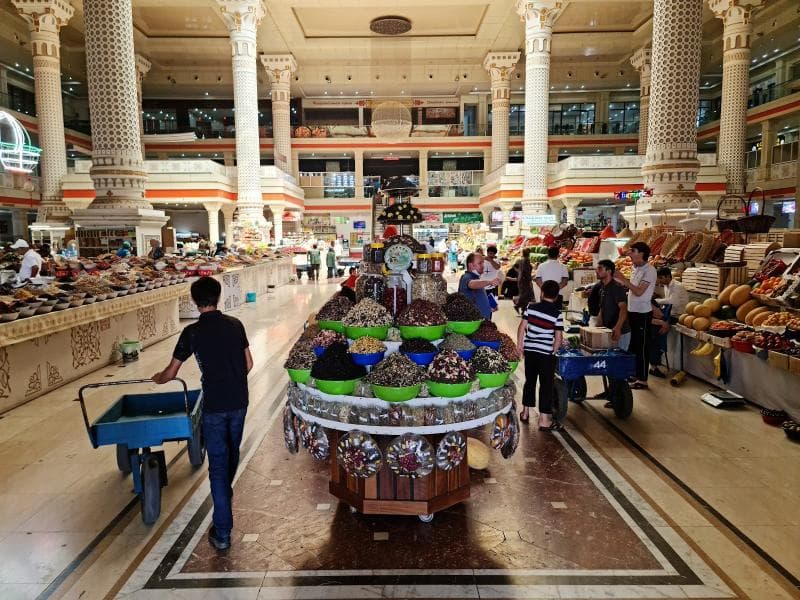
Explore the vibrant Meat Hall in Mehrgon Market, Dushanbe, Tajikistan. Discover fresh local meats, cultural traditions, and an authentic Tajik market experience.
Overview
Stepping into the Meat Hall of Mehrgon Market in Dushanbe, Tajikistan, is an immersive journey into the heart of Tajik culinary tradition. This modern market complex, inaugurated in 2014, stands as a testament to Dushanbe's evolution, replacing older, more traditional bazaars like Barakat and Green Bazaar with a grander, more structured space. Mehrgon Market itself is an architectural marvel, often described as resembling a palace rather than a typical market, with its imposing arches, domes, and richly adorned facades that echo Islamic and Silk Road influences. Spread across three stories and encompassing over 10,000 square meters, it’s a vibrant hub where the focus is overwhelmingly on food. The Meat Hall, a dedicated section within this expansive complex, is a central point for residents and visitors seeking high-quality local produce.
Unlike the bustling, often chaotic open-air markets of the past, Mehrgon Market offers a clean, organized, and climate-controlled environment, ensuring a comfortable experience for shoppers year-round. The Meat Hall is a prime example of this modernity, presenting a pristine and well-regulated space for the sale of fresh cuts, reflecting a commitment to quality and hygiene that stands out in Central Asian markets.
History & Cultural Background
The city of Dushanbe itself bears a historical connection to markets, with its name translating to 'Monday,' traditionally a market day. Bazaars have historically been the very pulse of the city, around which life and commerce coalesced. The development of Mehrgon Market was a deliberate step to create a contemporary commercial hub while preserving the spirit of the traditional bazaar. Its name, 'Mehrgon,' is derived from the ancient Persian harvest festival celebrated in October, a fitting tribute that symbolizes abundance and the rich agricultural heritage of the region. This market serves not just as a place of trade, but as a vital cultural institution, connecting generations through shared traditions of food, community, and commerce.
What Makes It Special
The Meat Hall is a highlight within Mehrgon Market, distinctly separating itself from other sections like dairy, produce, and dry goods. Here, the emphasis is on freshness and variety, offering premium beef and lamb, including the renowned Hissar breed, famous in Tajikistan. Visitors to the Meat Hall are often struck by the meticulous attention to detail; early mornings reveal butchers expertly sharpening their knives, preparing for the day's trade. A key aspect that sets Mehrgon's Meat Hall apart is its commitment to quality assurance. An on-site laboratory conducts daily inspections of all perishable goods, ensuring they meet rigorous health and safety standards. Vendors are often uniformed and wear gloves and aprons, contributing to the clean and professional atmosphere. This modern approach ensures a high level of transparency and trust, offering a stark but welcome contrast to the less regulated environments sometimes found in older markets.
Stories, Fun Facts & Local Details
Visiting the Meat Hall, especially during the early morning hours, offers a unique glimpse into the daily life of Dushanbe. This is when local chefs and restaurant buyers meticulously select the finest cuts, highlighting the importance of the market to the city's culinary scene. While observing, you might notice 'check-scales' strategically placed in the center of the hall, a thoughtful detail promoting transparency and fair trade for all customers. Haggling, a time-honored tradition in Central Asian bazaars, is still practiced here, though it's typically done with a smile and a friendly demeanor. It's not uncommon for a vendor, in a gesture of Tajik hospitality, to offer a small complimentary item, perhaps a piece of fruit or fresh bread, enhancing the personal connection between seller and buyer. The journey of Mehrgon from its inception wasn't without its challenges; initially, the relocation from the old Green Bazaar faced skepticism, but it has since blossomed into a beloved and successful institution.
Visitor Perspective
For a curious traveler, the Meat Hall inside Mehrgon Market provides an authentic and engaging cultural experience without the overwhelm that can sometimes accompany more traditional markets. The modern infrastructure, combined with the vibrant display of fresh meat, offers a comfortable yet culturally rich environment. Unlike some tourist traps, vendors are generally not pushy, allowing visitors to explore at their own pace and soak in the atmosphere. It's an opportunity to witness how traditional Tajik life and commerce thrive within a contemporary setting, providing a window into the local diet and daily routines. Many find the experience of a lavish, almost palatial market selling everyday goods quite surreal, making it a memorable stop. The Meat Hall is more than just a place to buy meat; it's a sensory immersion, filled with the sights, sounds, and authentic flavors that truly encapsulate the essence of Dushanbe.
Coordinates: 68.79907352489063, 38.586261640786596
View on Google Maps💬 How Travelers Describe This Place
Based on community votes
Unique
639Interesting
526Must See
421Beautiful
366Photogenic
181
Traveler Stories
Discover memorable experiences shared by travelers who have visited this place.
No traveler stories yet.
Be the first traveler to share what made this place memorable.

Tour
By
Spot
Discover amazing places around the world. Your journey starts here.
Explore
© 2026 TourBySpot. All rights reserved.