Mausoleum Hall
Hanoi, Vietnam
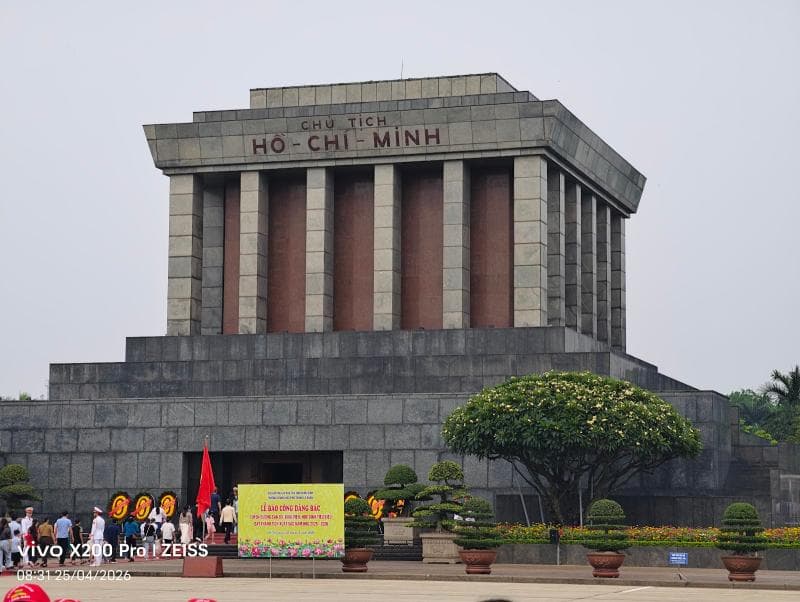
Explore the solemn Mausoleum Hall within the Ho Chi Minh Mausoleum in Hanoi, Vietnam, the revered resting place of 'Uncle Ho'.
Overview
The Mausoleum Hall forms the revered core of the Ho Chi Minh Mausoleum in Hanoi, Vietnam, serving as the solemn final resting place for President Ho Chi Minh, the revolutionary leader and founder of modern Vietnam. Located prominently in the center of historic Ba Dinh Square, this hallowed chamber draws countless visitors seeking to pay their respects to 'Uncle Ho', as he is affectionately known. The entire structure, including the inner hall, stands as a profound symbol of Vietnamese national identity and gratitude, deeply embedded in the nation's historical consciousness.
History & Cultural Background
Despite Ho Chi Minh's personal wish to be cremated and have his ashes scattered across Vietnam, his successors, driven by the profound love and respect of the Vietnamese people, decided to preserve his body for future generations. Construction of the Ho Chi Minh Mausoleum commenced on September 2, 1973, and was formally inaugurated on August 29, 1975, shortly after the end of the Vietnam War. The design was inspired by Lenin's Mausoleum in Moscow, reflecting Soviet architectural influence, yet it consciously incorporates distinct Vietnamese elements, such as a sloping roof. The monumental effort involved thousands of workers and utilized materials sourced from all corners of Vietnam, including marble from Thanh Hoa and wood from the Central Highlands, symbolizing national unity and collective reverence.
What Makes It Special
Inside the Mausoleum Hall, President Ho Chi Minh's embalmed body rests within a glass case, bathed in dim lights, creating a profoundly solemn and sacred atmosphere. The chamber is adorned with polished gray, black, and red stone, with towering granite columns and deep crimson marble walls framing his resting place. An honor guard stands vigil around the clock, emphasizing the immense respect and protection accorded to the national hero. The strict silence and continuous movement required of visitors inside underscore the sanctity of the space. The mausoleum's exterior, a tiered structure resembling a blooming lotus, symbolizes purity and resilience, further enhancing its special cultural significance.
Stories, Fun Facts & Local Details
The preservation of Ho Chi Minh's body is a testament to the dedication of Vietnamese and Soviet scientists. Following his passing in 1969, Soviet experts, who had experience with Lenin's preservation, assisted Vietnam. The embalming process involves complex chemical solutions and meticulous upkeep to maintain his appearance. Interestingly, his remains are annually sent for maintenance, historically to Russia, ensuring their long-term preservation. For many Vietnamese, visiting 'Uncle Ho' is a pilgrimage, an act of profound remembrance and patriotism, rather than mere tourism. The extensive gardens surrounding the mausoleum feature nearly 250 different species of plants and flowers, all collected from various regions of Vietnam, with 79 cycad trees specifically planted to represent his 79 years of life.
Visitor Perspective
Visiting the Mausoleum Hall is an experience that demands reverence and adherence to strict protocols. Visitors are expected to dress respectfully, avoiding shorts, sleeveless shirts, and mini-skirts. Silence is mandatory inside the hall, and photography is strictly prohibited. Guests are required to move continuously in an orderly line, ensuring a brief yet impactful encounter. These rules are in place to maintain the solemnity of the site and honor the deep respect the Vietnamese people hold for President Ho Chi Minh. The queues can be long, particularly on national holidays, yet the opportunity to witness the preserved body of their revered leader remains a deeply moving experience for both local and international visitors.
Coordinates: 105.83472, 21.03667
View on Google Maps💬 How Travelers Describe This Place
Based on community votes
Interesting
995Must See
989Unique
603Beautiful
581Photogenic
388
Traveler Stories
Discover memorable experiences shared by travelers who have visited this place.
No traveler stories yet.
Be the first traveler to share what made this place memorable.

Tour
By
Spot
Discover amazing places around the world. Your journey starts here.
Explore
© 2026 TourBySpot. All rights reserved.