Matthias Fountain
Budapest, Hungary
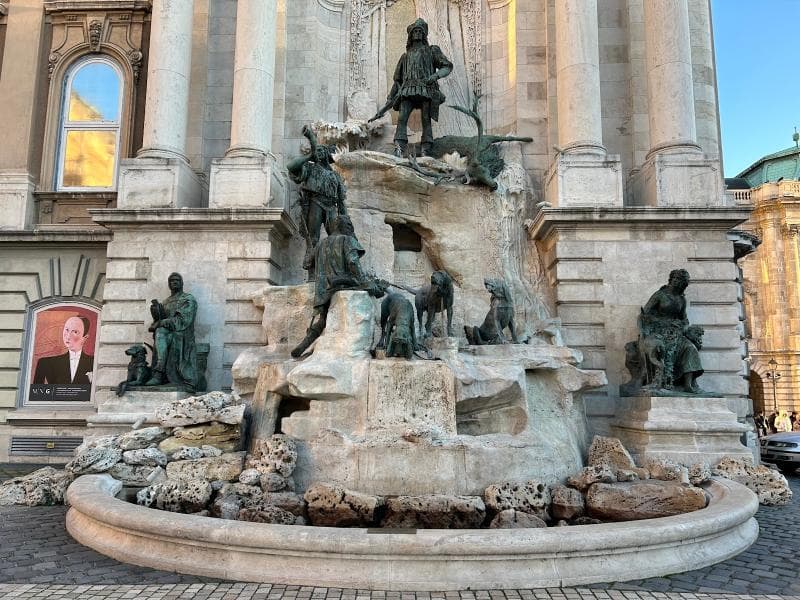
Discover Matthias Fountain, a stunning Neo-Baroque masterpiece in Budapest's Buda Castle. Explore its history, the tragic legend of King Matthias and Ilonka, and its intricate sculptures.
Overview
Nestled within the historic Buda Castle complex in Budapest, Hungary, the Matthias Fountain stands as a monumental Neo-Baroque masterpiece. Often referred to as the 'Trevi Fountain of Budapest,' this intricately sculpted fountain captivates visitors with its dramatic depiction of a royal hunting scene. It graces the western forecourt of the Buda Castle, specifically in the Hunyadi Court, offering a picturesque and culturally rich experience for those exploring Hungary's capital.
History & Cultural Background
The Matthias Fountain, known in Hungarian as Mátyás kútja, was designed by the acclaimed sculptor Alajos Stróbl, with the support of architect Alajos Hauszmann, who was instrumental in the reconstruction of the Royal Palace. Work on this grand project commenced in 1899, and the fountain was officially inaugurated in 1904, in the presence of Emperor Franz Joseph I. The sculpture is a remarkable example of Neo-Baroque artistry, though it also incorporates subtle Art Nouveau elements in its decorative details.
Beyond its artistic merit, the fountain carries a deeper cultural significance. It was created during a period when Hungarian noblemen expressed a strong desire for an independent kingdom within the Habsburg-led Austro-Hungarian Empire. Its prominent placement within the Buda Castle, the residence of Austrian Habsburg kings, subtly conveyed this nationalistic sentiment. The fountain pays homage to King Matthias Corvinus, a revered Renaissance ruler of Hungary, whose reign from 1458 to 1490 was marked by significant advancements in art, culture, and law. Remarkably, the fountain sustained only minor damage during World War II, with the middle dog sculpture being destroyed but later reconstructed. It underwent further restoration in 2010 and 2020, ensuring its enduring beauty for future generations.
What Makes It Special
The Matthias Fountain's allure lies in its detailed bronze figures and theatrical composition. At its heart is King Matthias Corvinus, triumphantly standing with a crossbow over a slain stag, surrounded by his three loyal hunting dogs. His huntsmen aids, one blowing a horn and another resting, complete the dynamic central group. On one side, the delicate figure of Szép Ilonka (Beautiful Helen), a peasant girl, gently caresses a young deer, her gaze directed towards the king. On the opposite side sits Galeotto Marzio, King Matthias' Italian chronicler, diligently recording the king's deeds.
The overall arrangement of the figures and the way water cascades through the rock formations bear a striking resemblance to the famous Trevi Fountain in Rome, earning it the affectionate nickname 'Trevi Fountain of Budapest.' Its artistic excellence, meticulous craftsmanship, and the way it blends historical narrative with folklore contribute to its unique charm, making it a powerful visual representation of Hungary's past and identity.
Stories, Fun Facts & Local Details
The Matthias Fountain is steeped in a poignant Hungarian legend, often referred to as the tale of King Matthias and Szép Ilonka. The story recounts how King Matthias, known for often hunting in disguise to understand his kingdom better, encountered the beautiful peasant girl Ilonka. They fell deeply in love at first sight. However, when Ilonka later discovered that her beloved was, in fact, the King of Hungary, she was overcome with the realization that their love could never culminate in marriage due to their differing social statuses. Heartbroken, she is said to have died from sorrow. The fountain subtly captures this melancholic romance, with Ilonka's figure depicted shielding a fawn, watching the king with longing.
Another fascinating detail is that the stag in the fountain was modeled after a real animal. According to legend, the sculptor Alajos Stróbl used a majestic stag that had been killed by poachers in 1896 as his model. Furthermore, the middle hunting dog in the sculpture group was destroyed during World War II and was later reconstructed, though some note it as being of a slightly different quality than the original two. A popular tradition, similar to that of its Roman counterpart, encourages visitors to toss coins into the fountain. It's believed that doing so ensures a safe return to Budapest. Interestingly, the coins collected from the fountain are now put towards educational programs for students, adding a modern philanthropic layer to this old custom.
Visitor Perspective
Visiting the Matthias Fountain offers more than just a glimpse of a beautiful sculpture; it's an immersion into Hungarian history, art, and folklore. Located prominently within the Buda Castle complex, it's easily accessible and provides a peaceful spot for reflection amidst the bustling Castle District. The intricate details of each figure invite close inspection, allowing travelers to unravel the narrative woven into the bronze and stone. Whether you're a history enthusiast captivated by King Matthias Corvinus's legacy or a romantic drawn to the tragic love story of Ilonka, the fountain provides a profound connection to the cultural heart of Budapest. It's an unmissable stop for anyone exploring Buda Castle, promising both visual splendor and a rich tapestry of stories. Its dramatic backdrop makes for exceptional photographs, capturing memories of this unique landmark.
Coordinates: 19.03908, 47.49617
View on Google Maps💬 How Travelers Describe This Place
Based on community votes
Interesting
915Must See
211Unique
123Beautiful
74Photogenic
53
Traveler Stories
Discover memorable experiences shared by travelers who have visited this place.
No traveler stories yet.
Be the first traveler to share what made this place memorable.

Tour
By
Spot
Discover amazing places around the world. Your journey starts here.
Explore
© 2026 TourBySpot. All rights reserved.