Marble Facade
Ashgabat, Turkmenistan
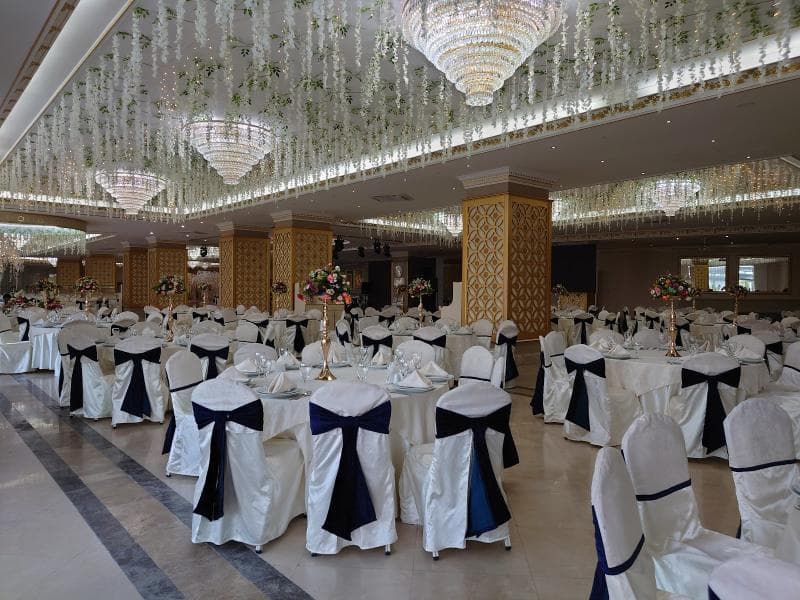
Explore the majestic Marble Facade of the Wedding Palace (Bagt Koshgi) in Ashgabat, Turkmenistan. Discover its unique architecture and cultural significance.
Overview
Nestled in the heart of Ashgabat, Turkmenistan, the Wedding Palace, locally known as Bagt Koshgi or 'Palace of Happiness,' stands as a testament to the city's unique architectural vision. This magnificent eleven-story structure is not just a civil registry building but a prominent landmark renowned for its dazzling exterior, dominated by an extensive use of white marble. The palace’s striking facade is a prime example of Ashgabat's distinction as the 'White Marble City,' a title earned due to its extraordinary concentration of white marble-clad buildings.
Completed in 2011 by the Turkish company Polimeks, the Wedding Palace covers an impressive area of over 38,000 square meters. Its design features a three-tiered base, with each side shaped like an eight-pointed star, a significant motif in Turkmen culture. Crowning the edifice is a colossal 32-meter diameter globe, symbolically representing planet Earth and adorned with a golden map of Turkmenistan. This grand scale and intricate detailing, particularly the gleaming white marble, make the Wedding Palace a captivating sight and a focal point for both locals and international visitors.
History & Cultural Background
The Wedding Palace 'Bagt Koshgi' was inaugurated in 2011, coinciding with the 20th anniversary of Turkmenistan's independence. This timing underscores its significance not only as a functional building but also as a symbol of the nation's progress and cultural pride. The choice of white marble for its exterior is deeply rooted in Ashgabat's identity. The city holds a Guinness World Record for having the highest density of white marble-clad buildings globally, with hundreds of structures showcasing this pristine material.
The extensive use of white marble across Ashgabat was a deliberate architectural strategy to create a modern, unified, and visually stunning capital, reflecting the country's national identity and wealth. The Wedding Palace perfectly embodies this vision, designed to host one of life's most significant events – marriage. The interior also incorporates traditional Turkmen styles, offering a blend of modern grandeur and rich cultural heritage for couples embarking on their marital journey.
What Makes It Special
What truly sets the Wedding Palace apart is its breathtaking marble facade. The sheer quantity and pristine quality of the white marble cladding contribute to the building's radiant appearance, especially under the bright Ashgabat sun. This extensive use of marble, a hallmark of Ashgabat's unique urban landscape, transforms the building into a gleaming beacon, reflecting light and creating a dazzling spectacle. The facade's pristine white contrasts dramatically with the intricate gold accents and the blue skies of Turkmenistan, making it incredibly photogenic.
Beyond its material, the architectural design itself is extraordinary. The staggered eight-pointed star shape of the lower tiers, leading up to the giant globe, is both aesthetically pleasing and culturally significant, representing a traditional Turkmen motif. The combination of monumental scale, modern design, and traditional symbolism, all encased in immaculate white marble, solidifies its status as an architectural marvel and a true highlight of Ashgabat.
Stories, Fun Facts & Local Details
The name 'Bagt Koshgi' translates to 'Palace of Happiness,' perfectly encapsulating its purpose as a place where new families begin their lives together. It is a hub for all things wedding-related, housing not only ceremonial halls but also shops for bridal dresses, jewelry rentals, beauty salons, and photo studios. The palace even includes a 22-room hotel for newlyweds and their guests.
One of the most notable features inside is the 'Shamchyrag' Golden Hall, located on the ninth floor within the symbolic globe, reserved for grand wedding celebrations. Historically, couples wishing to marry in this opulent setting would have their photo taken in front of a portrait of the President of Turkmenistan, a unique local tradition. The palace's four entrances are said to symbolize the four cardinal directions, adding another layer of symbolic depth to its design.
Visitor Perspective
Approaching the Wedding Palace, visitors are immediately struck by its grand scale and the mesmerizing gleam of its marble facade. The building's bright white surfaces, characteristic of Ashgabat's architecture, create an almost ethereal presence. While the interior has formal dress codes and is a functioning civil registry, the exterior and its surrounding grounds are generally open for visitors to admire.
Many recommend visiting in the evening when the entire structure, including its white marble facade, is illuminated with colored lights, creating a spectacular and dynamic display. The palace offers a rare glimpse into Turkmen social life and contemporary ceremony, acting as a popular backdrop for cherished memories and a symbol of national pride. Its majestic presence and distinctive design make it an unmissable stop for anyone exploring Ashgabat.
Coordinates: 58.34146, 37.92647
View on Google Maps💬 How Travelers Describe This Place
Based on community votes
Must See
491Photogenic
443Beautiful
414Interesting
310Unique
277
Traveler Stories
Discover memorable experiences shared by travelers who have visited this place.
No traveler stories yet.
Be the first traveler to share what made this place memorable.

Tour
By
Spot
Discover amazing places around the world. Your journey starts here.
Explore
© 2026 TourBySpot. All rights reserved.