Marble Door
Istanbul, Turkey

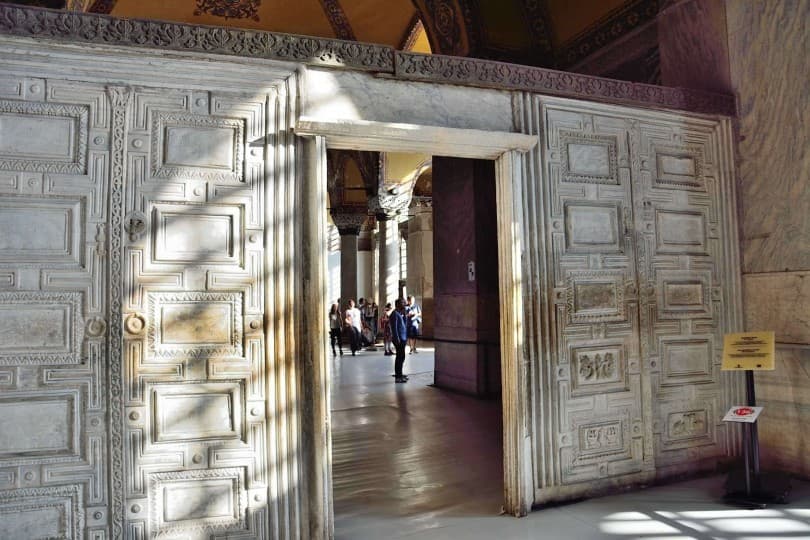
Discover the Marble Door, also known as the 'Gate of Heaven and Hell', located within the historic Hagia Sophia in Istanbul, Turkey.
Overview
Deep within the awe-inspiring Hagia Sophia in Istanbul, Turkey, lies a fascinating and historically significant architectural element known as the Marble Door. This striking double-leaved doorway, crafted from beautifully veined marble, is nestled in the southern upper gallery of the grand edifice. More than just an ornate entrance, the Marble Door once served as a crucial threshold, delineating sacred spaces and marking the passage to areas reserved for important ecclesiastical and imperial functions.
Often referred to as the 'Gate of Heaven and Hell,' this ancient portal embodies layers of history, symbolism, and meticulous Byzantine craftsmanship. It stands as a silent witness to centuries of religious ceremonies, political decisions, and the enduring grandeur of what was once the largest church in the world. Visitors ascending to the upper galleries to admire the mosaics will inevitably encounter this enigmatic structure, inviting contemplation on its storied past.
History & Cultural Background
The Hagia Sophia itself boasts a rich and complex history, first consecrated as a cathedral in 537 CE under Emperor Justinian I, later converted into a mosque, then a museum, and most recently, reconverted into a mosque in 2020. The Marble Door's origins are deeply intertwined with the Byzantine period of this magnificent structure.
Historians suggest that the Marble Door dates to the middle Byzantine period, though some scholars posit it could be contemporary with the initial 6th-century construction of the Hagia Sophia. There is also a theory that it might have been repurposed from another Hellenistic building, brought to the Hagia Sophia to serve a new purpose.
Its primary function was to separate the western and southern galleries, creating an exclusive space for synod members and imperial ceremonies. This area, sometimes called the Council Hall, was where significant religious meetings and decisions of patriarchate officials took place. Passing through the Marble Door meant entering a zone of profound spiritual and political authority within the Byzantine Empire.
What Makes It Special
What sets the Marble Door apart is not just its historical role, but its exquisite artistry and the deep symbolism embedded within its design. Crafted from finely veined white marble, the door's panels feature deliberate arrangements that create captivating mirror-like patterns, showcasing the Byzantine craftsmen's ability to turn natural stone into abstract art.
The door is adorned with low-relief motifs depicting fruits and fish, details that offer clues to its symbolic significance. The sobriety and refined decoration reflect the aesthetic tastes of the era, emphasizing a blend of natural beauty and spiritual meaning. It is a testament to the fact that even functional architectural elements were imbued with profound artistic and cultural value during the Byzantine period.
Stories, Fun Facts & Local Details
The most compelling aspect of the Marble Door is its traditional moniker: the 'Gate of Heaven and Hell.' This evocative name stems from a medieval Byzantine interpretation where one side, often the decorated side with its intricate carvings, was believed to symbolize heaven, while the plainer side represented hell. This duality reflects the Byzantine notions of judgment and the sacred threshold one crosses when entering holy ground.
Imagine the Byzantine emperors, patriarchs, and high-ranking clergy passing through this very door, its polished marble echoing with their footsteps, as they convened for critical synods and imperial events. The depictions of fruits and fish on the panels are not merely decorative; they are thought to carry Christian symbolism, perhaps representing sustenance, spiritual abundance, or even specific parables. These subtle details enrich the narrative of a structure that once delineated the earthly from the divine within the grand cathedral.
Visitor Perspective
For the curious traveler exploring the vast interiors of the Hagia Sophia, locating the Marble Door offers a unique and intimate connection to its ancient past. You will find it in the south upper gallery, a journey that also rewards you with breathtaking panoramic views of the main nave below and the magnificent mosaics.
As you approach this ancient portal, take a moment to observe the intricate veining of the marble, noticing how the craftsmen artfully arranged the pieces. Ponder the 'Heaven and Hell' symbolism and the countless historical figures who walked through this very passage. It's a moment to reflect on the layers of history that permeate every stone of the Hagia Sophia, offering a quiet yet profound encounter with Istanbul's rich cultural heritage. The Marble Door is not just an artifact; it is a tangible piece of history, silently inviting you to step back in time.
Coordinates: 28.9799, 41.0085
View on Google Maps💬 How Travelers Describe This Place
Based on community votes
Interesting
934Must See
705Unique
449Photogenic
279Beautiful
256
Traveler Stories
Discover memorable experiences shared by travelers who have visited this place.
No traveler stories yet.
Be the first traveler to share what made this place memorable.

Tour
By
Spot
Discover amazing places around the world. Your journey starts here.
Explore
© 2026 TourBySpot. All rights reserved.