Main Viewing Deck
Bali, Indonesia
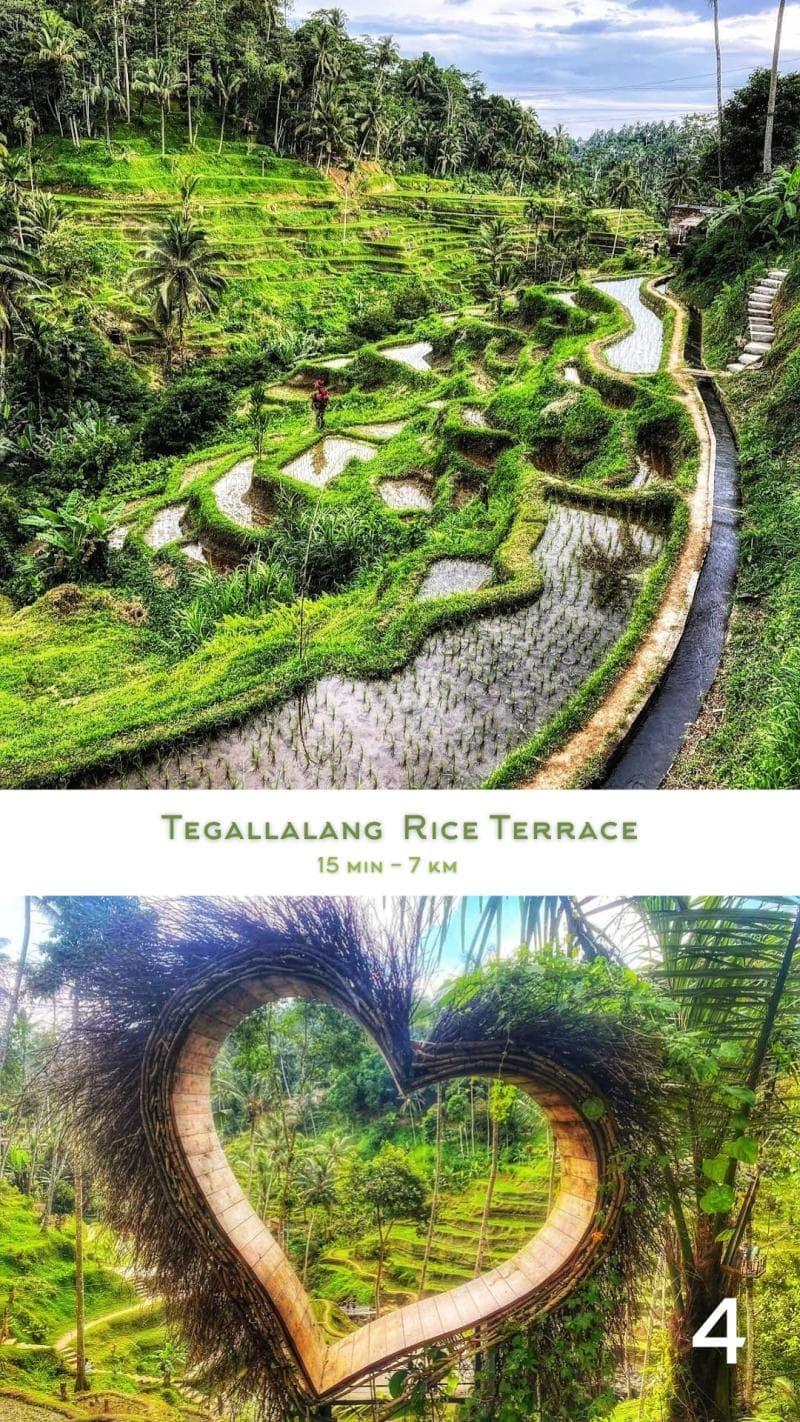
Explore the Main Viewing Deck at Tegallalang Rice Terrace in Bali, Indonesia. Discover its history, the Subak irrigation system, and stunning panoramic views.
Overview
Perched majestically amidst the lush landscapes of Bali, Indonesia, the Tegallalang Rice Terrace offers a breathtaking tableau of agricultural artistry. Within this expansive valley, the concept of a 'Main Viewing Deck' refers less to a singular, built structure and more to the prime elevated areas that afford visitors unparalleled panoramic vistas of the iconic terraced rice fields. These viewpoints, often found along the roadside and at the entrances to the terraces, provide the initial and most comprehensive visual embrace of this UNESCO World Heritage site. The terraces themselves are a testament to centuries of ingenious farming and a deep respect for nature, making the main viewing areas ideal for soaking in both their beauty and their profound cultural significance.
Located approximately 9 to 10 kilometers north of Ubud, Tegallalang is an accessible and highly celebrated destination, drawing travelers from across the globe to witness its verdant, sculpted hillsides. The main viewing points serve as a gateway to understanding Bali's agricultural heritage, offering sweeping views that stretch down into the Ceking valley, where emerald-green paddies cascade in graceful steps towards the river basin.
History & Cultural Background
The beauty of the Tegallalang Rice Terrace is deeply intertwined with Bali's rich history and its unique agricultural system known as Subak. This traditional cooperative irrigation system dates back over a thousand years, with its origins attributed to the revered holy man Rsi Markandeya in the 8th or 9th century.
Subak is far more than just an irrigation technique; it is a profound philosophical framework that reflects the Balinese philosophy of 'Tri Hita Karana'. This principle emphasizes the harmonious relationship between three essential elements: God, humanity, and nature. Under the Subak system, water is treated as a sacred gift from Dewi Danu, the goddess of water and lakes, and is distributed equitably among farmers through a network of canals and bamboo pipes, ensuring that every farmer receives a fair share regardless of their plot's position. This democratic and cooperative approach has sustained the local population for centuries, proving resilient through various historical shifts. Small shrines dedicated to Dewi Sri, the Goddess of Rice, are dotted throughout the landscape, highlighting the spiritual dimension of rice cultivation here.
What Makes It Special
The Tegallalang Rice Terrace stands out as a unique marvel due to its exceptional blend of natural beauty and human ingenuity. The terraces are meticulously carved into the steep hillsides, transforming the landscape into a living sculpture of layered green steps. From the main viewing areas, you witness an 'amphitheater of green and brown,' where the paddies follow the natural contours of the Ceking valley. This dramatic effect is particularly striking, presenting an ever-changing palette of greens depending on the planting and harvesting cycles.
The engineering behind these terraces, managed by the ancient Subak system, is a testament to sustainable agriculture that has thrived for over a millennium. This intricate network of retaining walls, channels, and bamboo pipes ensures efficient water distribution, preventing soil erosion and maximizing arable land on challenging terrain. The sheer scale and enduring functionality of this system, coupled with its UNESCO World Heritage status, underscore its global significance.
Stories, Fun Facts & Local Details
Beyond the sweeping views, the Tegallalang Rice Terrace tells a story of enduring tradition and community. Local farmers continue to cultivate these fields using age-old methods, often seen wearing traditional conical hats (caping) as they tend to their crops by hand. Visitors might even catch a glimpse of the planting or harvesting rituals, offering an authentic insight into Balinese rural life. Historically, local elders who own and cultivate the land would often invite visitors to sample green coconut drinks or purchase woven hats made from coconut leaves.
While the terraces remain a vital agricultural landscape, they have also embraced tourism. You'll find numerous art kiosks and cafés near the viewing ledges, providing spots to relax and take in the scenery. For the adventurous, giant swings and photo platforms have become popular attractions, allowing visitors to 'soar' above the terraces for unique photo opportunities, though these often come with separate fees. It's also common for farmers along trekking paths to request small donations for passage across private land, a custom that reflects the evolving relationship between local livelihoods and international visitors.
Visitor Perspective
Arriving at the main viewing areas of Tegallalang Rice Terrace is often described as stepping into a living postcard. The high roadside location provides a cool and breezy vantage point, making it a popular spot for travelers to pause and capture photos. The visual experience from these elevated spots is truly mesmerizing, with layers of green stretching as far as the eye can see.
For the best experience, many recommend visiting early in the morning, ideally between 7:00 AM and 9:00 AM. During these hours, the air is cooler, the light is soft and golden, perfect for photography, and the crowds are significantly smaller, allowing for a more tranquil appreciation of the landscape. The silence, occasionally broken by the gentle trickle of water through the Subak system, adds to the serene atmosphere. Whether you choose to simply gaze from an overlook or venture down the stepped pathways, the main viewing deck sets the stage for an unforgettable encounter with Bali's natural and cultural splendor.
Coordinates: 115.28054, -8.43362
View on Google Maps💬 How Travelers Describe This Place
Based on community votes
Unique
953Must See
695Interesting
658Photogenic
69Beautiful
22
Traveler Stories
Discover memorable experiences shared by travelers who have visited this place.
No traveler stories yet.
Be the first traveler to share what made this place memorable.

Tour
By
Spot
Discover amazing places around the world. Your journey starts here.
Explore
© 2026 TourBySpot. All rights reserved.