Main Nave
Pristina, Kosovo
Explore the Main Nave of Pristina's Cathedral of Saint Mother Teresa, Kosovo. Discover its Neo-Romanesque architecture, spiritual ambiance, and cultural significance.
Overview
Step inside the Main Nave of the Cathedral of Saint Mother Teresa in Pristina, Kosovo, and discover a space designed for both reverence and reflection. This grand interior serves as the spiritual heart of the cathedral, welcoming visitors into its spacious embrace. Conceived in a Neo-Romanesque and Neo-Renaissance style, the cathedral, and specifically its nave, is a prominent landmark, recognized as the largest Roman Catholic church in the Balkans. It stands not only as a place of worship for Pristina's Catholic community but also as a profound symbol of interfaith harmony and national pride within a predominantly Muslim nation.
As you enter, the sheer scale of the main nave is immediately apparent. It follows a traditional basilica layout, characterized by its wide central vault and expansive floor plan, offering ample room for a large congregation. The architecture emphasizes height and light, with elevated ceilings and strategically placed windows that allow natural light to filter in, creating an atmosphere of peace and openness. This central area is where services and ceremonies take place, providing a focal point for the spiritual life of the cathedral.
History & Cultural Background
The journey to realize the Cathedral of Saint Mother Teresa, and its impressive Main Nave, is steeped in significant cultural and historical context for Kosovo. The idea to honor Mother Teresa, an Albanian nun renowned worldwide for her humanitarian work, emerged in the early 2000s. The foundation stone was symbolically laid in 2005 by the then-President of Kosovo, Ibrahim Rugova, a Muslim leader, signaling the nation's commitment to religious tolerance and pluralism from the very outset.
Construction began in 2007, and while initially inaugurated in an unfinished state in 2010, marking the anniversary of Mother Teresa's passing, it was formally consecrated in 2017. This timeline highlights a period of post-war reconstruction and the desire to celebrate Kosovo's diverse heritage. The decision to dedicate such a significant structure to Mother Teresa was deeply rooted in shared Albanian ethnic identity, transcending purely religious affiliations and embodying a wider sense of national pride.
What Makes It Special
The Main Nave's distinction lies in its blend of architectural grandeur and symbolic significance. It's a classic three-aisled basilica, designed to accommodate both the everyday faithful and large ceremonial gatherings. The spaciousness of the nave, coupled with its elegant Neo-Romanesque style, offers a tranquil retreat from the bustling city outside. Visitors often note the calming effect created by the light walls and the way light plays through the windows, making it an ideal space for quiet contemplation and spiritual reflection.
Beyond its aesthetic appeal, the main nave is special because it embodies the spirit of its namesake, Mother Teresa. The very existence of this prominent Catholic cathedral in a nation where Catholics are a minority underscores a powerful message of coexistence and respect among different faiths. It represents a collective tribute to a humanitarian figure whose legacy resonates deeply across all communities in Kosovo.
Stories, Fun Facts & Local Details
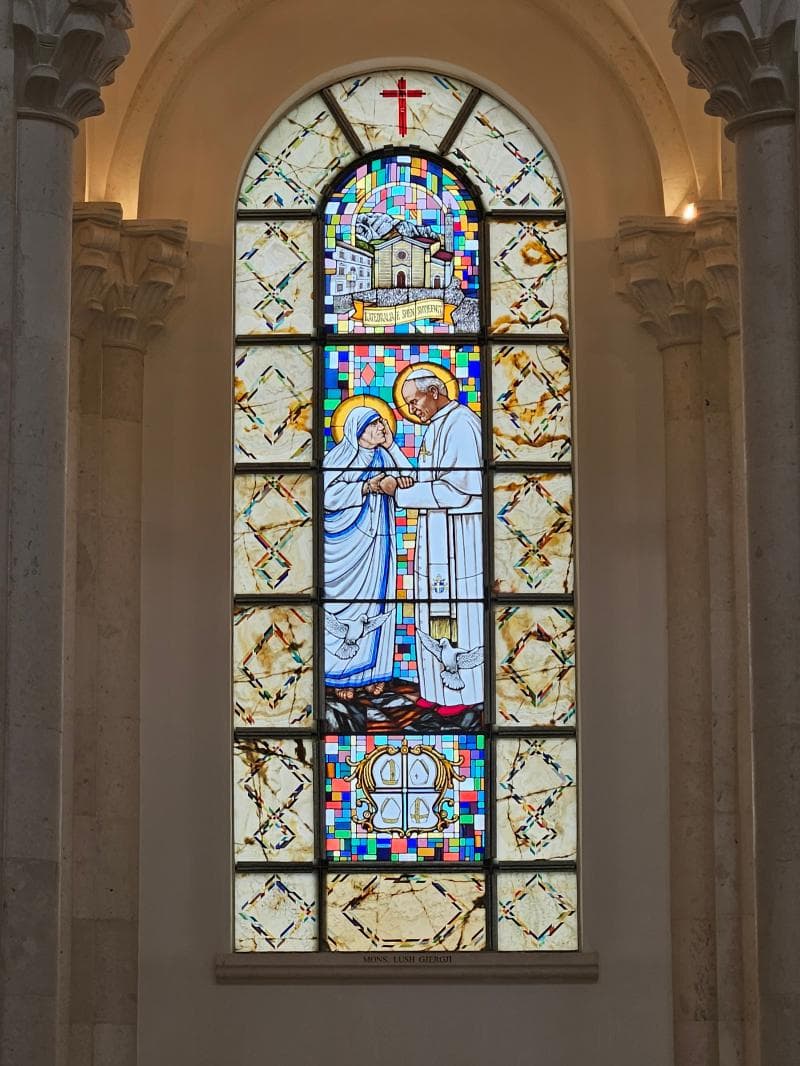
Within the Main Nave, elements tell silent stories of faith and local identity. The stained-glass windows are particularly captivating, depicting not only scenes from the life of Christ but also honoring Albanian Catholic martyrs. One notable detail mentioned by visitors is a stained-glass window featuring Mother Teresa alongside the Pope, a poignant representation of her revered status. The interior also includes marble altars and a statue of Mother Teresa, serving as constant reminders of her enduring compassion and service.
A touching aspect of the cathedral's role in the community is the participation of local Muslims in Christmas masses, showcasing the strong bonds of solidarity and shared celebration in Pristina. While not directly within the main nave, a unique relic reported by some is a flame said to contain a drop of Mother Teresa's blood, further emphasizing the deep veneration she receives. The surrounding area and the cathedral's prominent bell tower, accessible by elevator, provide breathtaking panoramic views of Pristina, connecting the spiritual space with the city's vibrant urban landscape.
Visitor Perspective
For those visiting the Main Nave, the experience is both enriching and accessible. Entry to the cathedral is free, making it an open invitation to all curious travelers and spiritual seekers. To ensure a respectful visit, especially during services, visitors are encouraged to dress modestly and maintain a quiet demeanor, as it remains an active place of worship.
The spacious interior halls and light atmosphere provide a peaceful respite from city life. If you wish to experience the nave in its quietest form, morning hours or weekdays are generally recommended, as mass times can limit sightseeing access. Engaging with the interior architecture, from the wide central vault to the detailed stained glass, offers a deep dive into both the artistry and the spiritual significance of this modern Kosovar landmark.
Coordinates: 21.15933, 42.65639
View on Google Maps💬 How Travelers Describe This Place
Based on community votes
Photogenic
951Unique
748Beautiful
499Interesting
427Must See
94
Traveler Stories
Discover memorable experiences shared by travelers who have visited this place.
No traveler stories yet.
Be the first traveler to share what made this place memorable.

Tour
By
Spot
Discover amazing places around the world. Your journey starts here.
Explore
© 2026 TourBySpot. All rights reserved.