Main Hall
Vientiane, Laos
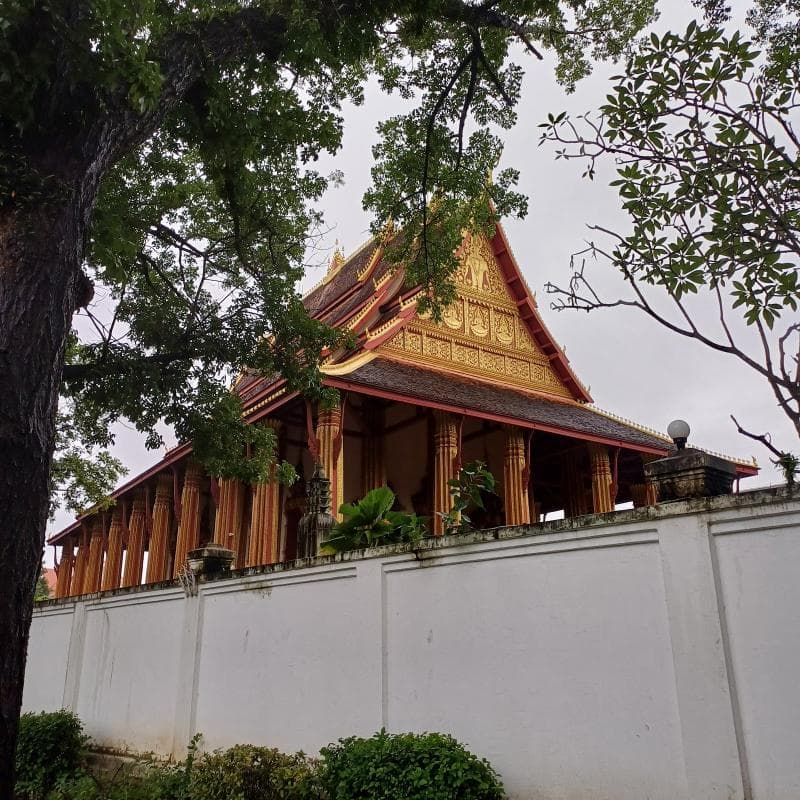
Explore the historic Main Hall of Wat Ho Phra Keo in Vientiane, Laos, a former royal temple now a museum of exquisite Buddhist art and artifacts.
Overview
Stepping into the Main Hall of Wat Ho Phra Keo in Vientiane, Laos, is like walking through centuries of spiritual devotion and artistic mastery. Once the sacred heart of a royal temple, this magnificent structure now serves as a revered museum of religious art, offering a profound glimpse into Laos' rich cultural and historical tapestry. Originally conceived in 1565 by King Setthathirath, its primary purpose was to house the legendary Emerald Buddha, a relic of immense spiritual significance. Today, the Main Hall, often referred to as the 'sim' in its temple days, stands as the central exhibition space within the Wat Ho Phra Keo complex, a testament to traditional Lao design with its elegant multi-tiered roof, intricately carved wooden features, and a serene atmosphere that invites contemplation.
History & Cultural Background
The story of Wat Ho Phra Keo, and particularly its Main Hall, is deeply intertwined with the history of Laos. Its construction in 1565–1566 by King Setthathirath marked a pivotal moment, as it coincided with the relocation of the capital from Luang Prabang to Vientiane. The temple was built specifically within the royal palace grounds to enshrine the Emerald Buddha, a sacred figurine that Setthathirath had brought from Chiang Mai. For over two centuries, this hall was the personal place of worship for the king and the revered home of the Emerald Buddha. However, its destiny took a tragic turn in 1779 when Siamese forces seized Vientiane, taking the Emerald Buddha to Thailand, where it remains to this day. The temple suffered significant destruction during the Siamese invasion of 1828. What we see today is largely the result of a meticulous reconstruction carried out by the French between 1936 and 1942, which, while honoring traditional designs, also incorporated some 19th-century Bangkok-style architectural elements. Since then, the Main Hall and the broader Wat Ho Phra Keo complex have been preserved as a museum, no longer an active monastery, dedicated to showcasing Lao religious art and artifacts.
What Makes It Special
The Main Hall's enduring appeal lies in its rich historical significance and its exceptional collection of artifacts. Foremost among its distinctions is its past as the sanctuary for the Emerald Buddha, a detail that imbues the space with profound spiritual weight, even in its absence. Architecturally, the building is a stunning example of traditional Lao craftsmanship, featuring an elegant, multi-tiered roof, intricately carved wooden doors—some of which are original to the old temple—and striking naga (serpent) motifs that adorn its exterior. Inside, the Main Hall is a treasure trove of Lao religious art, housing one of the country's finest collections. Visitors will discover an impressive array of bronze Buddha statues, ancient stone carvings, valuable manuscripts inscribed on palm leaves, and ceremonial objects, spanning from the Lan Xang period through the French colonial era. The vibrant murals and detailed wooden carvings that decorate the interior further enhance the hall's unique character, offering visual narratives of Buddhist teachings and Lao traditions.
Stories, Fun Facts & Local Details
The name 'Haw Phra Kaew' itself, meaning 'House of the Emerald Buddha,' whispers tales of its former glory and its central role in Lao spirituality. The removal of the revered Emerald Buddha in 1779 is remembered as a significant and sorrowful event in the nation's history, a moment of profound loss for the Lao people. Within the Main Hall today, visitors can observe the gilded throne where the original Emerald Buddha once rested, a poignant reminder of its past presence. Additionally, a wooden copy of Phra Bang, another palladium of Laos, is displayed, adding to the hall's sacred aura. Beyond the architectural splendor, the surrounding gardens are meticulously maintained and hold interesting artifacts, including ancient stone jars from the Plain of Jars, linking this site to even older archaeological periods of Laos. The stone balustrades leading up to the Main Hall are carved into the form of mythical dragons, or naga, symbolically guarding the sacred space within and reflecting deep Buddhist and local mythological influences.
Visitor Perspective
For the curious traveler, a visit to the Main Hall of Wat Ho Phra Keo offers a deeply immersive cultural experience. The serene and respectful atmosphere within allows for quiet reflection and appreciation of the intricate craftsmanship and historical depth. Guests can spend time admiring the vast collection of Buddha images—crafted from bronze, wood, silver, and stone—along with other historical artifacts that narrate the evolution of Lao Buddhist art and royal religious culture. Many find the detailed carvings, colorful murals, and the overall architectural beauty to be particularly captivating. As a temple-turned-museum, it provides an invaluable window into the spiritual heritage and history of Laos without the active religious ceremonies of a functioning temple. Situated conveniently in Vientiane, often across from Wat Sisaket, it's a popular and accessible cultural stop. An entrance fee, typically 30,000 LAK for foreigners, grants access to this significant landmark. To experience the Main Hall and its treasures in a more tranquil setting, an early morning visit is highly recommended.
Coordinates: 102.61148, 17.96169
View on Google Maps💬 How Travelers Describe This Place
Based on community votes
Beautiful
931Photogenic
670Interesting
655Must See
491Unique
266
Traveler Stories
Discover memorable experiences shared by travelers who have visited this place.
No traveler stories yet.
Be the first traveler to share what made this place memorable.

Tour
By
Spot
Discover amazing places around the world. Your journey starts here.
Explore
© 2026 TourBySpot. All rights reserved.