Main Hall
Ho Chi Minh City, Vietnam
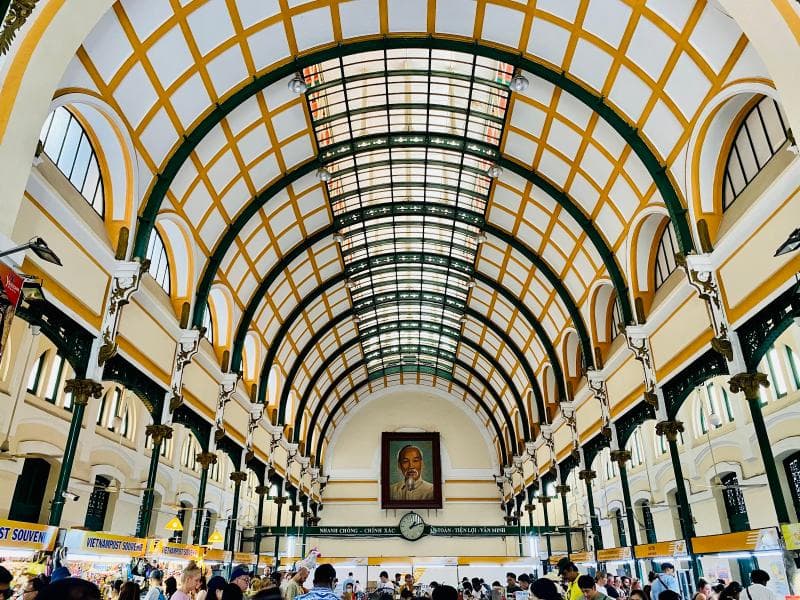
Discover the Main Hall of Saigon Central Post Office in Ho Chi Minh City, Vietnam. Explore its French colonial architecture, rich history, and unique cultural details.
Overview
The Main Hall of the Saigon Central Post Office in Ho Chi Minh City, Vietnam, stands as a magnificent testament to French colonial architecture. Situated prominently in District 1, directly opposite the iconic Notre Dame Cathedral, this historical landmark is more than just a functional post office; it is a captivating journey into the past. It seamlessly blends Gothic, Renaissance, and French Baroque styles with subtle Asian decorative elements, creating a visually stunning edifice that has captivated visitors for generations. Still a fully operational postal service, the Main Hall welcomes curious travelers to admire its grandeur and even send a postcard, bridging centuries with a simple stamp. Admission to this architectural gem is free, inviting everyone to step inside and explore its enduring beauty and rich history.
History & Cultural Background
Constructed between 1886 and 1891, the Saigon Central Post Office emerged during a pivotal era when Vietnam was part of French Indochina. While often associated with the renowned engineer Gustave Eiffel, credited for the Eiffel Tower, historical records suggest the building's design was overseen by architects from his firm, or specifically by Alfred Foulhoux and Auguste Henri Vildieu. Regardless of the precise hand behind its blueprint, the post office quickly became a symbol of French modernity and technological advancement in Saigon. It wasn't merely a place for sending letters; it served as a vital communication hub, connecting the colonial administration and its citizens to the wider world. The precursor to this grand structure, the Saigon Telegraph-wire Department, was established in 1860, with the first post office opening in 1863 and issuing its inaugural stamps in 1864. The current, more expansive building was necessitated by the increasing demand for postal services, solidifying its role as a cornerstone of the city's infrastructure and cultural identity.
What Makes It Special
Stepping into the Main Hall is an immersive experience, defined by its extraordinary architectural features. The soaring vaulted ceiling, supported by impressive wrought-iron arches, immediately evokes the grandeur of a 19th-century European train station rather than a traditional post office. Beneath this magnificent canopy, the floor is adorned with intricately patterned tiles that have withstood the test of time. Perhaps the most captivating elements are the two immense, hand-painted historical maps gracing opposite walls. One depicts 'Saigon et ses environs 1892', offering a detailed glimpse into Saigon and its surroundings over a century ago, while the other illustrates 'Lignes télégraphiques du Sud Vietnam et Cambodge 1892' or '1936', showcasing the crucial telegraph lines connecting Southern Vietnam and Cambodia. Dominating the far end of the hall, above the main counter, is a large, reverent portrait of President Ho Chi Minh, serving as a powerful visual reminder of Vietnam's journey to independence. Adding to the nostalgic charm are the antique wooden telephone booths lining the hall, some of which are still remarkably in use. The hall's enduring function as a working post office allows visitors to engage directly with its legacy, perhaps by purchasing a stamp or mailing a letter from a piece of living history.
Stories, Fun Facts & Local Details
The Saigon Central Post Office carries with it a tapestry of tales. One enduring tidbit involves the attribution of its design: while many believe it was solely Gustave Eiffel's creation, the truth is a bit more nuanced, with his firm or other architects like Alfred Foulhoux and Auguste Henri Vildieu playing significant roles. This slight ambiguity only adds to its mystique. The magnificent clock positioned above the main entrance has diligently marked time for over 130 years, a silent witness to Saigon's many transformations. Visitors might notice plaques on the building's exterior commemorating pioneering scientists like Volta and Ampère, recognizing their contributions to the fields of electricity and telegraphy – the very technologies that the post office once championed. The building’s grandeur has not gone unnoticed globally; it has been lauded as one of the most beautiful post offices in the world by publications like Architectural Digest. A particularly heartwarming detail is the story of Mr. Duong Van Ngo, who served as the last public letter writer in Vietnam until 2021, a living link to an almost forgotten era of communication, often found assisting locals and tourists alike within this very hall.
Visitor Perspective
For any traveler exploring Ho Chi Minh City, the Main Hall of the Saigon Central Post Office offers an accessible and enriching experience. With free admission and its central location adjacent to other major landmarks, it's an effortless addition to any itinerary. To truly appreciate its architectural nuances and avoid the busiest periods, an early morning or late afternoon visit is highly recommended, allowing for better light and fewer crowds. While the interior is spacious and naturally lit, it is generally not air-conditioned, a minor detail to note on warmer days. Beyond its visual appeal, the hall provides opportunities for engaging with local culture; browse the small souvenir shops for unique handicrafts, stamps, and postcards. Sending a postcard from this historic location is a popular and meaningful activity, allowing visitors to connect with loved ones while preserving a tangible memory of their trip. It's not just a photo opportunity; it's a chance to immerse oneself in a living piece of history, observing daily life unfold within an architectural marvel, and gaining a deeper appreciation for Saigon's enduring charm.
Coordinates: 106.7, 10.7747
View on Google Maps💬 How Travelers Describe This Place
Based on community votes
Unique
998Photogenic
903Interesting
481Must See
472Beautiful
92
Traveler Stories
Discover memorable experiences shared by travelers who have visited this place.
No traveler stories yet.
Be the first traveler to share what made this place memorable.

Tour
By
Spot
Discover amazing places around the world. Your journey starts here.
Explore
© 2026 TourBySpot. All rights reserved.