Main Dome
Istanbul, Turkey
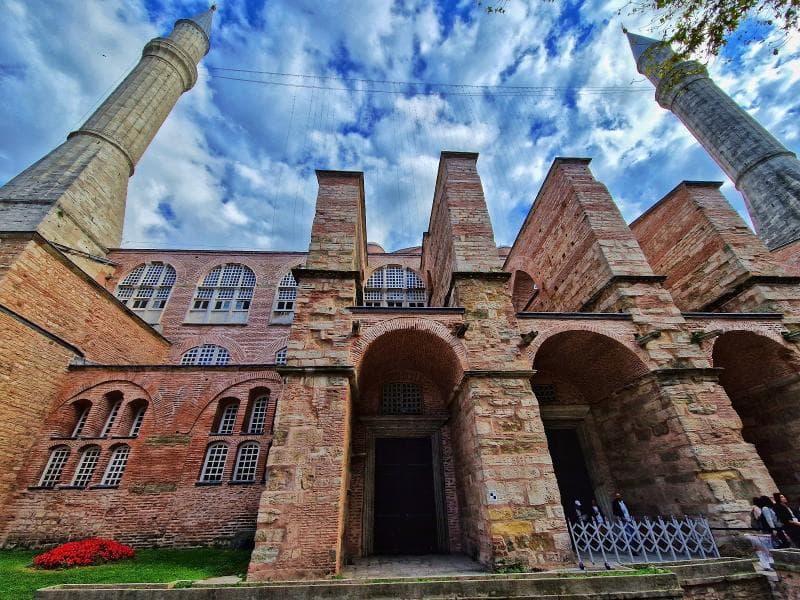
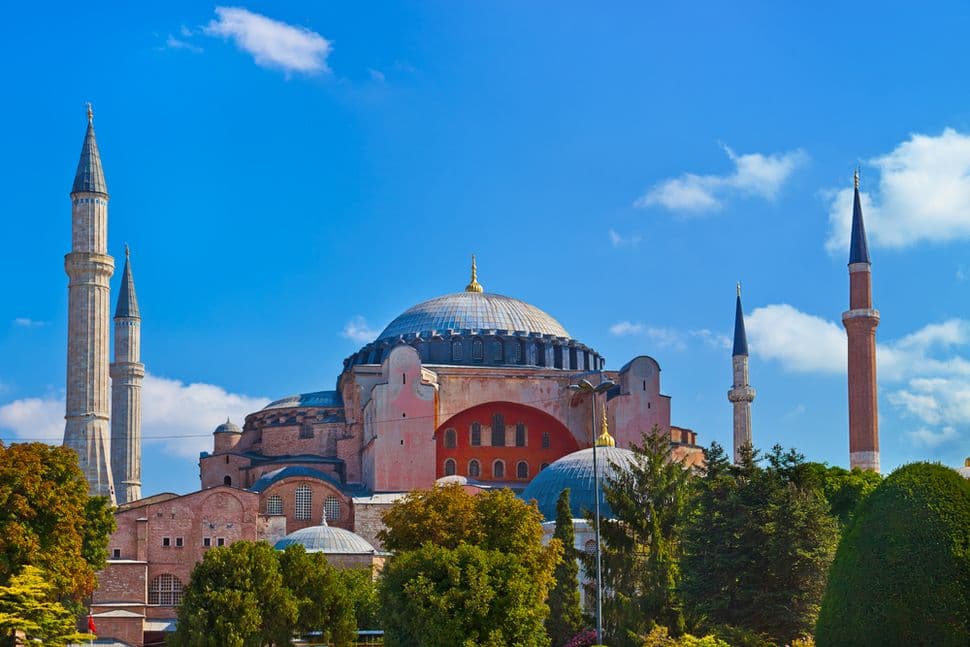
Explore the Main Dome of Hagia Sophia in Istanbul, Turkey – a marvel of Byzantine engineering, rich in history, culture, and stunning architectural detail.
Overview
Stepping into the Hagia Sophia in Istanbul, Turkey, one's gaze is immediately drawn upwards to its magnificent Main Dome, a breathtaking marvel that has crowned this historic edifice for over 1,500 years. More than just an architectural element, this dome is a symbol of human ingenuity and a testament to centuries of shifting empires and cultures. Its colossal scale and innovative design continue to inspire awe, creating a sense of boundless space and divine grandeur within the building's heart.
Originally conceived as the central feature of a grand Byzantine cathedral dedicated to 'Holy Wisdom' (Hagia Sophia), the dome has witnessed the transformation of the structure from a principal church of Eastern Orthodoxy to an imperial mosque, then a museum, and most recently, back to an active mosque.
History & Cultural Background
The current Main Dome is part of the third church built on this site, commissioned by Emperor Justinian I in 532 CE and completed remarkably quickly by 537 CE. Its creation was a monumental undertaking, designed by the brilliant geometers Isidore of Miletus and Anthemius of Tralles. The original dome, however, proved structurally unstable and partially collapsed after an earthquake in 558 CE. It was swiftly rebuilt by Isidore the Younger, nephew of one of the original architects, and completed by 562 CE. This reconstructed dome, standing taller and more stable, is largely what we see today, albeit with numerous repairs and reinforcements over the centuries due to subsequent earthquakes. The ingenuity of its design, particularly the revolutionary use of pendentives, allowed a circular dome to rest seamlessly upon a square base, an architectural feat that fundamentally 'changed the history of architecture'.
Following the Ottoman conquest of Constantinople in 1453, the Hagia Sophia was converted into a mosque. The dome, rather than being destroyed, was embraced and adapted, with Islamic calligraphy eventually adorning its interior. In 1935, it transitioned into a museum, symbolizing a secular Turkey, before its reconversion to a mosque in 2020. These transformations reflect the rich, layered history and cultural confluence that define Istanbul itself.
What Makes It Special
The Main Dome of Hagia Sophia is a masterpiece of Byzantine engineering. Its impressive dimensions, with a diameter of approximately 31 to 33 meters (about 102-105 feet) and rising to a height of around 55 to 55.6 meters (180-184 feet) from the floor, made it the largest dome in the world for nearly a thousand years. What truly sets it apart, however, is the innovative use of pendentives, which are curved triangular sections of masonry that elegantly transition the weight from the circular base of the dome to the four massive piers supporting it. This structural solution allowed for an immense, unobstructed interior space unlike anything seen before. Adding to its ethereal quality, a ring of forty windows encircles the base of the dome, creating an illusion that the dome 'seems not to rest upon solid masonry, but to cover the space beneath as though suspended from heaven by a golden chain,' as described by the 6th-century historian Procopius.
Stories, Fun Facts & Local Details
Legend has it that upon the completion of the Hagia Sophia, Emperor Justinian I exclaimed, 'Solomon, I have surpassed thee!' – a proud declaration acknowledging that his creation exceeded the biblical Temple of Solomon in grandeur. The dome's construction was a race against time and gravity, with a reported 10,000 workers contributing to its rapid completion. The slightly oval shape of the dome today is a subtle reminder of the numerous earthquakes it has endured and the subsequent repairs and rebuilds. Interestingly, the structure's resilience comes partly from the use of lightweight bricks and flexible mortar in the dome itself, allowing it to absorb seismic shocks rather than cracking. The design of Hagia Sophia's dome profoundly influenced later architects, notably Mimar Sinan, the chief Ottoman architect, who drew inspiration from it for many imperial mosques, thus bridging Byzantine and Ottoman architectural traditions.
Visitor Perspective
Today, visitors can experience the awe-inspiring presence of the Main Dome. Since 2024, tourists access the Hagia Sophia primarily through a designated route to the upper galleries. From this vantage point, one can gaze down at the main prayer area and fully appreciate the dome's colossal scale, the intricate details of its mosaics (some of which were uncovered after plaster was removed) and calligraphy, and the dramatic interplay of light entering through its base. The spiritual ambiance, combined with the sheer architectural audacity, makes standing beneath this dome an unforgettable experience, offering a profound connection to Istanbul's layered past.
Coordinates: 28.98, 41.00833
View on Google Maps💬 How Travelers Describe This Place
Based on community votes
Unique
995Beautiful
964Photogenic
929Interesting
730Must See
482
Traveler Stories
Discover memorable experiences shared by travelers who have visited this place.
No traveler stories yet.
Be the first traveler to share what made this place memorable.

Tour
By
Spot
Discover amazing places around the world. Your journey starts here.
Explore
© 2026 TourBySpot. All rights reserved.