Liberty Island
New York, United States
Explore Liberty Island, home to the iconic Statue of Liberty in New York, United States. Discover its rich history, cultural significance, and visitor essentials.
Overview
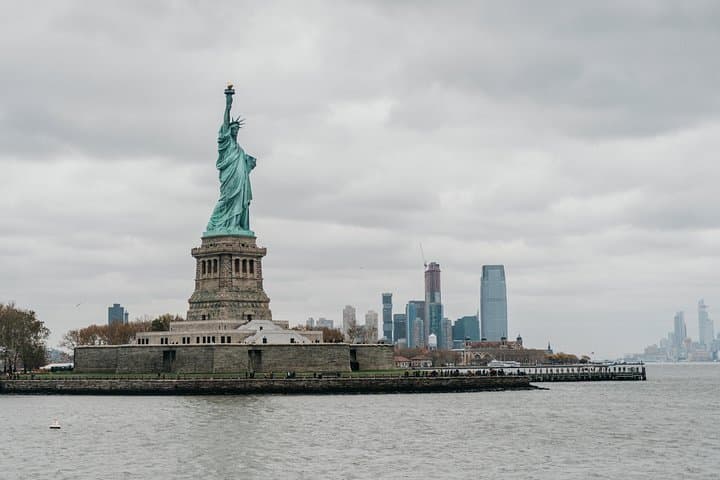
Liberty Island, a federally owned island nestled in Upper New York Bay, is globally recognized as the distinguished home of the Statue of Liberty. This iconic landmark, officially named 'Liberty Enlightening the World,' stands as a powerful symbol of freedom, democracy, and a welcoming beacon for millions. Administered by the National Park Service, Liberty Island, though situated closer to New Jersey, is under the jurisdiction of New York, United States. It draws more than four million visitors annually from across the globe, eager to experience its profound historical and cultural significance.
History & Cultural Background
The island's history predates the Statue's arrival, stretching back to its early occupation by Native Americans, specifically the Algonquian tribes, who frequented it for its rich oyster beds. Known to the Delaware Indians as Minnissais, or 'Lesser Island,' it was later acquired by a Dutchman named Isaac Bedloe in the 1660s, giving it the name 'Bedloe's Island.' Over centuries, the island served various purposes, including a quarantine station and a military post. An eleven-pointed star-shaped fort, known as Fort Wood, was constructed between 1808 and 1811 to protect New York Harbor. This fort later became the base for the Statue's pedestal. The idea for the Statue of Liberty emerged after the American Civil War, conceived by French political thinker Édouard de Laboulaye as a monument to represent America's commitment to freedom and democracy and to celebrate the friendship between France and the United States. French sculptor Frédéric-Auguste Bartholdi designed the statue, selecting Bedloe's Island as its site in 1871. The statue was officially dedicated on October 28, 1886. In 1924, it was designated a national monument, and in 1933, the National Park Service took over its maintenance. The island was officially renamed Liberty Island by an act of Congress in 1956, further cementing its symbolic role.
What Makes It Special
Liberty Island is extraordinary due to its embodiment of universal ideals. The Statue of Liberty itself is a masterpiece of art and engineering, a gift of friendship from the people of France, symbolizing liberty and democracy worldwide. Her design is rich with symbolism: a torch representing enlightenment, a tablet inscribed with July 4, 1776, marking American independence, and broken chains at her feet signifying freedom from oppression. The pedestal rests within the historic Fort Wood, adding layers of military history to its symbolic importance. The Statue of Liberty Museum, located on the island, enriches the visitor experience by housing the original torch and providing comprehensive exhibits on the Statue's history and creation. The island offers breathtaking views of the Manhattan skyline and New York Harbor, serving as a powerful reminder of the nation's immigrant history, as millions passed by Lady Liberty on their way to Ellis Island.
Stories, Fun Facts & Local Details
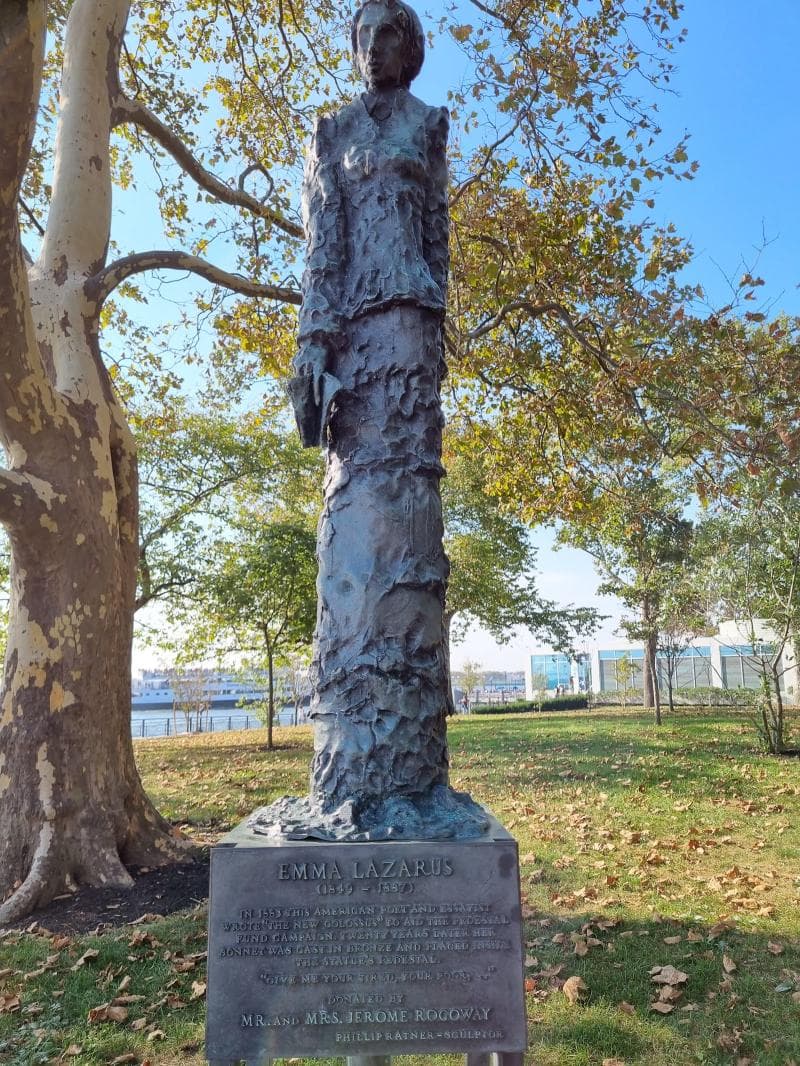
One fascinating detail is that the Statue of Liberty was originally a shiny reddish-brown, much like a new penny, when unveiled in 1886. Over time, exposure to the elements caused the copper to oxidize, developing the distinctive sea-green patina seen today. Gustave Eiffel, the visionary behind the Eiffel Tower, designed the Statue's intricate internal iron framework. The iconic poem 'The New Colossus' by Emma Lazarus, with its famous line 'Give me your tired, your poor, Your huddled masses yearning to breathe free,' was inscribed on a plaque affixed to the Statue's base in 1903, deepening its association with immigration and hope. Lady Liberty's crown features 25 windows and seven spikes, representing the seven continents and seven seas, symbolizing universal liberty. Despite its immense size, the Statue is designed to sway up to three to six inches in high winds. Annually, the Statue of Liberty National Monument and Ellis Island attract millions, underscoring its enduring appeal and significance.
Visitor Perspective
Access to Liberty Island is exclusively by authorized ferries operated by Statue City Cruises. Departures are available from Battery Park in Lower Manhattan, New York City, or Liberty State Park in Jersey City, New Jersey. It is highly recommended to purchase tickets in advance, especially during peak visitation periods, as they can sell out. The ferry ticket typically includes round-trip service to both Liberty Island and Ellis Island, offering access to the Statue of Liberty Museum and the Ellis Island National Museum of Immigration. Visitors can enjoy self-guided audio tours, available in multiple languages, to enhance their exploration of the island and its history. Security screening is mandatory, so visitors should plan for extra time. While there is no entrance fee to the monument itself, a ferry ticket is required. The island features ranger-led tours, weather permitting, providing deeper insights into its rich heritage. Preparing for colder, windier conditions than in other parts of New York City is advisable, especially during certain seasons.
Coordinates: -74.0445, 40.6892
View on Google Maps💬 How Travelers Describe This Place
Based on community votes
Photogenic
674Must See
585Beautiful
546Interesting
503Unique
92
Traveler Stories
Discover memorable experiences shared by travelers who have visited this place.
No traveler stories yet.
Be the first traveler to share what made this place memorable.

Tour
By
Spot
Discover amazing places around the world. Your journey starts here.
Explore
© 2026 TourBySpot. All rights reserved.