Lembit Submarine
Tallinn, Estonia
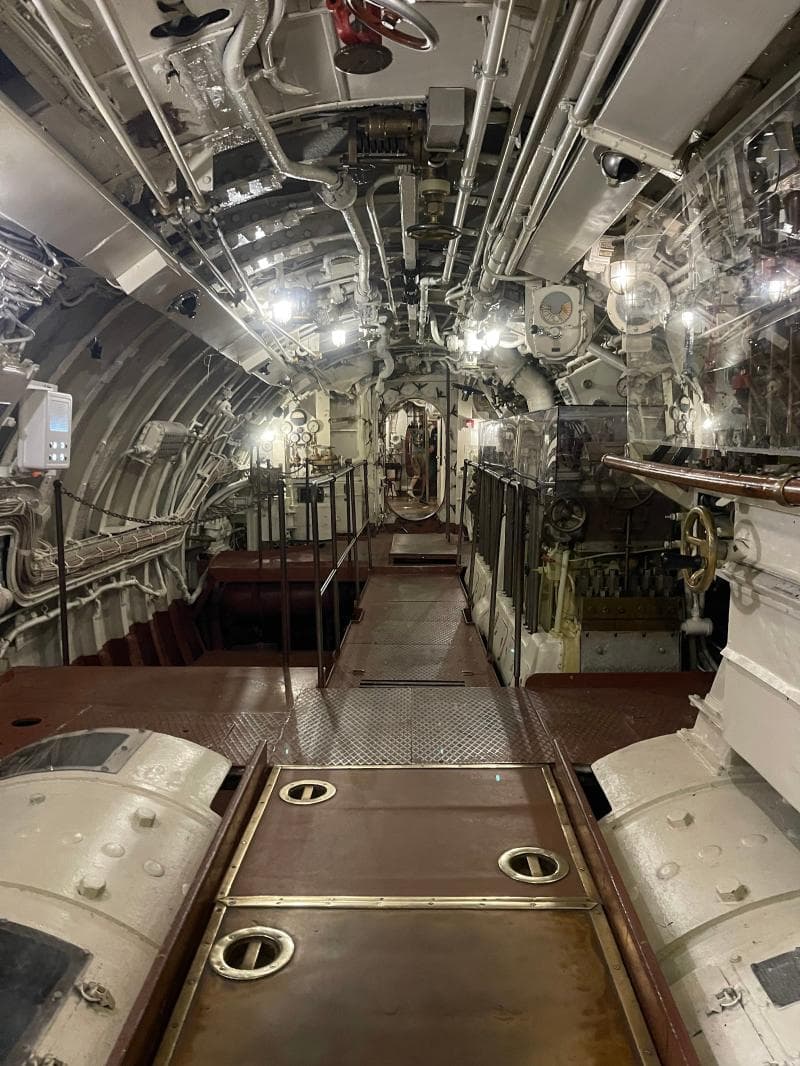
Explore the historic Lembit Submarine at Tallinn's Seaplane Harbour, Estonia. Discover its fascinating past, unique design, and immersive interior.
Overview
Nestled within the remarkable Seaplane Harbour in Tallinn, Estonia, lies the historic Lembit Submarine, a true gem of maritime history. This meticulously preserved vessel offers a rare and immersive journey into the depths of naval life and Estonian heritage. As a centerpiece of the Estonian Maritime Museum, the Lembit is more than just an exhibit; it's a tangible link to a pivotal era, drawing visitors into its fascinating story with every step through its narrow corridors.
The Seaplane Harbour itself, known locally as Lennusadam, is housed in extraordinary seaplane hangars, originally constructed for Peter the Great's Naval Fortress. These hangars, celebrated for being the world's first thin-shell concrete domes of their size without internal supports, create a dramatic and fitting backdrop for the submarine and the museum's extensive collection of maritime artifacts.
History & Cultural Background
The EML Lembit is one of two Kalev-class mine-laying submarines specifically built for the Republic of Estonia before the onset of World War II. Launched in 1936 at the Vickers-Armstrongs shipyard in Barrow-in-Furness, England, her construction was notably aided by scrap metal donations from the Estonian people, making her a symbol of national unity and aspiration.
Named in honor of Lembitu, a courageous 13th-century Estonian ruler who valiantly resisted the Livonian Crusades, the submarine carried a profound cultural significance from its very inception. The Lembit served in the Estonian Navy until the Soviet occupation in 1940, after which she was incorporated into the Soviet Baltic Fleet. Throughout World War II, she undertook seven war patrols, successfully impacting enemy vessels. After decades of service and various renamings, Lembit returned to Tallinn under tow in 1979 and, following Estonia's regained independence, was officially designated 'vessel No. 1' of the new Estonian Navy in 1994, cementing her status as a national treasure.
What Makes It Special
What truly sets the Lembit Submarine apart is its remarkable preservation and the authentic visitor experience it offers. Until its relocation ashore in 2011, it was considered the oldest submarine still afloat in the world. Unlike many museum submarines, the Lembit has not been cut open or altered with new entry points; visitors board through one of its original torpedo loading hatches, providing a truly authentic sense of a submariner's life.
Her interior has been painstakingly restored to its 1930s appearance, complete with original equipment, instruments, and fittings. This attention to detail allows for an unparalleled glimpse into the functional complexities and living conditions aboard a pre-World War II submarine. Measuring around 60 meters (200 feet), the Lembit is equipped with four torpedo tubes, an anti-aircraft gun, and storage for twenty sea mines, showcasing the advanced naval technology of its time.
Stories, Fun Facts & Local Details
The story of the Lembit is intertwined with Estonia's turbulent 20th-century history. Her survival through occupation and conflict, while her sister ship Kalev was lost, speaks volumes. Imagine the Estonian people, contributing their scrap metal to finance a vessel that would defend their young nation's sovereignty, an act of collective patriotism that highlights the submarine's deep connection to the national psyche.
Life aboard the Lembit was incredibly demanding, with a crew of 32 living in exceedingly cramped conditions. Many sailors even slept in the torpedo room, a testament to the harsh realities of naval service in such confined spaces. This very vessel's design even influenced Soviet submarine development, with its innovative mine-laying system being copied into the missile hatches of new Soviet submarines.
Visitor Perspective
Exploring the Lembit Submarine is an adventure in itself, offering a deeply personal insight into a submariner's world. Travelers can traverse the length of the vessel, moving through the control room, the compact crew quarters, the engine room, and both the forward and aft torpedo stations. The narrow passageways and steep steps inside provide an authentic, if challenging, experience, giving a true appreciation for the confined environment in which the crew operated.
While the immersive nature is thrilling, it's worth noting that the submarine's tight spaces might not be comfortable for those with claustrophobia or limited mobility. However, for most, it's an incredibly engaging and educational journey. Interactive displays throughout the Seaplane Harbour complement the visit, allowing guests to delve deeper into maritime history, operate mock equipment, and even try flight and submarine simulators, making the entire Estonian Maritime Museum a captivating destination for all ages.
Coordinates: 24.738308, 59.450433
View on Google Maps💬 How Travelers Describe This Place
Based on community votes
Unique
995Photogenic
839Beautiful
603Must See
581Interesting
388
Traveler Stories
Discover memorable experiences shared by travelers who have visited this place.
No traveler stories yet.
Be the first traveler to share what made this place memorable.

Tour
By
Spot
Discover amazing places around the world. Your journey starts here.
Explore
© 2026 TourBySpot. All rights reserved.