Latin Cathedral
Lviv, Ukraine
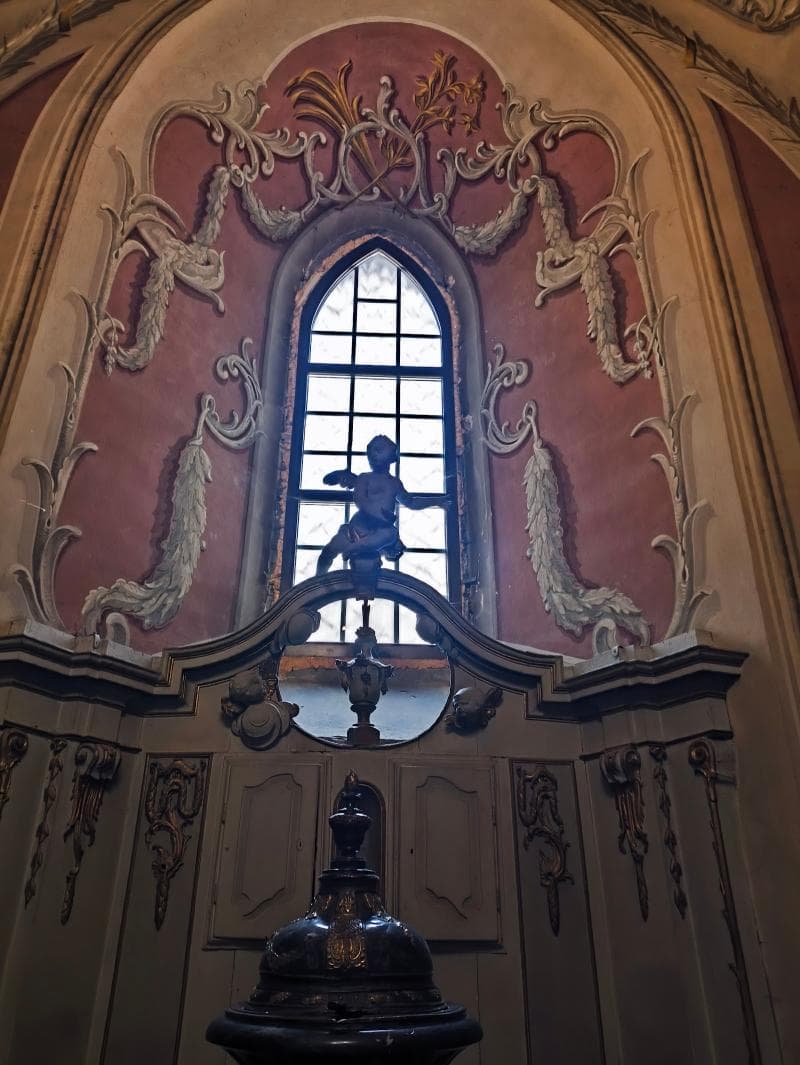
Explore the Latin Cathedral in Lviv Old Town, Ukraine. Discover its rich history, unique blend of Gothic, Renaissance, and Baroque architecture, and captivating stories.
Overview
Nestled within the enchanting embrace of Lviv Old Town, the Latin Cathedral, formally known as the Archcathedral Basilica of the Assumption of the Blessed Virgin Mary, stands as a profound testament to centuries of history, faith, and architectural evolution. This magnificent structure is not merely a church; it is a living chronicle of Lviv's vibrant past, reflecting a harmonious blend of Gothic, Renaissance, and Baroque styles. Located at the southwestern corner of Cathedral Square, it has long been a central landmark, drawing the eye with its singular tower and intricate details.
As a key spiritual center for Roman Catholics in Lviv, the cathedral has witnessed countless historical events and served as a steadfast beacon through periods of both prosperity and turmoil. Its enduring presence within the historic urban landscape makes it an indispensable stop for any traveler seeking to delve into the soul of this Ukrainian city.
History & Cultural Background
The story of the Latin Cathedral begins in the mid-14th century. A small wooden Latin Catholic church dedicated to the Holy Trinity stood on this site in 1344 but was tragically consumed by fire six years later. In 1360, King Casimir III the Great of Poland initiated the construction of the present-day church in the Gothic style, intending it to become the cathedral of the newly established See of Lwów.
The construction proved to be a monumental undertaking, stretching over more than a century, with the church finally consecrated in 1481. This prolonged building period meant that none of the original master-builders lived to see its completion, contributing to its eclectic architectural character. The Latin See was officially transferred here from Halych in 1412, solidifying its metropolitan status. Over the centuries, the cathedral underwent significant transformations. The vaulting collapsed after the great Lviv fire of 1527, necessitating substantial rebuilding. A major Baroque renovation occurred between 1761 and 1776 under Archbishop Wacław Hieronim Sierakowski, dramatically altering its appearance and adding a tall bell tower. Later, a Gothic Revival remodelling of the presbytery took place from 1892 to 1898, introducing beautiful stained glass.
What Makes It Special
The Latin Cathedral's distinctive charm lies in its layered architecture, a living textbook of styles that beautifully coexist. While its foundational Gothic elements, such as the elongated lancet arches and vaulted ceilings, are still prominent, they are seamlessly interwoven with Renaissance additions and Baroque flourishes. The Chapel of the Kampian family, dating back to the 17th century, is a particularly striking Renaissance feature, renowned for its exquisite stone carvings depicting Gospel themes.
Remarkably, the Latin Cathedral was one of only two Roman Catholic churches in Lviv that remained active throughout the Soviet era, a testament to its enduring spiritual importance and resilience. This unbroken chain of worship underscores its deep connection to the community. Furthermore, the cathedral was granted the prestigious status of a minor basilica by Pope Pius X in 1910, further acknowledging its significance.
Stories, Fun Facts & Local Details
The walls of the Latin Cathedral whisper tales of Lviv's tumultuous past. Embedded in its eastern exterior wall, you can still see cannonballs, stark reminders of historical sieges. One such cannonball commemorates the Turkish siege of 1672, while another, higher up, speaks of the Ukrainian-Polish war of 1918-1919. Latin inscriptions accompanying these projectiles silently narrate these dramatic events.
The cathedral was also the setting for King John II Casimir Vasa's famous Lwów Oath in 1656, where he solemnly entrusted the Polish-Lithuanian Commonwealth to the care of the Virgin Mary. A miraculous icon of Our Lady of Grace, painted by Józef Szolc-Wolfowicz, was once crowned and housed here. Though the original was moved to Kraków and then to Lubaczów after World War II, a revered copy was crowned by Pope John Paul II during his apostolic visit to Ukraine in 2001.
An interesting architectural detail is that the cathedral was initially planned with two grand belfries, but only one was ever completed, giving it a distinctive asymmetrical appearance.
Visitor Perspective
Visiting the Latin Cathedral offers a profound glimpse into Lviv's spiritual and historical heart. As an active place of worship, it continues to hold services in both Ukrainian and Polish, providing a sense of living tradition. Travelers are welcome to explore its magnificent interior, admiring the blend of Gothic structure, Renaissance chapels, and Baroque artistry. The rich array of wooden and marble altars, icons, sculptures, and 20th-century stained-glass windows invites quiet contemplation.
When you step inside, you'll feel the weight of centuries of devotion and artistry. It is a space that encourages reflection amid the vibrant energy of Lviv Old Town. Visitors are encouraged to enter respectfully, especially during service times, to preserve the sanctity of this historic and active basilica.
Coordinates: 24.0306, 49.8408
View on Google Maps💬 How Travelers Describe This Place
Based on community votes
Interesting
910Unique
755Photogenic
374Must See
183Beautiful
28
Traveler Stories
Discover memorable experiences shared by travelers who have visited this place.
No traveler stories yet.
Be the first traveler to share what made this place memorable.

Tour
By
Spot
Discover amazing places around the world. Your journey starts here.
Explore
© 2026 TourBySpot. All rights reserved.