Lakeside Terrace
Yangon, Myanmar
Discover Lakeside Terrace at Karaweik Palace in Yangon, Myanmar. Explore this golden royal barge replica on Kandawgyi Lake, its history, and cultural shows.
Overview
Nestled on the serene eastern shore of Kandawgyi Lake in Yangon, Myanmar, the Karaweik Palace stands as an iconic landmark, instantly recognizable by its magnificent golden facade. While visitors often seek a 'Lakeside Terrace' experience, the entire Karaweik Palace itself offers an unparalleled connection to the water, serving as a cultural hall, restaurant, and event venue that appears to majestically float on the lake's surface. This grandeur provides a naturally integrated lakeside perspective, allowing guests to immerse themselves in the tranquil ambiance and captivating views of the surrounding natural beauty and the distant Shwedagon Pagoda.
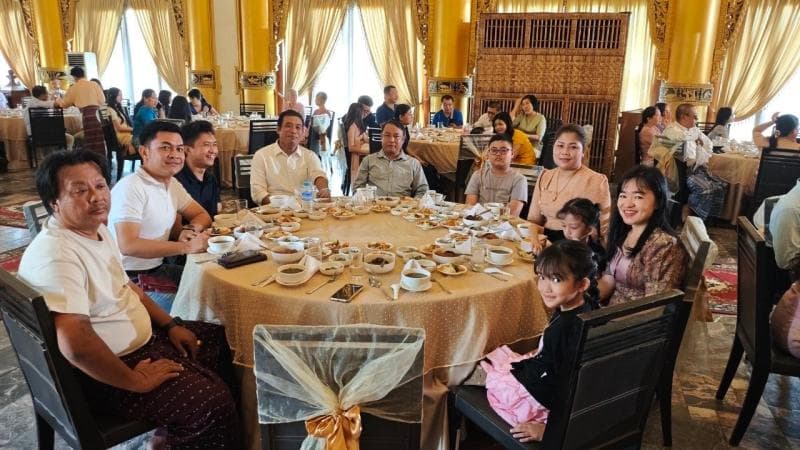
Karaweik Palace is a reinforced-concrete reproduction of a royal ceremonial barge, designed to showcase traditional Burmese architecture and culture. It functions primarily as a buffet restaurant that hosts engaging cultural shows, making any dining or viewing area within or around it a de facto lakeside terrace experience.
History & Cultural Background
The construction of Karaweik Palace began in 1972 and was completed by 1974, a project commissioned by General Ne Win after he was inspired by a Burmese pavilion at the 1970 World Exposition in Osaka, Japan. That pavilion, in turn, drew inspiration from the Pyigyimon Royal Barge used by Burmese kings for ceremonial processions in Mandalay. The name 'Karaweik' itself comes from the Pali word 'karavika,' referring to a mythical bird renowned for its melodious cry, a creature deeply woven into Burmese folklore and associated with grace and elegance.
Architect U Ngwe Hlaing meticulously designed the palace to emulate this mythical bird and the grandeur of royal barges, integrating traditional Burmese architectural elements with modern construction techniques. Its creation was part of a national effort to preserve and celebrate Myanmar's rich cultural heritage.
What Makes It Special
Karaweik Palace is truly special due to its unique architectural marvel and its symbolic floating presence on Kandawgyi Lake. The palace is constructed as two giant concrete bird figures with golden exteriors, featuring intricate wood carvings and a seven-tiered Pyatthat roof, which is characteristic of traditional Burmese Buddhist and royal architecture.
The palace's design, with two towering golden spires mimicking the outstretched wings of the mythical Karaweik bird, creates an enchanting visual. Each bird figure holds yellow spheres in its beak, and their converged tails display vibrant red and gold coloring, often adorned with depictions of Nat spirits, vital in Burmese beliefs. From any vantage point around its perimeter, including what would serve as a 'Lakeside Terrace,' visitors are treated to panoramic views of Kandawgyi Lake, reflecting the golden glow of the palace, and the breathtaking sight of the distant Shwedagon Pagoda, especially striking at sunset.
Stories, Fun Facts & Local Details
Beyond its striking appearance, Karaweik Palace is rich with stories and cultural nuances. The mythical Karaweik bird, from which the palace takes its name, is a symbol of beauty and auspiciousness in Burmese culture. The palace's construction in the early 1970s marked a significant period in Myanmar's post-colonial history, reflecting a desire to reassert national identity through cultural landmarks.
Interestingly, the Kandawgyi Lake itself is artificial, created by the British colonial administration to serve as a reservoir for clean water. The palace was once managed by the Ministry of Trade before being leased to a local entrepreneur, indicating its evolving role from a state-run cultural project to a commercial, yet culturally significant, venue. It has also served as a safe haven during historical unrest, with staff inviting monks from nearby monasteries to stay during the violent events of August 1988.
Visitor Perspective
For a curious traveler, a visit to Karaweik Palace offers a multi-sensory experience that extends beyond mere sightseeing. While the term 'Lakeside Terrace' might not be an official designation, the numerous open-air sections and dining areas provide precisely that – a captivating vantage point to soak in the atmosphere. Enjoying a meal here is not just about the food; it's about the regal setting, the panoramic views of the tranquil lake, and the illuminated Shwedagon Pagoda in the distance.
Evenings are particularly enchanting, as the palace lights up, reflecting its golden facade on the water, creating a magical ambiance. Visitors can enjoy traditional Myanmar dance performances, which portray various historical eras and cultural traditions of Myanmar. These shows feature elaborate costumes and diverse dance forms, from serene and elegant to flamboyant and dynamic, offering an authentic glimpse into the nation's artistic heritage. It's a place where history, myth, and cultural artistry converge, offering a memorable immersion into the heart and soul of Myanmar.
Coordinates: 96.1657, 16.7986
View on Google Maps💬 How Travelers Describe This Place
Based on community votes
Beautiful
997Interesting
785Photogenic
546Must See
231Unique
103
Traveler Stories
Discover memorable experiences shared by travelers who have visited this place.
No traveler stories yet.
Be the first traveler to share what made this place memorable.

Tour
By
Spot
Discover amazing places around the world. Your journey starts here.
Explore
© 2026 TourBySpot. All rights reserved.