Kuidaore Taro
Osaka, Japan
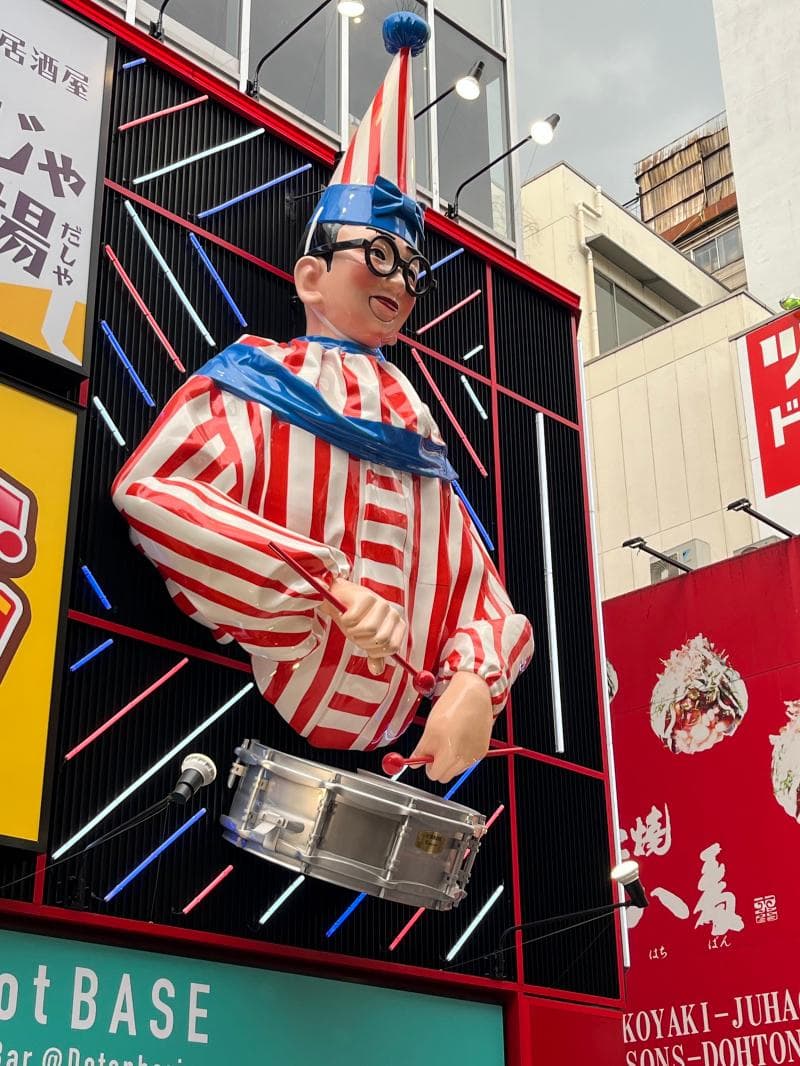
Discover Kuidaore Taro, the iconic drumming clown mascot of Dotonbori, Osaka, Japan. Explore its history, cultural significance, and fun facts.
Overview
In the vibrant heart of Osaka's Dotonbori district stands an enduring symbol of the city's unique spirit: Kuidaore Taro. This beloved mechanical drumming clown, instantly recognizable in his cheerful red and white striped suit, blue hat, and dark-rimmed glasses, has captivated visitors for decades. He's not just a mascot; he embodies the very essence of Osaka's 'kuidaore' culture, a delightful philosophy that playfully suggests 'eat until you drop'. Situated prominently in front of the Nakaza Kuidaore Building, Taro-san, as he's affectionately known, greets passersby with his rhythmic drumming, setting a lively tone for one of Japan's most bustling entertainment areas. He serves as a beacon for tourists and locals alike, inviting them to immerse themselves in the gastronomic and entertainment delights that Dotonbori famously offers.
History & Cultural Background
Kuidaore Taro's story began in 1950, when he was created as the charismatic mascot for a local restaurant named 'Kuidaore', which translates to 'eat oneself to ruin' or 'eat until you go bankrupt'. This phrase is deeply rooted in Osaka's history as a merchant city, where the pursuit of good food was, and remains, a celebrated aspect of daily life, in contrast to Kyoto's 'dress till you drop' culture. The restaurant's founder envisioned Taro-san as a figure to attract customers and uplift the community's spirits in the post-World War II era. For many years, the drumming clown was a fixture, faithfully performing his role. When the original restaurant closed its doors in 2008, there was widespread local sadness, and Taro-san was temporarily retired. However, due to an outpouring of public affection and passionate requests from Osaka's residents, Kuidaore Taro made a triumphant return just a year later, reinstated by a different business that acquired the rights. This resurgence cemented his status not just as a restaurant mascot, but as a cherished cultural icon of Osaka itself.
What Makes It Special
What sets Kuidaore Taro apart is his ability to perfectly encapsulate Osaka's boisterous, fun-loving, and food-obsessed personality. His perpetually cheerful drumming, though mechanical, conveys a palpable sense of joy that resonates with the energetic atmosphere of Dotonbori. He represents more than just a historical relic; he is a living (or mechanically animated) testament to the city's resilience and its unwavering commitment to good food and entertainment. His distinctive outfit, a playful take on a traditional jester, makes him an unforgettable sight and a popular subject for photographs. Taro-san's enduring popularity, even after the restaurant he once advertised closed, speaks volumes about his deep connection to the local identity. He's a symbol of perseverance, embodying the vibrant, humorous spirit that defines Osaka and its people.
Stories, Fun Facts & Local Details
Kuidaore Taro has accumulated several memorable anecdotes over his long career. Perhaps the most famous story involves a baseball championship celebration. When the local Hanshin Tigers won, ecstatic fans celebrated by jumping into the Dotonbori Canal. To prevent Taro-san from suffering a similar fate (which notoriously befell a Colonel Sanders statue), he was once seen sporting a life float with a humorous sign that read, 'I can't swim!' This self-aware humor is very characteristic of Osaka. His drum, an integral part of his persona, is reportedly polished daily to maintain its shine, a small detail that highlights the care he receives. His influence extends beyond Dotonbori; he's believed to have inspired other moving mascot advertising characters across Japan. In recent years, Taro-san has even made an appearance in pop culture, featuring in the video game 'Like A Dragon Gaiden: The Man Who Erased His Name'. The Nakaza Kuidaore Building itself underwent a significant renovation, completed in spring 2025, and now features an impressive six-meter-tall 3D moving signboard of Kuidaore Taro on its exterior, further solidifying his larger-than-life presence. Unsurprisingly, merchandise featuring Kuidaore Taro, from sweets and keychains to socks, is immensely popular, allowing visitors to take a piece of Osaka's charm home with them.
Visitor Perspective
For any traveler exploring Dotonbori, encountering Kuidaore Taro is an essential part of the experience. He stands as a cheerful sentinel, often surrounded by visitors eager to capture a photograph with this local celebrity. The area around him pulses with energy, particularly in the evenings when Dotonbori's famous neon lights illuminate the canal and its surroundings, making Taro-san's colorful figure stand out even more. His presence contributes to the district's overall festive atmosphere, inviting a sense of playfulness and wonder. He's a perfect photo opportunity, a friendly face in a bustling urban landscape, and a quirky reminder of Osaka's unique cultural identity and its unwavering passion for food and fun. A visit to Dotonbori feels incomplete without a nod to the iconic drumming clown.
Coordinates: 135.502594, 34.668914
View on Google Maps💬 How Travelers Describe This Place
Based on community votes
Unique
445Interesting
416Must See
289Beautiful
141Photogenic
33
Traveler Stories
Discover memorable experiences shared by travelers who have visited this place.
No traveler stories yet.
Be the first traveler to share what made this place memorable.

Tour
By
Spot
Discover amazing places around the world. Your journey starts here.
Explore
© 2026 TourBySpot. All rights reserved.