Kinský Palace
Prague, Czech Republic
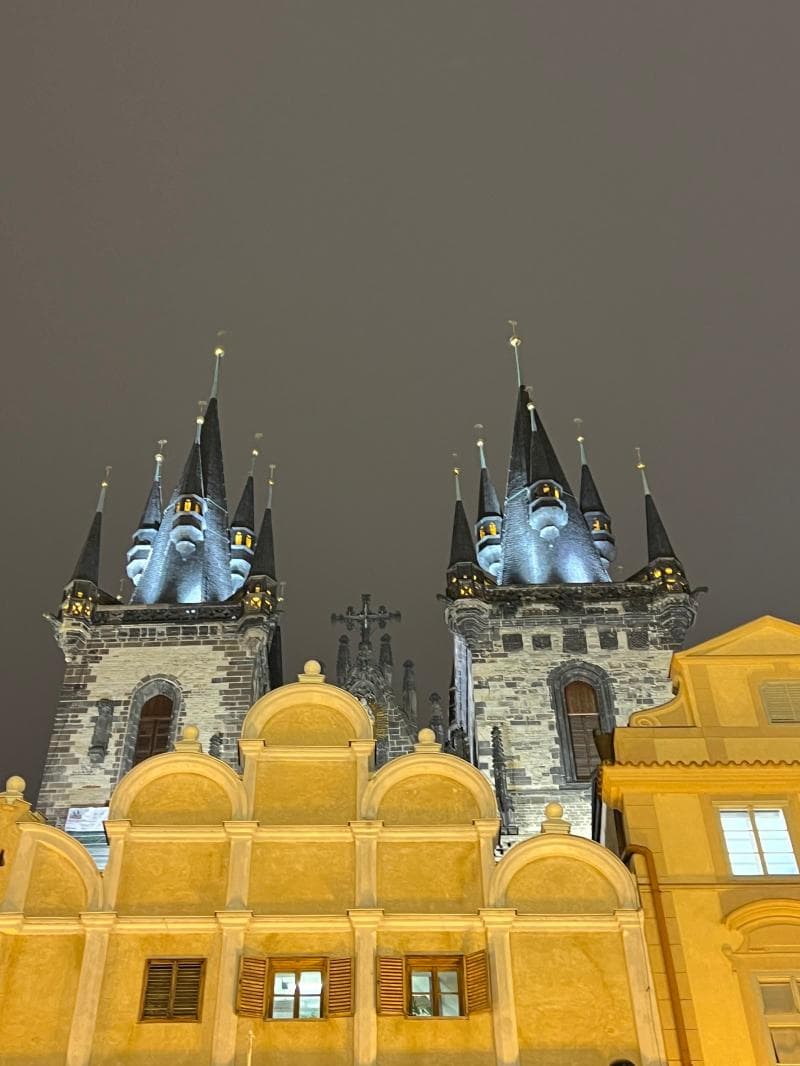
Explore Kinský Palace, a stunning Rococo masterpiece on Prague's Old Town Square, rich in history and cultural significance, once home to nobles and a stage for pivotal events in Czech Republic.
Overview
Nestled prominently within the historic Old Town Square of Prague, Czech Republic, Kinský Palace, or Palác Kinských, stands as a magnificent example of Rococo architecture. Its distinctive pale pink-and-white stucco facade, adorned with rich ornamentation, makes it an unmissable landmark amidst the Gothic and Baroque splendor of the square. Originally built as a lavish noble residence, the palace has transcended its aristocratic origins to become a significant cultural institution, housing a part of the National Gallery Prague for many decades. It is not just an architectural marvel but a repository of history, art, and compelling stories, drawing the eye of every traveler who steps into Prague's bustling heart.
History & Cultural Background
The story of Kinský Palace begins in the mid-18th century. Construction commenced in 1755 for Count Jan Arnošt Golz, concluding a decade later in 1765. The design is traditionally attributed to the renowned architect Kilian Ignaz Dientzenhofer, with construction completed by Anselmo Lurago, creating what is considered Prague's finest Rococo facade. Remarkably, the palace was erected on the foundations of three earlier medieval houses, incorporating elements like a 12th-century Romanesque structure's ground floor, preserved in its cellars, offering a fascinating glimpse into Prague's deeper past. Just three years after its completion, in 1768, the palace was acquired by the noble Kinský family, whose name it has carried ever since. The Kinský family maintained ownership until 1945, playing a significant role in the palace's identity. Since 1949, Kinský Palace has been under the administration of the National Gallery Prague, functioning as an art museum and contributing significantly to the Czech art scene. Its historical and architectural importance was formally recognized when it was protected as a national cultural monument in 1992.
What Makes It Special
What truly sets Kinský Palace apart is its exquisite Rococo styling, a delightful contrast to the Gothic and Baroque architecture dominating Old Town Square. Its facade is a masterpiece of stucco work, intricately detailed and painted in a charming pink and white. Sculptures by Ignaz Franz Platzer depicting classical elements adorn its exterior, adding to its theatrical and controlled exuberance. The palace's grand scale makes it the largest single building on Old Town Square, standing out with a unique presence. This architectural grandeur extends to its interiors, which, when accessible, have historically housed diverse collections of European and Asian art from the National Gallery, offering a rich cultural experience. The way the palace proudly extends slightly into the square, defying the typical alignment of neighboring buildings, is a testament to its singular character and the historical circumstances of its construction.
Stories, Fun Facts & Local Details
Kinský Palace is steeped in fascinating stories that weave it into the fabric of Czech history and culture. Perhaps one of its most celebrated connections is as the birthplace of Bertha von Suttner in 1843, who would later become the first woman to be awarded the Nobel Peace Prize in 1905. The palace also holds a significant link to one of the 20th century's most influential writers, Franz Kafka. His father, Hermann Kafka, operated a haberdashery shop on the ground floor, and young Franz himself attended a German secondary school located within the palace from 1893 to 1901. Another pivotal moment in Czech history unfolded here: in February 1948, Klement Gottwald, the Communist leader, addressed a large crowd from the palace's balcony, proclaiming the beginning of communist rule in Czechoslovakia. There is also a local legend surrounding the palace's slightly protruding position on the square. It's said that Count Golz, the original owner, bribed three city councilmen to obtain permission for this unusual placement, ensuring the palace's commanding view and unique footprint, much to the chagrin of later officials.
Visitor Perspective
As a visitor to Prague's Old Town Square, Kinský Palace immediately captures attention with its striking facade. While the palace has served as a significant venue for the National Gallery Prague, currently, its interior exhibition spaces may have limited access or be temporarily closed for exhibitions. Therefore, for travelers planning a visit in the near future, it is advisable to treat the palace primarily as an exterior architectural landmark, a stunning focal point within the square's vibrant atmosphere. Even from the outside, its Rococo elegance, the delicate pink-and-white colors, and the intricate sculptural details offer a rich visual feast. Standing before its facade allows one to connect with centuries of history, from noble families and literary giants to pivotal political events. It remains an essential part of exploring the historical and cultural layers of Prague, offering a silent narrative of the city's enduring legacy. Its prime location makes it an easy and rewarding stop during any walking tour of the Old Town, providing a picturesque backdrop for reflection and photography.
Coordinates: 14.42165, 50.08795
View on Google Maps💬 How Travelers Describe This Place
Based on community votes
Interesting
639Photogenic
526Beautiful
421Unique
366Must See
212
Traveler Stories
Discover memorable experiences shared by travelers who have visited this place.
No traveler stories yet.
Be the first traveler to share what made this place memorable.

Tour
By
Spot
Discover amazing places around the world. Your journey starts here.
Explore
© 2026 TourBySpot. All rights reserved.