Kazandžiluk Street
Sarajevo, Bosnia and Herzegovina
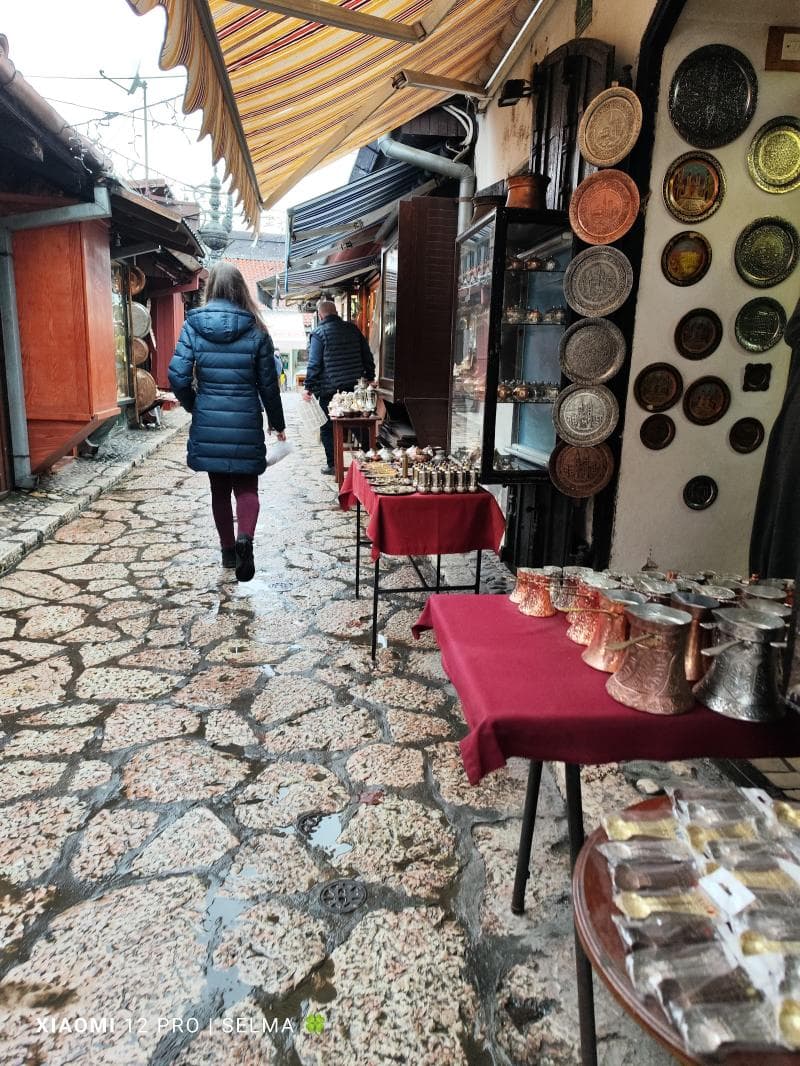
Explore Kazandžiluk Street in Sarajevo's Baščaršija, where coppersmiths have handcrafted traditional Bosnian wares for over 500 years.
Overview
Tucked within the vibrant labyrinth of Baščaršija, Sarajevo's historical and cultural heart, lies Kazandžiluk Street – a place where time seems to slow, and the echoes of centuries past resonate through the air. This ancient lane, often referred to as Coppersmith Street, is a living testament to a craft that has endured for over 500 years. It is here that the skilled hands of artisans transform humble sheets of copper into intricate masterpieces, upholding a cherished Bosnian tradition.
As you wander through Baščaršija, the distinct, rhythmic clang of hammers against metal is your first invitation to Kazandžiluk. This isn't merely a tourist attraction; it's a bustling, narrow street where daily life and ancient artistry intertwine, offering visitors an authentic glimpse into Sarajevo's enduring heritage.
History & Cultural Background
The story of Kazandžiluk Street is deeply rooted in the Ottoman period, emerging in the 16th century as a vital component of Sarajevo's burgeoning craft and trade core. The very name 'Kazandžiluk' provides a direct link to its origins, derived from 'kazandžija', the Bosnian word for coppersmith. This term, in turn, comes from the Turkish 'kazancı', meaning 'pot-maker', a nod to the artisans who initially forged large cauldrons ('kazan') for the Ottoman army.
Baščaršija itself, meaning 'main market' in Turkish, was founded in the 15th century by Isa-beg Ishaković, the Ottoman governor of Bosnia. It quickly became a thriving commercial hub, with streets dedicated to various crafts. While many of these specialized streets have seen their namesake crafts fade over time, Kazandžiluk has uniquely maintained its original trade, a rare feat that underscores its profound historical significance. So crucial is this cultural ensemble that the ambient area encompassing Kazandžiluk, Male Daire, and Luledžina Street was officially declared a national monument of Bosnia and Herzegovina in 2021.
What Makes It Special
What truly distinguishes Kazandžiluk Street is its unbroken chain of tradition. For over five centuries, coppersmiths have plied their trade on this very street, often passing down their skills through generations. This continuity is remarkable, making it one of the few places in central Sarajevo where a 15th-century Ottoman trade still flourishes in its original setting.
The artisans here, known as 'kazandžije', are not merely vendors; they are custodians of a meticulous craft. They employ age-old techniques, including intricate filigree work, to hand-hammer, engrave, and tin copper objects. Watching a master craftsman deftly shape metal, creating patterns with precision and care, is an almost mesmerizing experience. The atmosphere is further enhanced by the symphony of sounds – the continuous, irregular rhythm of hammers echoing from open workshops, a distinctive soundtrack to this corner of Sarajevo.
Stories, Fun Facts & Local Details
The street holds many stories within its gleaming copper. Beyond the utilitarian pots and pans, the 'kazandžije' specialized in crafting items for daily life and special occasions. The iconic Bosnian coffee sets, complete with a 'džezva' (coffee pot), 'fildžan' (small cup holder), and sugar bowl, are among the most popular and authentic creations found here.
Perhaps one of the most compelling and poignant details of Kazandžiluk is the artisans' ability to transform symbols of conflict into emblems of beauty. Visitors often discover unique pieces crafted from spent bullet and shell casings from past wars, repurposed into flowerpots, pens, or decorative objects. This powerful act of creation from destruction speaks volumes about the resilience and spirit of Sarajevo. Many of the workshops are family affairs, run by second, third, or even fourth-generation coppersmiths, ensuring that this precious heritage is preserved and continues to evolve.
Visitor Perspective
Stepping onto Kazandžiluk Street is an immersion of the senses. You'll hear the characteristic 'ping, ping, ping' before you even see the shops, a metallic melody that has defined the street for centuries. The glint of countless copper items, from polished trays to ornate coffee sets, catches the sunlight, creating a warm, inviting glow. The subtle smell of copper, sometimes mingling with a hint of scorching, adds to the authentic ambiance.
Travelers are encouraged to take their time here. Observe the craftsmen at work – many are happy to share insights into their techniques and traditions, and typically welcome photographs if asked politely. Purchasing a handmade piece from Kazandžiluk is more than just buying a souvenir; it's taking home a piece of Sarajevo's living history, crafted with skill and tradition. The street is conveniently located just east of the Sebilj fountain, making it an easy and essential stop on any Baščaršija exploration. It's a place where history isn't just displayed, but actively lived and created every single day.
Coordinates: 18.4318, 43.8596
View on Google Maps💬 How Travelers Describe This Place
Based on community votes
Interesting
521Beautiful
477Must See
422Unique
157Photogenic
28
Traveler Stories
Discover memorable experiences shared by travelers who have visited this place.
No traveler stories yet.
Be the first traveler to share what made this place memorable.

Tour
By
Spot
Discover amazing places around the world. Your journey starts here.
Explore
© 2026 TourBySpot. All rights reserved.