Karaweik Palace
Yangon, Myanmar
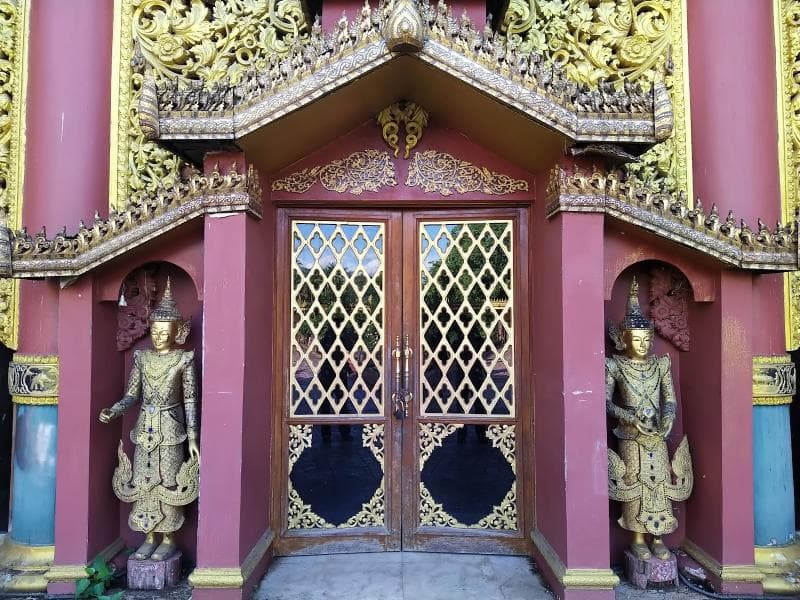
Explore Karaweik Palace, a golden royal barge on Kandawgyi Lake in Yangon, Myanmar. Discover its mythical history, stunning architecture, and vibrant cultural shows.
Overview
Nestled on the eastern shore of Kandawgyi Lake in Yangon, Myanmar, the Karaweik Palace stands as an instantly recognizable and magnificent landmark. Often appearing to float gracefully on the water, this unique structure is a modern interpretation of a traditional Burmese royal barge, dazzling visitors with its golden facade and intricate design. While often referred to as a palace, Karaweik is primarily a cultural hall, restaurant, and event venue, offering a captivating blend of Burmese heritage, cuisine, and performing arts. It serves as a prominent cultural center in Yangon, inviting travelers to immerse themselves in the rich traditions of Myanmar.
History & Cultural Background
The construction of Karaweik Palace, also known as Karaweik Hall, began in 1972 and was completed in 1974. Its inception was inspired by General Ne Win, who, after being captivated by a Burmese pavilion at the Expo '70 in Osaka, envisioned a similar grand structure for Yangon. The pavilion itself was modeled after the Pyigyimon royal barge, historically used by Mandalay's royal court for ceremonial processions. Renowned Burmese architect U Ngwe Hlaing was responsible for its design, aiming to create a structure that appeared to float on the lake's surface. The name 'Karaweik' originates from the Pali word 'karavika', referring to a mythical bird celebrated for its melodious cry. Originally commissioned by the government, the palace was managed by the Ministry of Trade before being leased to a private operator in the late 1990s.
What Makes It Special
The distinctive feature of Karaweik Palace is its architectural brilliance, designed in the style of two enormous golden mythical Karaweik birds. These bird figures, holding yellow spheres in their beaks, feature vibrant red and gold colored tails that converge at the rear of the structure. Adorning its roof is a seven-tiered 'pyatthat', a classic element of traditional Burmese architecture, reminiscent of royal palaces. Constructed from concrete and stucco, and extensively gilded, the palace glistens, especially under the tropical sun and when illuminated at night. Beyond its exterior, the interior boasts intricate wood carvings, frescoes, and national art, creating an atmosphere of luxury and celebrating Myanmar's rich heritage. It harmoniously blends traditional Burmese design with modern construction techniques, making it both an architectural marvel and a cultural testament.
Stories, Fun Facts & Local Details
The mythical Karaweik bird, whose elegant form the palace emulates, holds a significant place in Burmese folklore as a symbol of grace and having a beautiful song. Depictions of Nat spirits, guardian figures important in local culture and belief, can be found on the converged tails of the Karaweik birds, adding a layer of spiritual depth to the structure. An interesting historical anecdote reveals that during the tumultuous 8888 Uprising, the palace's staff provided a safe haven for monks from nearby monasteries, highlighting a moment of compassion amidst unrest. For many years, Karaweik Palace's image was proudly featured on the former Myanmar 10 kyats note, solidifying its status as a national symbol. The venue is also known for showcasing the 'Pann Sel Myo', Myanmar's ten traditional arts and crafts, through its design and performances. Traditional dance performances, such as the famous Elephant Dance, rooted in the era of ancient kings, and the romantic Kinnari and Kinnara Dance, are regularly staged here, bringing ancient legends to life. For some locals, it was once one of the few places to reliably find treats like ice cream, a fun detail from its past.
Visitor Perspective
Visiting Karaweik Palace offers a multi-sensory experience for travelers. Many come to admire its unique architecture, taking in the panoramic views of Kandawgyi Lake, often capturing stunning photographs, particularly at sunset when the nearby Shwedagon Pagoda glows golden. The palace houses a popular buffet restaurant serving a variety of Myanmar, Chinese, and Eastern cuisines. A highlight for many is the opportunity to witness authentic traditional Burmese cultural shows, which typically accompany dinner. These performances, lasting two to three hours, feature elaborate dances, puppet shows, and music, showcasing ethnic costumes and historical narratives. Inside, visitors can explore halls adorned with detailed wood carvings that tell stories of Burmese legends. The palace is generally open daily, with cultural shows and dinner usually starting in the evening. Its convenient location within the Kandawgyi Lake complex makes it easily accessible, often combined with a leisurely stroll around the lake or a visit to nearby attractions.
Coordinates: 96.1657, 16.7986
View on Google Maps💬 How Travelers Describe This Place
Based on community votes
Photogenic
879Must See
723Unique
482Interesting
396Beautiful
274
Traveler Stories
Discover memorable experiences shared by travelers who have visited this place.
No traveler stories yet.
Be the first traveler to share what made this place memorable.

Tour
By
Spot
Discover amazing places around the world. Your journey starts here.
Explore
© 2026 TourBySpot. All rights reserved.