Irrigation Channels
Bali, Indonesia
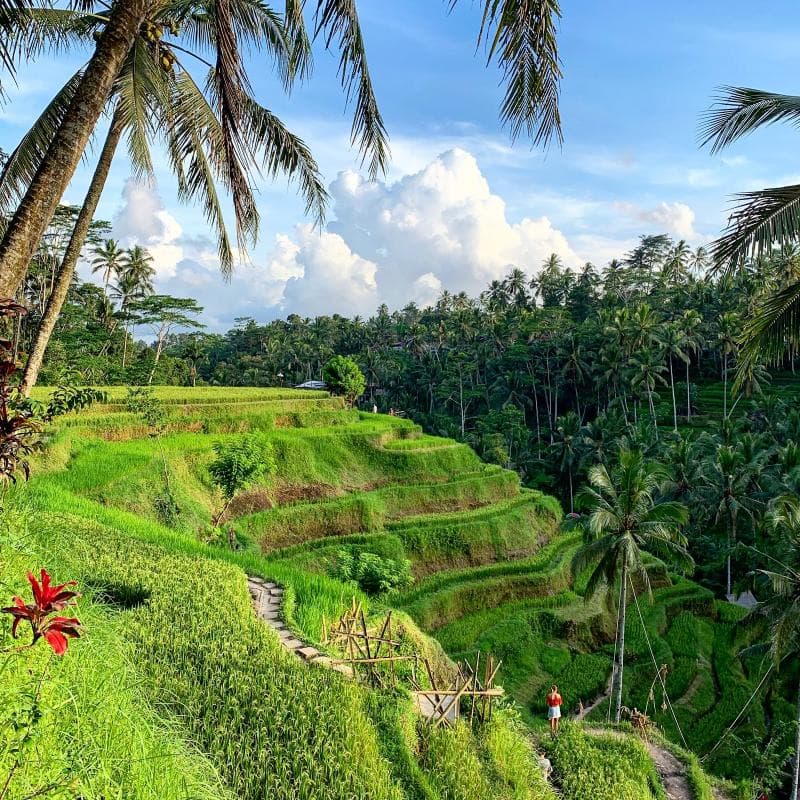
Discover the ancient irrigation channels of Tegallalang Rice Terrace, Bali, Indonesia, and the UNESCO-recognized Subak system that sustains them.
Overview
The intricate irrigation channels winding through the Tegallalang Rice Terrace in Bali, Indonesia, are far more than mere conduits for water; they represent the pulsating heart of a profound cultural and agricultural system known as Subak. Nestled amidst the lush landscapes north of Ubud, these channels are an integral part of the terraced fields, a landscape recognized by UNESCO as a World Heritage Site in 2012 for its outstanding universal value.
These hand-dug channels, along with bamboo pipes, tunnels, and weirs, meticulously guide water from mountain sources, ensuring equitable distribution across the descending rice paddies. Visitors to Tegallalang are immediately struck by the visual harmony created by this ancient engineering, where water flows constantly, feeding the vibrant green tapestry that defines the Balinese countryside. It's a living testament to centuries of sustainable farming practices and a deep-seated spiritual connection to nature.
History & Cultural Background
The origins of the Subak system, which the Tegallalang irrigation channels exemplify, trace back to at least the 9th century, with some sources pointing to an 8th-century introduction by the revered sage Rsi Markandeya. This ancient system emerged as early Balinese communities began cultivating wet rice in the island's mountainous terrain, necessitating an organized approach to water management.
At its core, Subak is deeply intertwined with the Balinese Hindu philosophy of Tri Hita Karana. This principle emphasizes the harmonious relationship between the divine (Parahyangan), humanity (Pawongan), and nature (Palemahan). For the Balinese, water is not just a resource; it is considered a sacred gift from Dewi Danu, the goddess of lakes and water. The irrigation channels, therefore, are physical manifestations of this spiritual belief, managed through democratic councils of farmers rather than by government or royalty. This cooperative approach ensures that every farmer receives a fair share of water, fostering a strong sense of community and shared responsibility that has preserved the system for over a thousand years.
What Makes It Special
What sets the irrigation channels of Tegallalang apart is their ingenious design and the philosophy they embody. The entire Subak system operates solely on gravity, a marvel of ancient engineering that requires no mechanical pumps. Water is channeled through an intricate network of hand-dug canals, tunnels, and bamboo pipes, meticulously carved into the hillsides to follow the natural contours of the Ceking valley.
This sophisticated network ensures a controlled and equitable distribution of water to each rice paddy, regardless of its position. This sustainable method has allowed generations of farmers to cultivate rice efficiently while preventing soil erosion, especially during heavy monsoon rains. The resilience of the Subak system is remarkable; it has adapted to environmental changes, volcanic eruptions, and political shifts without altering its core mechanics, demonstrating a profound balance between human ingenuity and natural forces.
Stories, Fun Facts & Local Details
The irrigation channels bring life to the Tegallalang Rice Terrace, creating a dynamic landscape that changes with the seasons. Depending on the month, the fields fed by these channels transform from reflective muddy pools during replanting, to vibrant emerald green during peak growth, and eventually to a golden-brown hue just before harvest in March, April, September, and October. This continuous cycle, regulated by the water flow, is a testament to the farmers' coordinated efforts.
Small shrines, often made of woven palm leaves and bamboo, dot the corners of the rice fields, marking spiritual boundaries and serving as places for daily offerings of flowers, rice, and incense to honor Dewi Sri, the goddess of rice and fertility, and Dewi Danu. These offerings are a poignant reminder of the spiritual dimension embedded in every aspect of the Subak system. Walking the narrow paths, visitors might encounter locals carrying baskets of harvested rice, or observe the constant, soothing trickle of water as it moves from upper tiers to the valley floor. Be mindful that while exploring, the clay-like soil near the channels can become slick, especially after morning showers.
Visitor Perspective
For visitors, exploring the irrigation channels at Tegallalang Rice Terrace offers a unique, immersive experience. Trekking along the narrow dirt paths and stone steps that weave between the paddies provides an intimate view of this living agricultural marvel. You'll cross bamboo bridges and step over the flowing channels, gaining a deeper appreciation for the effort involved in maintaining this landscape.
It's an opportunity to witness firsthand the traditional farming methods that have sustained local communities for centuries. Observing farmers tending to their fields, guided by the ancient Subak system, provides a glimpse into the harmonious relationship between people and nature. The best time to visit is often early morning (between 7:00 AM and 9:00 AM) to avoid crowds and the midday heat, and to capture the soft light illuminating the misty valley. Remember to respect the working environment; stay on designated paths, avoid stepping on crops, and be mindful of any small offerings on the ground.
Coordinates: 115.2786, -8.4329
View on Google Maps💬 How Travelers Describe This Place
Based on community votes
Beautiful
673Photogenic
219Interesting
186Must See
143Unique
80
Traveler Stories
Discover memorable experiences shared by travelers who have visited this place.
No traveler stories yet.
Be the first traveler to share what made this place memorable.

Tour
By
Spot
Discover amazing places around the world. Your journey starts here.
Explore
© 2026 TourBySpot. All rights reserved.