Interior Nave
Vilnius, Lithuania
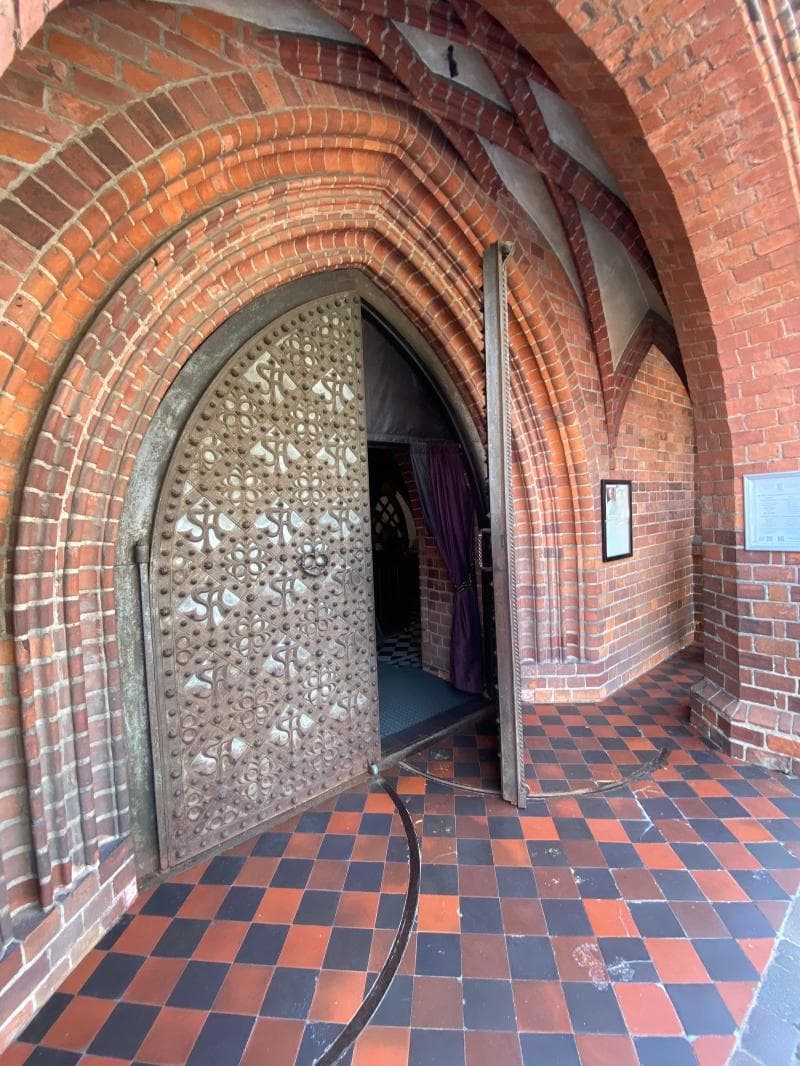
Explore the serene Interior Nave of St. Anne's Church in Vilnius, Lithuania. Discover its Gothic structure, Baroque altar, and rich history.
Overview
Stepping into the Interior Nave of St. Anne’s Church in Vilnius, Lithuania, is to enter a serene world where centuries of history and artistry converge. This architectural marvel, nestled within Vilnius’ UNESCO World Heritage-listed Old Town, is renowned globally for its stunning Flamboyant Gothic exterior, crafted from 33 types of brick. Yet, the interior offers a captivating counterpoint, a space of quiet grandeur that tells its own story through evolving styles and enduring faith. It is a single-nave church, a characteristic that immediately draws the eye upwards, emphasizing its impressive verticality and elegant proportions. [2, 12, 17]
While the facade presents an intricate tapestry of Gothic brickwork, the nave's interior, though structurally Gothic with its pointed arches and high ceilings, features decorative elements that have seen several transformations, notably a Baroque altar and significant early 20th-century refurbishment. This blend creates an atmosphere that is both historically profound and visually engaging, inviting contemplation and admiration from every visitor. [2, 5, 7, 12]
History & Cultural Background
The history of St. Anne's Church dates back to the late 14th century with a wooden church, which was later destroyed by fire. The present brick edifice, which includes the interior nave, was constructed between 1495 and 1500, initiated by Alexander I Jagiellon, King of Poland and Grand Duke of Lithuania. It was consecrated in 1500 and named for Anna, Grand Duchess of Lithuania, wife of Vytautas the Great. [2, 4, 10, 15]
Over the centuries, the church has endured fires, wars, and numerous reconstructions. A significant repair was undertaken in 1747 under the supervision of Johann Christoph Glaubitz. While the exterior has remained remarkably unchanged since its late 15th-century construction, the interior has seen more extensive evolution. Notably, a comprehensive restoration between 1902 and 1909 shaped much of the current interior design, giving it a distinctive Neo-Gothic character in places, contrasting with the Baroque altar. The church was part of the Bernardine complex, often associated with the larger Bernardine Church and monastery nearby. [3, 5, 7, 12, 16]
What Makes It Special
The Interior Nave of St. Anne's Church is special for its striking structural Gothic elegance harmoniously intertwined with later decorative styles. The journey from the intricate Gothic exterior to the reverent interior is a transition through architectural eras. Inside, the single nave leads the gaze towards the main altar, which is adorned in a Baroque style, featuring intricate stonework, sculptures, and icons in its niches. [2, 6, 7, 12]
Visitors will notice the soaring pointed arches and high ceilings that speak to its Gothic foundations, creating an airy and expansive feel. Light filters gracefully through tall stained-glass windows, casting vibrant hues across the traditional checkered floor tiles and illuminating the weathered pews. The interior also showcases unique paintings and intricately carved wooden sculptures, adding layers of artistic detail to the space. This fusion of Gothic structure with Baroque and early 20th-century decorative elements offers a rich visual experience that differentiates it from many other churches. [7, 8, 11, 12]
Stories, Fun Facts & Local Details
One of the most enduring legends associated with St. Anne's Church, and by extension its interior, involves Napoleon Bonaparte. It's said that during his 1812 campaign, he was so captivated by the church's beauty that he expressed a desire to carry it back to Paris 'in the palm of his hand.' While a charming anecdote, his soldiers reportedly burned much of the church's wooden inventory for fuel, creating a poignant contrast to the tale. [4, 6, 8, 10, 11]
Look closely at the iron church doors, where you might spot St. Anne's monogram, 'SA' (Santa Anna in Latin). An even more intriguing detail lies in the door handles, said to be decorated with horned mythical creatures—an unexpected, almost whimsical touch in a sacred space. The interior's unique acoustics are also noteworthy; the space is renowned for the way organ music resonates, with Bach's fugues reportedly 'caroming off brick ribs' during evening vespers, creating a deeply immersive auditory experience. [9, 11]
Visitor Perspective
For the curious traveler, the Interior Nave offers a profound sense of peace and historical continuity. The initial impression is often one of quiet awe, as the silence inside feels almost palpable, a stark contrast to the bustling Old Town outside. Observing the crimson light streaming through the lancet windows, illuminating the nave's architectural details, is a truly captivating experience. [11]
Walking along the checkered tiles and looking up at the high ceilings, one can truly appreciate the craftsmanship that has stood for centuries. Whether attending a service or simply soaking in the atmosphere, the church encourages a moment of reflection. Respectful behavior and modest dress are encouraged, especially given that it remains an active place of worship. Combining a visit here with the neighboring Bernardine Church and monastery further enriches the understanding of this historically significant area of Vilnius. [7, 8, 12]
Coordinates: 25.29333, 54.68306
View on Google Maps💬 How Travelers Describe This Place
Based on community votes
Unique
982Photogenic
876Must See
458Interesting
235Beautiful
197
Traveler Stories
Discover memorable experiences shared by travelers who have visited this place.
No traveler stories yet.
Be the first traveler to share what made this place memorable.

Tour
By
Spot
Discover amazing places around the world. Your journey starts here.
Explore
© 2026 TourBySpot. All rights reserved.