Interior Frescoes
Zagreb, Croatia
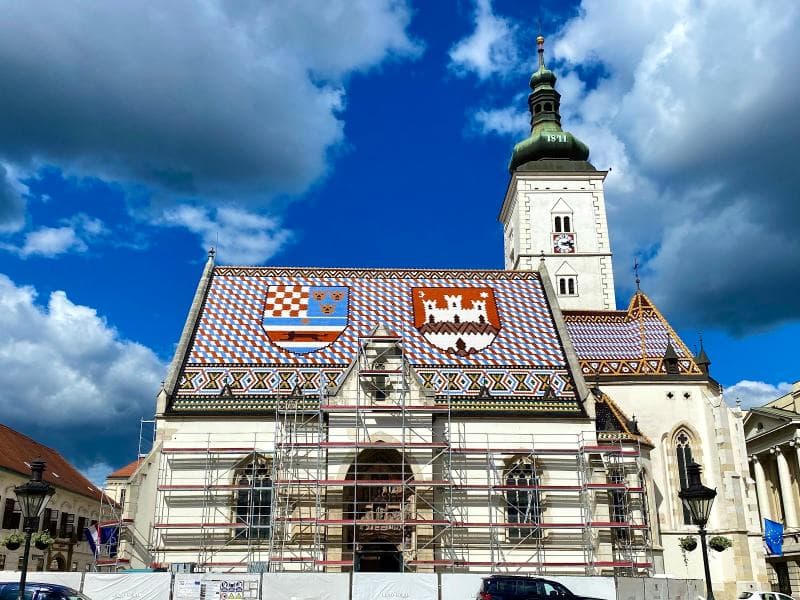
Explore the stunning interior frescoes of St. Mark's Church in Zagreb, Croatia, depicting Croatian history and religious themes by Jozo Kljaković. Discover its rich cultural heritage.
Overview
Stepping inside St. Mark's Church in Zagreb, Croatia, visitors are immediately drawn into a vibrant historical narrative told through its magnificent interior frescoes. Far beyond the church's iconic tiled roof, these wall and ceiling paintings offer a profound glimpse into Croatian history, culture, and religious devotion. They transform the Gothic interior into a visual encyclopedia, guiding the eye through centuries of artistic and national identity. The frescoes are primarily the work of the esteemed Croatian painter Jozo Kljaković, whose artistic vision brought a fresh spiritual and historical dimension to this ancient place of worship. Complementing these frescoes are significant sculptures by the renowned Ivan Meštrović, collectively making the interior of St. Mark's Church a true treasury of Croatian art and heritage.
History & Cultural Background
St. Mark's Church, dating back to the 13th century, has witnessed numerous transformations throughout its long history, blending Romanesque, Gothic, and later architectural styles. While the exterior underwent significant Gothic revival modifications in the late 19th century, it was the early 20th century that brought the most profound changes to its interior artistic scheme. Between 1936 and 1938, a crucial renovation project aimed to 'purify' the church, removing some of the earlier Neo-Gothic additions and integrating works by leading Croatian artists. This period saw Jozo Kljaković embark on his monumental cycle of frescoes. Born in 1889, Kljaković was a prominent Croatian painter and professor at the Academy of Fine Arts in Zagreb, known for his mastery of fresco painting. His work in St. Mark's Church was a collaborative effort that also included the integration of powerful sculptures by his friend, Ivan Meštrović, and oil paintings by Ljubo Babić.
What Makes It Special
The interior frescoes of St. Mark's Church are special for their powerful narrative quality and their deep connection to Croatian identity. Jozo Kljaković's work focuses on themes of Croatian history and culture, intertwining them with religious narratives. Unlike purely decorative church art, Kljaković's frescoes serve as a vivid chronicle, depicting Croatian kings and significant historical events alongside traditional biblical scenes. This unique blend makes the church not just a religious site, but a profound cultural monument. The frescoes are characterized by their rich imagery and meticulous craftsmanship, creating a solemn and reflective ambiance that invites contemplation. The addition of sculptures by Ivan Meštrović, such as 'The Crucified Christ' and 'Madonna with Jesus,' further elevates the artistic significance, demonstrating a harmonious integration of different artistic forms by leading national artists.
Stories, Fun Facts & Local Details
One fascinating aspect of the frescoes' creation is their role in a broader artistic movement to restore and redefine Croatian national art within significant public spaces. Kljaković, deeply influenced by Art Nouveau and Ivan Meštrović, brought a distinctive modern yet historically informed style to the church. The renovation involved not just painting but also structural enhancements, such as the elimination of dampness, installation of a concrete blanket, and the gilding of the vaults with 22-carat gold leaflets, adding to the interior's luminosity. The choice to portray Croatian kings within a religious context underscores the deep intertwining of faith and national heritage in Croatia. The church itself is a vibrant center for the community, hosting religious services and cultural events. Historically, it has also been a venue for state ceremonies, further cementing its role as a focal point for Croatian identity. Imagine the prayers and hopes whispered within these walls, surrounded by art that celebrates both heavenly grace and earthly legacy.
Visitor Perspective
For the curious traveler, experiencing the interior frescoes of St. Mark's Church is an enriching journey into Croatia's soul. While the church's famous exterior roof often captures the initial attention, the true depth of its artistry lies within. Visitors should note that access to the interior is typically restricted to times of religious services. Attending a Mass offers a unique opportunity to witness the frescoes and sculptures in their intended spiritual context, surrounded by local parishioners. Photography inside may be limited, so visitors are encouraged to absorb the vivid imagery and meticulous craftsmanship through their own eyes. The sheer scale and detail of Kljaković's work, combined with Meštrović's powerful sculptures, create an unforgettable atmosphere. It's a place where history, art, and faith converge, leaving a lasting impression of Croatia's rich cultural tapestry. Plan your visit accordingly to fully appreciate this hidden gem of Zagreb's Upper Town.
Coordinates: 15.971, 45.8098
View on Google Maps💬 How Travelers Describe This Place
Based on community votes
Must See
836Unique
795Photogenic
536Beautiful
522Interesting
489
Traveler Stories
Discover memorable experiences shared by travelers who have visited this place.
No traveler stories yet.
Be the first traveler to share what made this place memorable.

Tour
By
Spot
Discover amazing places around the world. Your journey starts here.
Explore
© 2026 TourBySpot. All rights reserved.