Interactive Exhibits
Astana, Kazakhstan
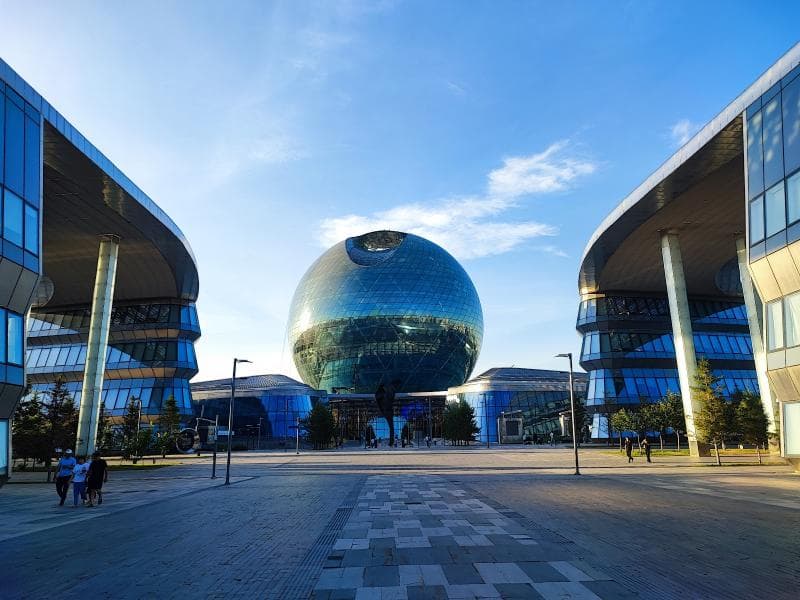
Explore the interactive exhibits at Nur Alem Museum Of Future Energy in Astana, Kazakhstan, delving into space, solar, wind, and kinetic power.
Overview
Stepping into the Nur Alem Museum Of Future Energy in Astana, Kazakhstan, is like entering a vision of tomorrow. This colossal spherical structure, the largest of its kind globally, stands as a gleaming beacon on the city's skyline, originally serving as the centerpiece for EXPO-2017 with the theme 'Future Energy'. Now, it has transformed into Kazakhstan's premier technological energy museum, inviting curious minds to explore the possibilities of sustainable power.
Across its eight distinct floors, Nur Alem offers a captivating journey through various forms of energy, from the cosmic expanse to the hidden power in our everyday movements. Each level is meticulously designed to be fully interactive, encouraging visitors to not just observe, but to engage, experiment, and truly become part of the scientific discovery. From the moment you ascend in its glass elevators, you are immersed in a world where learning about renewable energy is an adventure for all ages.
History & Cultural Background
The story of Nur Alem is deeply intertwined with Kazakhstan's ambitious vision for the future. Conceived as the main pavilion for the International Specialized Exhibition EXPO-2017, held in Astana, the sphere embodied the exhibition's pivotal theme: 'Future Energy'. The design, by the renowned architectural firm Adrian Smith + Gordon Gill Architecture, reflected a commitment to showcasing innovative energy solutions and the transition to a green economy.
After the successful conclusion of EXPO-2017, which saw the Nur Alem pavilion become the most visited attraction, the structure was repurposed. Instead of being dismantled, it proudly reopened as the Museum of Future Energy, cementing its legacy as a symbol of progress and a continuous source of education. This transformation highlights Kazakhstan's dedication to sustainable development and its role in fostering global dialogue on energy security. The museum not only speaks about energy but also actively produces it, with integrated photovoltaic panels and silent wind generators making it a living exhibit of sustainable architecture.
What Makes It Special
The interactive exhibits at Nur Alem are special due to their immersive and hands-on approach to complex scientific concepts. Unlike traditional museums, here, 'all sites are interactive,' meaning visitors are encouraged to touch, conduct experiments, and even participate in scientific explorations, such as those found in the kinetic energy hall.
Each of the eight floors delves into a unique energy type, creating a multi-sensory experience. For example, the seventh floor, dedicated to 'Space Energy,' offers an attraction called 'Walk on the Moon' and panoramic films on orbital solar collection that can induce a mild sense of vertigo, truly transporting you beyond Earth. The sixth floor (or second, depending on the source), focusing on 'Solar Energy,' allows visitors to see photovoltaic arrays up close and learn how the very skin of the Nur Alem building generates its own power. On the fifth floor, the 'Wind Energy' exhibit features an 'Alley of Winds' where you can feel different wind speeds and observe a kinetic sculpture with metallic petals gracefully responding to air currents.
Furthermore, the museum employs guide-robots to enhance the visitor experience and is constantly updated with the latest scientific developments, ensuring a dynamic and forward-thinking exhibition.
Stories, Fun Facts & Local Details
The Nur Alem sphere itself is a marvel of engineering and design, often translated as 'Shining World' or 'Universe of Light.' It holds the distinction of being the world's largest spherical building, a striking architectural achievement that captures the sun's rays and reflects them dramatically across the steppe landscape.
A fascinating aspect is that the building's infrastructure is an exhibit in itself. The very structure generates its own electricity through solar panels integrated into its curved glass facade and wind generators discreetly placed at its summit, making it a living, breathing example of future energy in action. The museum's first floor isn't solely about energy; it also hosts a National Pavilion, offering insights into Kazakhstan's rich history and diverse culture, alongside showcasing local scientific innovations in green energy.
Visitors can also ascend to the eighth floor to discover 'Future Astana,' an exhibition forecasting the capital's development and its reliance on alternative energy sources by 2050. This level also provides an observation deck, offering unparalleled panoramic views of Astana's futuristic skyline and the surrounding Kazakh steppe.
Visitor Perspective
For any traveler exploring Astana, the interactive exhibits of Nur Alem offer a unique blend of education and entertainment. It's a place where families can spend hours, with children particularly drawn to the hands-on experiments in the biomass and kinetic energy halls. Imagine riding bicycle generators to understand the power of movement or delving into an interactive laboratory.
The museum caters to a wide range of interests, from those fascinated by space exploration on the seventh floor to those intrigued by the historical applications of water energy on the second floor. Navigating the spherical building is an experience in itself, with glass elevators offering glimpses of the expansive interior as you ascend. The journey culminates on the observation deck, providing not just a view of the city but a perspective on Kazakhstan's commitment to a sustainable future. It's an inspiring visit that leaves you contemplating the possibilities of energy and innovation.
Coordinates: 71.433, 51.133
View on Google Maps💬 How Travelers Describe This Place
Based on community votes
Interesting
989Unique
613Photogenic
581Must See
514Beautiful
207
Traveler Stories
Discover memorable experiences shared by travelers who have visited this place.
No traveler stories yet.
Be the first traveler to share what made this place memorable.

Tour
By
Spot
Discover amazing places around the world. Your journey starts here.
Explore
© 2026 TourBySpot. All rights reserved.