Interactive Displays
Oslo, Norway
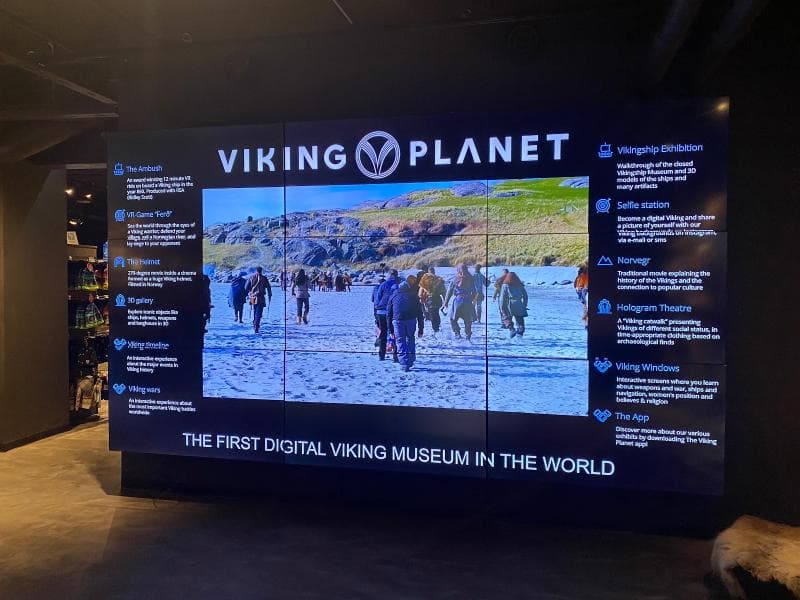
Explore Interactive Displays at The Viking Planet in Oslo, Norway. Dive into Viking history with VR, holograms, and immersive 3D exhibits.
Overview
Stepping into The Viking Planet in Oslo, Norway, is an invitation to journey back a thousand years, not through dusty artifacts, but through a vibrant tapestry of interactive displays. This modern museum redefines how we engage with history, offering a cutting-edge, digital portal to the Viking Age. It is located conveniently in the heart of Oslo, across from the Oslo City Hall.
Instead of traditional static exhibits, The Viking Planet leverages advanced technology to create a dynamic and immersive experience. Visitors are encouraged to explore the lives, battles, and voyages of the Norsemen through various high-tech mediums, making history palpable and engaging for all ages. The core of this innovative approach lies in its diverse array of interactive displays, designed to stimulate multiple senses and offer unique insights into Viking culture.
History & Cultural Background
The Viking Planet opened its doors in Oslo in June 2019, with the ambition of connecting guests to the Viking Age in an entirely new and innovative way. It was established as the world's first interactive Viking Age museum. The museum's concept emerged from a desire to make Viking history engaging for a digitally oriented generation, drawing on advances in virtual reality (VR) hardware and immersive storytelling. To ensure historical accuracy, The Viking Planet has collaborated extensively with experts, including Viking historian Kim Hjardar, who oversaw the design of buildings, weaponry, clothing, and longships featured in the content.
This digital museum complements traditional institutions by offering a different perspective, bringing the past to life through technology rather than solely relying on physical artifacts. While dramatic at times, the experiences are rooted in knowledge acquired through archaeological finds and Old Norse literature, providing a credible yet exciting narrative of the Viking era.
What Makes It Special
The interactive displays at The Viking Planet are its true centerpiece, distinguishing it from conventional museums. Visitors are not mere observers; they become integral participants in the historical narrative. Key features include award-winning virtual reality experiences, where guests can virtually tour famous Viking ships like the Oseberg and Gokstad, or find themselves in the midst of a Viking battle.
Beyond VR, the museum boasts a hologram theater where historically accurate Vikings appear lifelike, bringing ancient figures into the present. Interactive 3D exhibits and touchscreens allow for deep dives into specific topics, enabling visitors to manipulate 3D models of Viking artifacts, explore settlements, and ships, and delve into extensive historical timelines with detailed information, images, and videos. The cinematic experiences, including a stunning 270-degree panorama, further immerse guests, providing a comprehensive visual and auditory journey through Viking life.
Stories, Fun Facts & Local Details
One of the most talked-about experiences is 'The Ambush,' an award-winning VR film produced in collaboration with Ridley Scott Associates and Dimension Studio. This twelve-minute scripted VR drama places you directly into a Viking ambush on Norway's western coast, experienced from automated cinema chairs that move in sync with the virtual Viking ship, adding a physical dimension to the immersion. Visitors can also challenge themselves in 'Ferd,' an action-packed VR game where they can 'fight like a Viking' using bows, arrows, or swords.
The interactive timelines are particularly rich in detail, presenting major Viking events and battles with engaging visuals that depict strategies and troop movements. The ability to digitally explore iconic artifacts, even those from the currently inaccessible Viking Ship Museum (under renovation), provides a unique way to connect with precious historical items, viewing them from all angles and learning their stories. The blend of such high-tech storytelling ensures that every visit uncovers new facets of the Viking world, making complex history accessible and enjoyable.
Visitor Perspective
A visit to The Viking Planet's interactive displays is an incredibly engaging and educational adventure. The diverse range of media, from VR and holograms to touch screens and cinematic presentations, ensures that all visitors, regardless of their prior knowledge of Viking history, will find something captivating. The museum recommends allowing between 1.5 to 2 hours for a full experience, suggesting there is a wealth of content to absorb. While most content is suitable for all ages, some VR experiences are recommended for visitors aged 12 and up due to realistic depictions of violence and headset fit.
The multi-sensory approach fosters a deeper understanding and appreciation for Viking culture, moving beyond traditional textbook learning to provide a truly memorable encounter with Norway's heritage. The overall impression is one of a fun, extremely interactive, and well-balanced museum that skillfully uses technology to break down barriers between the past and the present.
Coordinates: 10.734085898620854, 59.91334527601768
View on Google Maps💬 How Travelers Describe This Place
Based on community votes
Interesting
618Unique
449Must See
335Photogenic
308Beautiful
22
Traveler Stories
Discover memorable experiences shared by travelers who have visited this place.
No traveler stories yet.
Be the first traveler to share what made this place memorable.

Tour
By
Spot
Discover amazing places around the world. Your journey starts here.
Explore
© 2026 TourBySpot. All rights reserved.