Independence Monument
Tashkent, Uzbekistan
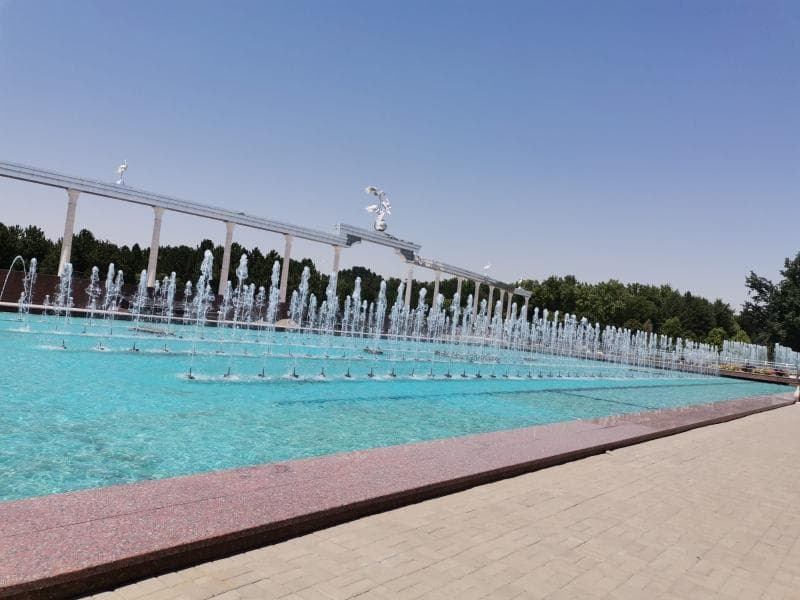
Discover the Independence Monument in Tashkent, Uzbekistan, a powerful symbol of sovereignty within the grand Mustaqillik Maydoni.
Overview
The Independence Monument, known locally as 'Mustaqillik Monumenti,' stands proudly within Independence Square ('Mustaqillik Maydoni') in the heart of Tashkent, Uzbekistan. It is a powerful and significant architectural complex symbolizing the nation's hard-won sovereignty and national pride. The monument features a grand globe, upon which the borders of Uzbekistan are outlined, resting atop a granite pedestal. At its base, a poignant bronze sculpture, often referred to as the 'Happy Mother' or Mother-Motherland, depicts a woman tenderly holding a baby. This central landmark is nestled within an expansive and beautifully landscaped square that covers approximately 12 hectares, making it feel more like a large park. The square itself is adorned with lush green zones, numerous refreshing fountains, and impressive architectural elements like the 'Ezgulik' (Goodness) Arch, topped with sculptures of storks. Independence Square serves as a central hub for major national celebrations and solemn events, making it a focal point for both locals and visitors to reflect on Uzbekistan's rich history and bright future.
History & Cultural Background
The site of Independence Square carries a layered history that reflects Uzbekistan's journey through time. Before 1865, the area was near a Kokand khan's palace, and later became the location for a Turkestan Governor-General's residence during the colonial period. During the Soviet era, this prominent location was known as Lenin Square, and a monument to Vladimir Lenin stood in its center. However, with Uzbekistan's declaration of independence in September 1991, the square underwent a transformative renaming in 1992 to 'Mustaqillik Maydoni,' or Independence Square. The statue of Lenin was subsequently dismantled, making way for the new Independence Monument.
The current Independence Monument, featuring the globe, was erected in 1992 to symbolize the newly sovereign state's emergence on the world map. A significant addition came in December 2005, during a comprehensive architectural reconstruction of Mustaqillik Maydoni, when the 'Happy Mother' sculpture was integrated into the monument complex. By a presidential decree in February 2006, the newly renovated monument was officially renamed the Monument of Independence and Humanism, signifying a deeper symbolic meaning. This evolution from a colonial-era center to a Soviet parade ground, and finally to a symbol of national freedom, encapsulates Uzbekistan's modern identity and aspirations.
What Makes It Special
The Independence Monument is special not just for its impressive scale, but for the profound symbolism it embodies for the Uzbek nation. The golden globe, with Uzbekistan's borders distinctly outlined, powerfully represents the country's emergence as an independent and equal member of the global community. It signifies a young state proudly taking its place on the international stage. The 'Happy Mother' sculpture, a tender figure of a woman cradling a baby, is perhaps the most emotionally resonant element. She symbolizes the Motherland, national rebirth, wisdom, and the guardianship of ancient traditions. The child in her arms represents the bright future and hopes for the next generation of Uzbekistan.
Beyond the central monument, the broader Independence Square adds to its unique character. The Arch of Ezgulik, or 'Arch of good and noble aspirations,' is adorned with figures of storks, which are traditional symbols of peace and tranquility in Uzbekistan. The expansive green spaces and numerous fountains throughout the square create an atmosphere of serenity and beauty, offering a peaceful retreat in the bustling capital. Moreover, the architectural blend of modern Uzbek design with subtle Islamic traditions in the surrounding government buildings makes the square a showcase of contemporary Uzbekistan. It serves as the nation's primary venue for significant state events and parades on national holidays, highlighting its ceremonial importance.
Stories, Fun Facts & Local Details
The Independence Monument and its surrounding square are deeply woven into the fabric of Tashkent's daily life and national consciousness. Locals frequently visit the square, not just for quiet reflection but also for joyous occasions. It's a particularly popular spot for newlyweds to take photographs, capturing their special moments against the backdrop of this significant landmark. During national holidays like Uzbekistan's Independence Day on September 1st, and even New Year's, the square comes alive with vibrant cultural performances, musicians, clowns, and rope-dancers, with a grand President's New Year tree often installed.
The symbolism of the golden globe on the monument has had a lasting impact on Uzbek art, inspiring reproductions on posters, murals, and sculptures across the country throughout the 1990s and 2000s. Within the larger complex of Independence Square, visitors will also find the Glory and Memory Alley. This area is dedicated to honoring Uzbek soldiers who perished in World War II, featuring Memory Books that list their names and an Eternal Flame, guarded by a figure known as the 'Mourner Mother.' It's a tradition for Tashkent residents to lay flowers here on May 9th and other holidays, paying homage to those who sacrificed for their Motherland. The sheer size of the square, approximately 12 hectares, gives it the feel of a vast park, complete with a multitude of fountains—Tashkent being notably rich in these refreshing water features.
Visitor Perspective
For any traveler to Tashkent, the Independence Monument and Independence Square offer a captivating experience. Visitors consistently describe the atmosphere as peaceful, clean, and meticulously maintained, making it ideal for a leisurely stroll and photography. The expansive green areas and beautiful fountains provide a serene escape from urban bustle. While the central monument and the 'Happy Mother' statue are undeniably the main attractions, the entire square is rich with symbolism and history, inviting contemplation on Uzbekistan's journey to nationhood.
The square is remarkably accessible, with the 'Mustaqillik Maydoni' Metro station conveniently located nearby, making it an easy destination to reach via public transport. It often serves as an excellent starting point for exploring other significant attractions within Tashkent. Most visitors find that 1-2 hours are sufficient to explore the square itself, including taking photos and viewing the monuments. If you wish to visit surrounding museums or simply linger longer in its tranquil ambiance, plan for 3-4 hours. While some areas near government buildings may have restricted access, the majority of the park and monuments are open for public enjoyment. For the most comfortable experience, consider visiting during spring (March-May) or autumn (September-November), when the weather is mild and the gardens are in full bloom or showcasing vibrant fall colors. A visit during Uzbekistan's Independence Day on September 1st, promises a truly immersive cultural experience with lively celebrations. Additionally, visiting in the evening allows you to witness the fountains beautifully illuminated, adding a magical touch to this important landmark.
Coordinates: 69.2668, 41.31638
View on Google Maps💬 How Travelers Describe This Place
Based on community votes
Beautiful
910Must See
755Interesting
658Photogenic
589Unique
374
Traveler Stories
Discover memorable experiences shared by travelers who have visited this place.
No traveler stories yet.
Be the first traveler to share what made this place memorable.

Tour
By
Spot
Discover amazing places around the world. Your journey starts here.
Explore
© 2026 TourBySpot. All rights reserved.