Imperial Gate Mosaic
Istanbul, Turkey
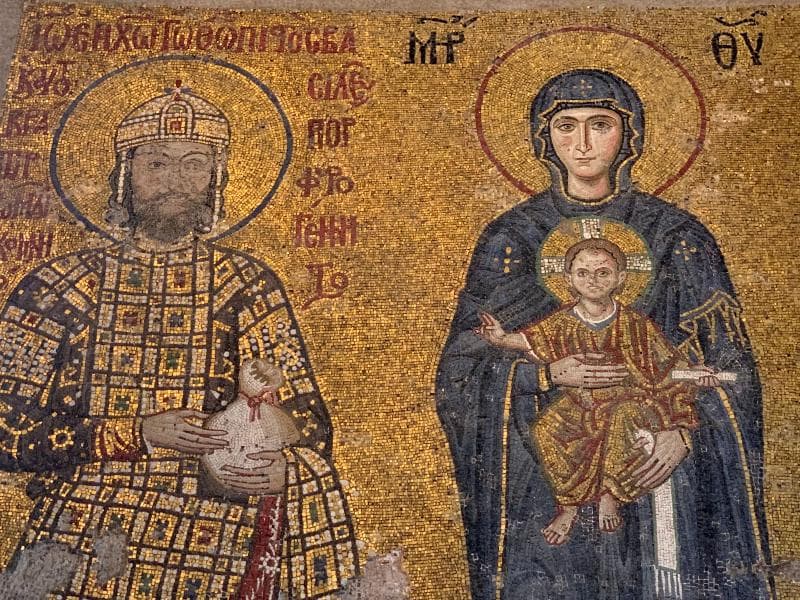
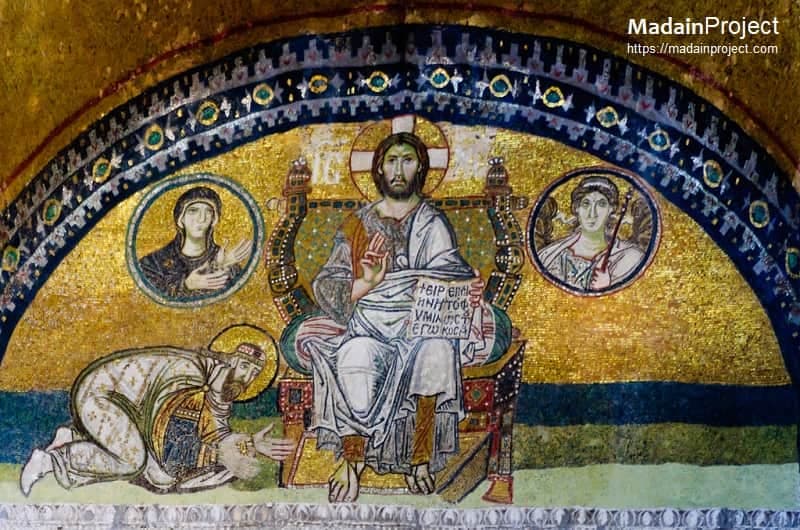
Discover the Imperial Gate Mosaic in Hagia Sophia, Istanbul, Turkey. Explore its Byzantine history, rich cultural context, and stunning artistry.
Overview
Deep within the awe-inspiring Hagia Sophia in Istanbul, Turkey, lies a masterpiece of Byzantine art and imperial symbolism: the Imperial Gate Mosaic. Positioned directly above the Imperial Gate – the grandest entrance to this historic edifice – this mosaic captivates visitors with its profound artistry and rich narrative. It depicts Christ Pantocrator enthroned, with a kneeling emperor, typically identified as Leo VI, prostrating before him in an act of deep devotion. Flanking Christ are the Archangel Gabriel and the Virgin Mary, adding layers of spiritual significance to this iconic image. It is not merely a decorative element but a powerful statement of Byzantine imperial authority and religious conviction, reflecting centuries of history within its shimmering tesserae.
The Imperial Gate, itself a monumental structure, served as the exclusive entry point for the Byzantine Emperor, transforming each passage into a ceremonial act that underscored the emperor's divine mandate. The mosaic above it thus became a visual prologue, setting the spiritual and political tone for all who entered this sacred space.
History & Cultural Background
The Imperial Gate, also known as the Emperor Door, dates back to the 6th century, coinciding with the construction of the present Hagia Sophia under Emperor Justinian I. This imposing gate, approximately 7 meters high, was crafted from oak wood and adorned with bronze elements. Legend even suggests that its timber was sourced from Noah's Ark, intertwining faith and ancient tales.
The mosaic itself, however, was created much later, between the late 9th and early 10th centuries, a period of significant artistic and theological development in the Byzantine Empire. It reflects the complex relationship between the earthly ruler and divine power during an era when the Hagia Sophia stood as the spiritual and political heart of the Eastern Roman Empire. The depiction of Emperor Leo VI bowing before Christ was a deliberate articulation of imperial legitimacy, portraying the emperor as a divinely sanctioned sovereign. This imagery reinforced the emperor's role as God's representative on earth, and the mosaic served as a potent political and religious declaration.
What Makes It Special
What truly sets the Imperial Gate Mosaic apart is its potent blend of theological depth and political declaration. At its center, Christ Pantocrator – the 'Ruler of All' – is shown enthroned, holding an open Gospel. The inscribed text, 'Peace be with you. I am the light of the world,' or 'Let peace and safety be with you. I am the peace and glorious light of universe,' offers a universal message of solace and divine illumination. The gesture of Christ's blessing hand signifies divine approval and authority.
Kneeling humbly at Christ's feet is the emperor, presenting himself not as an equal, but as a devoted servant, acknowledging the ultimate source of his power. This act of proskynesis – ritual prostration – was a powerful visual cue for all who entered. The presence of Archangel Gabriel and the Virgin Mary in medallions on either side of Christ's shoulders further elevates the scene, symbolizing the divine protection and intercession surrounding the emperor and, by extension, the empire itself. The mosaic's intricate details, vibrant colors, and the sheer scale of its placement emphasize its importance, making it a profound testament to Byzantine artistry and ideology.
Stories, Fun Facts & Local Details
One of the most enduring 'fun facts' associated with the Imperial Gate is the ancient Byzantine legend claiming that the gate's massive oak timbers were salvaged from Noah's Ark. This captivating story adds an almost mythical aura to an already significant structure, blending Christian tradition with the rich tapestry of local lore.
The Imperial Gate was strictly reserved for the emperor and his immediate retinue, making each entry a grand, symbolic procession. Imagine the Byzantine emperor, preceded by his court, crossing this very threshold, heading towards the nave for coronations or solemn liturgies. This exclusive privilege underscored the emperor's unique status, bridging the earthly realm with the sacred interior of the Great Church. While traditionally identified as Emperor Leo VI, some scholars suggest the kneeling figure could represent Constantine VII. This academic debate adds another layer of intrigue to the mosaic, encouraging deeper historical exploration for curious minds.
Visitor Perspective
For the curious traveler, encountering the Imperial Gate Mosaic is an essential part of the Hagia Sophia experience. As you step through the inner narthex towards the grand main hall, look directly above the largest central doorway – the Imperial Gate. Though the gate itself was once reserved, the mosaic is visible to all visitors today, inviting contemplation of its historical and spiritual depth.
Take a moment to absorb the details: the serene yet commanding presence of Christ, the humble posture of the emperor, and the celestial figures. The sheer age and preservation of this artwork, despite centuries of change and conversion within Hagia Sophia, are truly remarkable. It's a direct visual link to the Byzantine Empire's golden age, a silent witness to countless ceremonies and momentous events. Observing this mosaic allows for a deeper appreciation of Hagia Sophia's multilayered identity, offering a poignant glimpse into the intertwined realms of power, faith, and art that defined an era.
Coordinates: 28.9792432, 41.0079493
View on Google Maps💬 How Travelers Describe This Place
Based on community votes
Must See
934Beautiful
276Photogenic
152Unique
30Interesting
16
Traveler Stories
Discover memorable experiences shared by travelers who have visited this place.
No traveler stories yet.
Be the first traveler to share what made this place memorable.

Tour
By
Spot
Discover amazing places around the world. Your journey starts here.
Explore
© 2026 TourBySpot. All rights reserved.