Imperial Apartments
Innsbruck, Austria
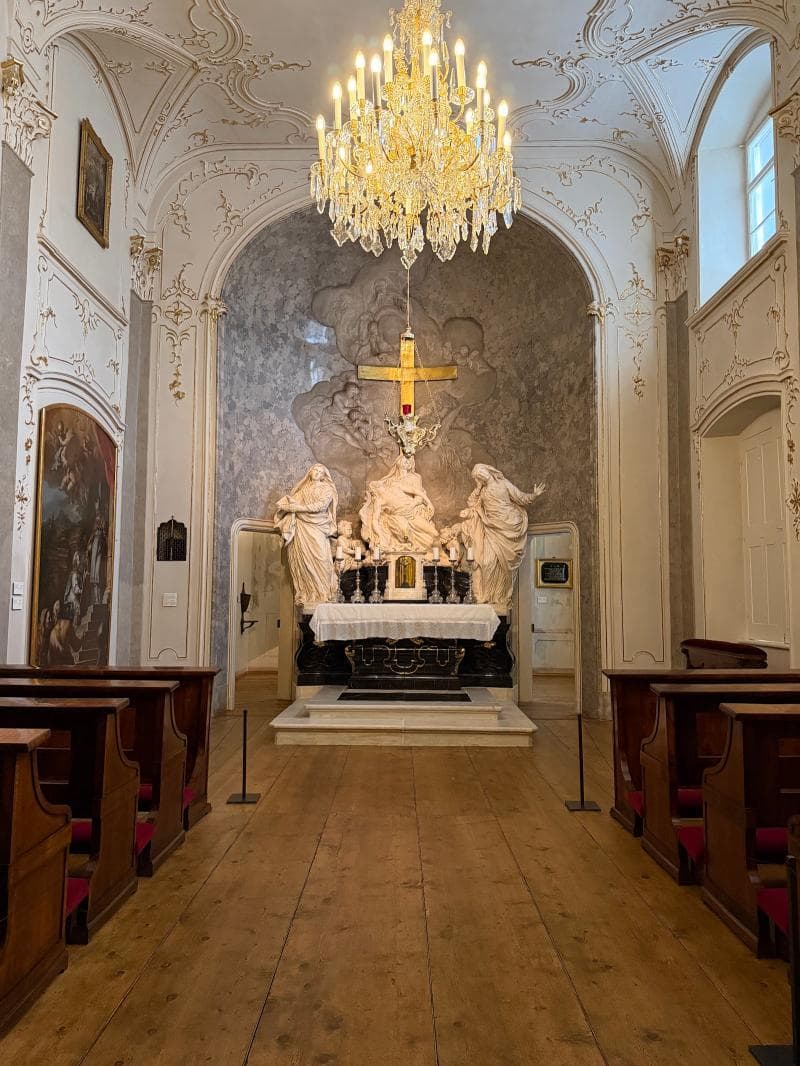
Explore the Imperial Apartments at Hofburg Innsbruck, Austria. Discover Habsburg history, Maria Theresa's Rococo grandeur, and Empress Sisi's private rooms.
Overview
The Imperial Apartments, nestled within the magnificent Hofburg Innsbruck in Innsbruck, Austria, offer a captivating journey into the heart of Habsburg imperial life. Recognized as one of Austria's three most significant cultural buildings, alongside the Hofburg Palace and Schönbrunn Palace in Vienna, the Hofburg Innsbruck itself is a testament to centuries of power and prestige. These apartments serve as a vibrant museum, meticulously preserving and showcasing 700 years of courtly history within their opulent walls. Visitors can explore the distinct realms of Empress Maria Theresa's 18th-century state rooms and Empress Elisabeth's (Sisi's) more personal 19th-century apartment, each reflecting the tastes and eras of their illustrious occupants. The palace's grandeur today is largely attributed to the extensive renovations commissioned by Empress Maria Theresa, whose vision shaped its Rococo splendor.
History & Cultural Background
The origins of the Hofburg Innsbruck date back to approximately 1460 when Archduke Sigismund 'the Rich in Coin' initiated its construction upon medieval fortifications. The palace saw significant enlargement under Emperor Maximilian I in the late Gothic style, earning it a reputation as 'the most beautiful building of the late Gothic period'. In 1497, Maximilian I further elevated Innsbruck's status by relocating the Habsburg treasury to the Hofburg, establishing the city as a vital financial hub of the Holy Roman Empire.
A pivotal transformation occurred between 1754 and 1776, under the meticulous direction of Empress Maria Theresa. She commissioned architects like Johann Martin Gumpp the Younger and Niccolò Pacassi to redesign the palace in the lavish Baroque and Rococo styles, giving it much of its current appearance. A deeply personal and poignant event in the palace's history occurred in 1765 when Maria Theresa's husband, Emperor Francis I, unexpectedly passed away within its walls during the wedding celebrations for their son Leopold II. In his memory, Maria Theresa ordered the room of his death to be converted into a solemn memorial chapel, a feature that remains an integral part of the Hofburg today. Later, in the mid-19th century, Archduke Karl Ludwig oversaw the refurbishment of apartments for Empress Elisabeth, creating the spaces now known as Sisi's Imperial Apartment. The Hofburg's long history as a royal residence concluded in 1918 with the end of the Habsburg era, after which it transitioned to state ownership and was eventually opened to the public. The Imperial Apartments themselves underwent extensive refurbishment, reopening as a public museum in the summer of 2010, ensuring their historical significance could be appreciated by all.
What Makes It Special
The Imperial Apartments are renowned for their exquisite interiors, predominantly in the late Rococo style, with rooms often featuring distinct color schemes of pink, green, and yellow that add to their individual character. A highlight is Empress Elisabeth's apartment, which has been painstakingly restored with original furnishings and luxurious silk fabrics, recreated based on patterns from 1858, providing a glimpse into her world.
Maria Theresa's rooms are equally impressive, including the grand Guard Hall, which served as a reception area, and the Audience Room and Council Hall, where state affairs were conducted. The magnificent Giants' Hall stands out with its breathtaking ceiling frescoes by Franz Anton Maulbertsch and a gallery of portraits depicting Maria Theresa's sixteen children, a powerful visual representation of her dynasty's lineage and power. The memorial chapel, dedicated to Emperor Francis I, offers a poignant and serene space for reflection. Furthermore, visitors can observe the Southern Tower, an armorial tower built around 1500 during Emperor Maximilian I's reign. A captivating portrait gallery within the apartments traces the lineage of Habsburg emperors from Joseph I to Franz Joseph, offering a comprehensive look at the ruling dynasty. The Chinese Cabinet, with its unique 18th-century wall paintings, provides an intriguing example of the era's fascination with exotic cultures.
Stories, Fun Facts & Local Details
Despite her monumental influence on the Hofburg's architectural splendor, Empress Maria Theresa, surprisingly, only visited Innsbruck twice in her lifetime. Her profound personal connection to the palace stems from the tragic death of her husband there, which led to the creation of the memorial chapel.
Empress Elisabeth, affectionately known as Sisi, was a frequent guest, making several stays in the Imperial Apartments alongside Emperor Franz Joseph. Her private rooms offer fascinating insights into her famed beauty cult and distinctive individuality, with even her single bed hinting at her unique preferences. Interestingly, Archduchess Maria Elisabeth, a daughter of Maria Theresa, was the only member of the imperial family to reside in the apartments for an extended period after Maria Theresa's renovations. The palace also played a brief but dramatic role in local history when Tyrolean rebel leader Andreas Hofer used the Hofburg as his headquarters during the uprising against Napoleonic forces in 1809. The Hofburg's historical depth is further underscored by its brief transformation into a treasury under Maximilian I, making Innsbruck a significant financial hub during his reign.
Visitor Perspective
Visiting the Imperial Apartments within Hofburg Innsbruck is more than just a tour; it is an immersive experience, inviting visitors on a genuine journey through time. The palace offers a truly captivating exploration of Austrian history, culture, and art, appealing to those with a keen interest in European royalty and heritage. The various museum areas, including Maria Theresa's state rooms, Empress Elisabeth's apartment, a furniture museum, an ancestral gallery, and a painting gallery, provide a comprehensive view of imperial life. For those seeking a modern twist on historical interpretation, the Maximilian1 exhibition incorporates digital visualizations and 3D reconstructions, making the past come alive with engaging clarity. Situated conveniently in Innsbruck's historic city center, the Hofburg is easily accessible. Furthermore, the museum complex is fully wheelchair accessible, ensuring that its rich history can be experienced by all visitors.
Coordinates: 11.3948986, 47.2688635
View on Google Maps💬 How Travelers Describe This Place
Based on community votes
Unique
722Beautiful
698Photogenic
358Must See
126Interesting
19
Traveler Stories
Discover memorable experiences shared by travelers who have visited this place.
No traveler stories yet.
Be the first traveler to share what made this place memorable.

Tour
By
Spot
Discover amazing places around the world. Your journey starts here.
Explore
© 2026 TourBySpot. All rights reserved.