Icebreaker Suur Tõll
Tallinn, Estonia
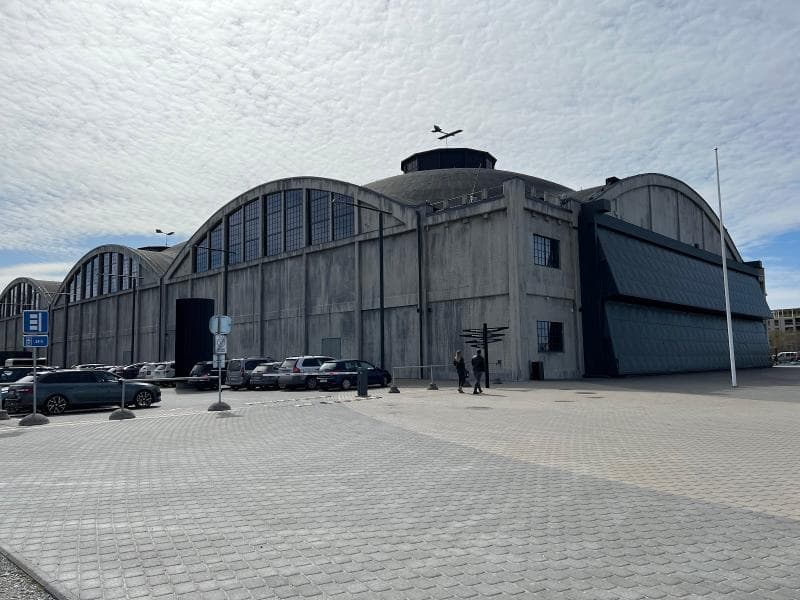
Explore the historic Icebreaker Suur Tõll in Tallinn, Estonia. Discover the world's largest preserved pre-war steam icebreaker at Seaplane Harbour.
Overview
Step aboard the majestic Icebreaker Suur Tõll, a national maritime symbol of Estonia and the largest preserved pre-war steam-powered icebreaker in the world. Berthed at the historic Seaplane Harbour (Lennusadam) in Tallinn, this magnificent vessel offers a unique window into the past, serving as a pivotal exhibit of the Estonian Maritime Museum. Built in 1914, Suur Tõll stands as a testament to early 20th-century engineering prowess and has witnessed the turbulent history of the Baltic Sea and Estonia itself.
As you approach, her imposing silhouette immediately captures attention, hinting at the power required to carve paths through formidable ice. She is not merely a static exhibit but a living piece of history, inviting visitors to explore her decks, cabins, and formidable engine rooms. Her story is one of resilience and transformation, embodying the spirit of a nation that has navigated its own challenging waters.
History & Cultural Background
The journey of Icebreaker Suur Tõll began in 1914, constructed by AG Vulcan in Stettin, Germany, for the Russian Empire, originally named 'Tsar Mikhail Feodorovich'. Her early years were marked by the tumult of World War I. In 1917, she was taken over by the Bolsheviks and renamed 'Volynets'. Her flag changed again in 1918 when she was captured by Finland, serving as 'Wäinämöinen' until 1922.
A significant chapter unfolded in 1922, following the Treaty of Tartu, when the icebreaker was handed over to the newly independent Estonia. It was then she received her enduring name, 'Suur Tõll', paying homage to a legendary mythological giant hero from Estonia's largest island, Saaremaa. This renaming cemented her status as an Estonian icon. However, her service under the Estonian flag was interrupted in 1940 during the Soviet occupation, when she was again renamed 'Volynets' and rejoined the Soviet fleet, remaining in active duty until 1985.
The ship's ultimate preservation is a story of national pride. Facing the scrapyard in 1987, she was acquired by the Estonian Maritime Museum, meticulously renovated, and proudly restored to her Estonian identity and name. Her lifespan and changing identities vividly reflect the dramatic shifts in Estonia's political landscape throughout the 20th century.
What Makes It Special
The Icebreaker Suur Tõll is exceptional for several compelling reasons, primarily her status as the largest preserved pre-war steam-powered icebreaker globally. She is not only a rare survivor but also the only remaining steamship that saw service in Estonia during the crucial interwar period of the 1920s and 1930s.
When she was launched, Suur Tõll was considered one of the most advanced icebreakers of her time. Her design incorporated unique engineering specifications, with moving parts dimensioned 35% stronger than those in other ships of similar power. This robustness allowed her to break through ice up to one meter thick, an impressive feat that kept vital shipping lanes open in the Baltic Sea. The ship represents a significant technical monument, offering insights into the era's shipbuilding capabilities and the sheer force required to master the icy Baltic winters. Her presence at the Seaplane Harbour, itself a marvel of early reinforced concrete architecture, creates a powerful sense of historical context and innovation.
Stories, Fun Facts & Local Details
The name 'Suur Tõll' itself carries a rich tapestry of Estonian folklore. Suur Tõll (Toell the Great) is a benevolent giant from Saaremaa, known for his immense strength, his towering stature, and his good-hearted nature, often depicted throwing massive rocks and defending his homeland. He even had a wife named Piret, whose own legend is tied to the landscape. The icebreaker's adoption of this name underscores her heroic role in battling the harsh Baltic ice.
Interestingly, the ship's life is a saga of five name changes, each mirroring a pivotal moment in the region's history. From 'Tsar Mikhail Feodorovich' to 'Volynets', then 'Wäinämöinen', and finally 'Suur Tõll' (twice), her identity shifted with the tides of political control, making her a poignant symbol of Estonian resilience. She was even launched just two years after the ill-fated Titanic, yet has endured for over a century, a testament to her robust construction. There's an ongoing ambition to return her original boilers and steam engines to operational status, which would allow visitors to experience the full might of this historical leviathan.
Visitor Perspective
Visiting the Icebreaker Suur Tõll is an immersive journey that transports you back to a bygone era of maritime adventure. Moored outside the main Seaplane Harbour museum, she is an unmissable part of the experience. Visitors are encouraged to walk her decks, explore the meticulously preserved officers' mess, the captain's cozy cabin, and the crew quarters, gaining a firsthand appreciation for life aboard such a powerful vessel.
The highlight for many is gazing down into the enormous engine room, imagining the roar and steam as her triple-expansion engines drove her through the ice. It's a vivid reminder of the incredible human effort and engineering prowess that defined icebreaking a century ago. While the main museum building offers interactive exhibits and a modern experience, stepping onto Suur Tõll provides a tangible connection to maritime history. Don't make the mistake of skipping this outdoor marvel; it's a profound and authentic encounter with Estonia's proud seafaring heritage. Virtual tours are also available, making her accessible to a global audience.
Coordinates: 24.73867, 59.45308
View on Google Maps💬 How Travelers Describe This Place
Based on community votes
Beautiful
953Unique
658Photogenic
585Interesting
69Must See
22
Traveler Stories
Discover memorable experiences shared by travelers who have visited this place.
No traveler stories yet.
Be the first traveler to share what made this place memorable.

Tour
By
Spot
Discover amazing places around the world. Your journey starts here.
Explore
© 2026 TourBySpot. All rights reserved.