Hyde Street Cable Car Stop
San Francisco, United States
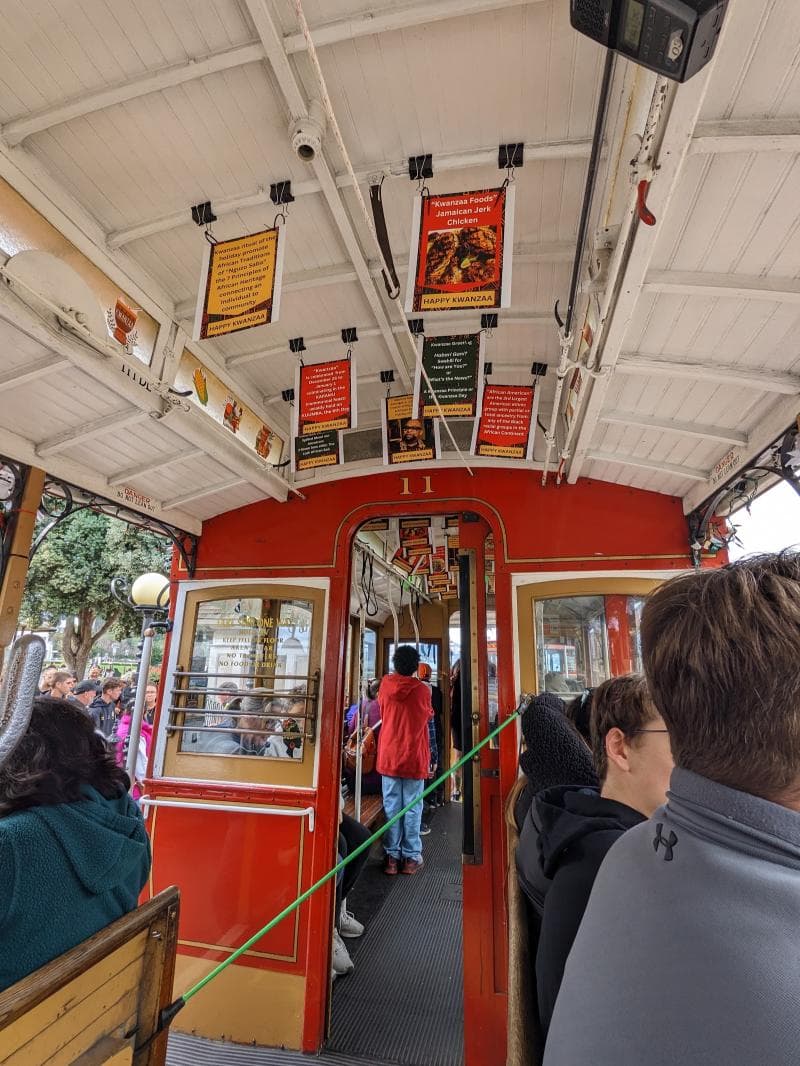
Experience the historic Hyde Street Cable Car Stop in San Francisco, United States. Ride the iconic Powell-Hyde line, famous for its scenic views of Lombard Street, Alcatraz, and the Golden Gate Bridge.
Overview
The Hyde Street Cable Car Stop offers a quintessential San Francisco experience, perfectly situated along the famed Powell-Hyde line, which traverses some of the city's most iconic landscapes. As a pivotal point on this historic route, the stop provides direct access to the world-renowned Lombard Street, often called the 'Crookedest Street in the World.' This particular stop, nestled in the Russian Hill neighborhood, is more than just a place to board or alight; it's a vantage point for breathtaking views of Alcatraz Island, the shimmering San Francisco Bay, and on clear days, the majestic Golden Gate Bridge. Riding a cable car here immerses you in a living piece of history, allowing travelers to experience the city's unique charm and dramatic topography firsthand.
History & Cultural Background
San Francisco's cable car system, a National Historic Landmark, traces its origins back to 1873 when Scottish engineer Andrew Smith Hallidie introduced this innovative mode of transportation. His inspiration reportedly came from witnessing the arduous struggle of horses attempting to pull streetcars up the city's notoriously steep, wet hills. The first successful line, the Clay Street Hill Railroad, debuted in September of that same year, marking a revolutionary advancement in urban transit. Over the decades, the system expanded significantly, though many lines were lost to the 1906 earthquake and the subsequent rise of electric streetcars. However, the enduring appeal and necessity of cable cars for navigating San Francisco's steepest inclines ensured their survival. The Powell-Hyde line itself, a key route that includes the stop at Lombard Street, was officially established in 1957, ingeniously combining segments of earlier cable car routes to create one of the most scenic journeys in the city. Its continued operation is a testament to dedicated citizen efforts in the mid-20th century that successfully campaigned to preserve these beloved 'moving landmarks' against modernization efforts.
What Makes It Special
The Hyde Street Cable Car Stop is particularly special for several compelling reasons. Primarily, it's situated on the Powell-Hyde line, widely regarded as the most scenic of San Francisco's three remaining cable car routes. From this vantage point, passengers are treated to panoramic views that include the infamous Alcatraz Island, the expanse of San Francisco Bay, and captivating glimpses of the Golden Gate Bridge. As the cable car approaches and descends the 21% grade along Hyde Street, it passes directly over Lombard Street's famously 'crooked' section, providing an unparalleled perspective of this unique architectural marvel. Furthermore, riding from this stop allows visitors to experience the world's last manually operated cable car system. These single-ended cars, characteristic of the Powell lines, require a manual turnaround at their terminals, a fascinating process that adds to the charm and historical authenticity of the ride. The engineering, with the car gripping an underground cable moving at a constant 9.5 miles per hour, showcases a remarkable 19th-century ingenuity still in full, vibrant operation today.
Stories, Fun Facts & Local Details
The cable cars themselves are a blend of ingenious engineering and rich history. A fun fact about these vehicles is their consistent speed: they travel at a steady 9.5 miles per hour, whether ascending a steep hill or traversing a flat section, because they are literally gripped to a continuously moving cable beneath the street. The 'gripman,' a skilled operator, manually engages and disengages the car from this cable, controlling its movement. The Hyde Street Cable Car Stop's proximity to Lombard Street means countless travelers have captured iconic photographs of the cable car against the backdrop of the eight hairpin turns. Another local detail is the vibrant Russian Hill neighborhood that the line winds through, featuring picturesque Victorian homes and offering glimpses into San Francisco's residential charm. The line also terminates near historic Ghirardelli Square and the Hyde Street Pier, part of the San Francisco Maritime National Historical Park, providing additional cultural and historical points of interest within easy reach.
Visitor Perspective
For visitors, boarding a cable car at the Hyde Street stop is often an eagerly anticipated highlight of their San Francisco journey. The experience is highly sought after, and this particular line, due to its spectacular views, is incredibly popular, often leading to significant wait times, especially during peak hours. To optimize the experience, many seasoned travelers recommend riding early in the morning or later in the afternoon to avoid the longest queues. Alternatively, hopping on a few stops away from the main turnarounds can sometimes shorten waiting periods. Riding on the outside running boards offers a thrilling, open-air perspective of the city's dramatic hills and vistas, a quintessential photo opportunity. It's important to note that tickets may need to be purchased in advance at major turnaround stations or via mobile apps, particularly for peak times. The Hyde Street Cable Car Stop provides an unforgettable immersion into San Francisco's history, culture, and stunning natural beauty.
Coordinates: -122.418706, 37.802148
View on Google Maps💬 How Travelers Describe This Place
Based on community votes
Photogenic
886Unique
443Beautiful
310Must See
277Interesting
233
Traveler Stories
Discover memorable experiences shared by travelers who have visited this place.
No traveler stories yet.
Be the first traveler to share what made this place memorable.

Tour
By
Spot
Discover amazing places around the world. Your journey starts here.
Explore
© 2026 TourBySpot. All rights reserved.