Hungarian National Gallery
Budapest, Hungary
Explore the Hungarian National Gallery in Buda Castle, Budapest, Hungary. Discover centuries of Hungarian art, history, and culture.
Overview
Nestled within the majestic Buda Castle complex in Budapest, Hungary, the Hungarian National Gallery (Magyar Nemzeti Galéria) stands as a proud guardian of the nation's artistic heritage. This prominent institution is dedicated exclusively to Hungarian art, offering a comprehensive journey through the country's creative spirit from the Middle Ages to the present day. Occupying several wings of the historic Royal Palace, the gallery provides a unique blend of grand architecture, panoramic city views, and an unparalleled collection that narrates Hungary's story through its art.
Unlike museums with broad international collections, the Hungarian National Gallery focuses on the works of Hungarian artists, presenting medieval stone carvings, Gothic altarpieces, Baroque portraiture, 19th-century Romantic and Realist masterpieces, and significant modern and contemporary art. Visitors can explore diverse mediums including over 6,000 paintings, 2,100 sculptures, 3,100 medals, 11,000 drawings, and 5,000 prints. It is an essential destination for anyone seeking to understand the artistic and cultural identity of Hungary.
History & Cultural Background
The Hungarian National Gallery was officially established in 1957, with the explicit aim of presenting Hungarian art from the earliest settlements through various historical periods. Initially, its collections were housed in the former Palace of Justice on Kossuth Square. However, a significant move in 1975 saw the gallery relocate to its current, more fitting home within Buildings B, C, and D of the Buda Castle, which had been specially refurbished for this purpose. Later, in 2005, Building A was also acquired, further expanding its exhibition spaces.
The Buda Castle itself boasts a rich and complex history, dating back to the reign of kings like Louis the Great and Matthias, who continuously developed it into a magnificent royal residence. However, the palace suffered significant damage during the Ottoman occupation and was later severely impacted during World War II, particularly during the Siege of Budapest in 1944-1945. Post-war reconstruction efforts in the 1950s led to the decision to transform the castle into a cultural quarter, leading to the gallery's eventual move. This transition from royal palace to national art museum underscores a cultural revival, demonstrating a commitment to preserving and celebrating Hungarian artistic expression despite historical upheavals.
What Makes It Special
What truly sets the Hungarian National Gallery apart is its unwavering dedication to the narrative of Hungarian art. Unlike many national galleries that feature global art, this institution offers a deep dive into Hungary's own artistic soul, showcasing how local artists interpreted and contributed to broader European art movements through the lens of their national experience. This focused approach provides visitors with a coherent and insightful understanding of the nation's struggles, triumphs, and daily life as depicted through art spanning centuries.
Moreover, its location within the UNESCO World Heritage site of Buda Castle adds an unparalleled dimension to the visit. The historic setting, with its monumental architecture, grand halls, and courtyards, creates a powerful ambiance that enhances the appreciation of the art within. A particular highlight for many visitors is the Dome Terrace, which offers breathtaking, 180-degree panoramic views over the Danube River and the Pest side of the city. This combination of significant art, historical context, and stunning vistas makes for an unforgettable cultural experience.
Stories, Fun Facts & Local Details
The gallery's collection of 18th and 19th-century paintings often proves to be among the most popular, vividly illustrating Hungary's turbulent past, including periods of Turkish and Austrian occupation. These works offer a poignant visual commentary on the nation's resilience and identity. One notable artist prominently featured is Mihály Munkácsy, an internationally renowned painter whose works often depict Hungarian life and history. His impactful pieces, such as 'Christ in front of Pilate,' were once global sensations. Another celebrated artist is Pál Szinyei Merse, a pioneer of Hungarian colorism, whose personal life and family often featured in his works.
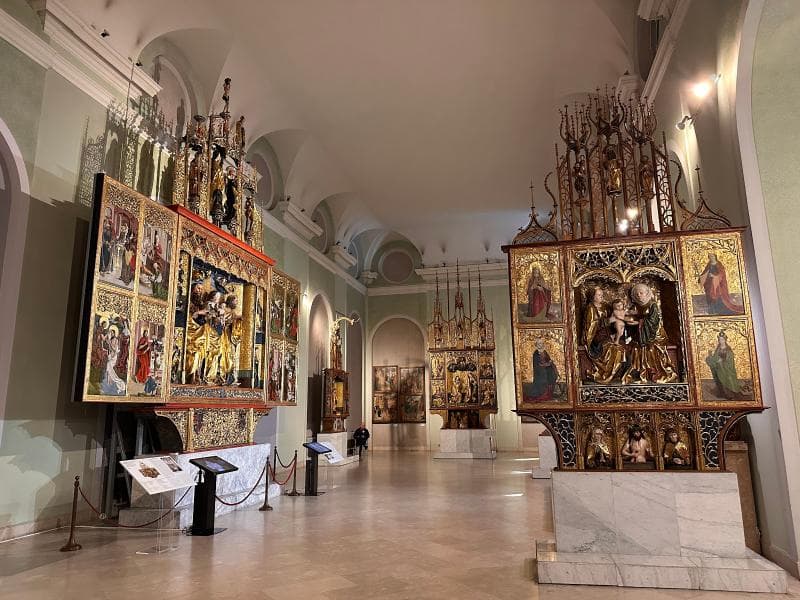
Beyond the paintings, the gallery houses fascinating medieval winged altarpieces, some dating back to the 15th century, including exquisite examples like 'The Visitation' by Master MS. These intricate pieces offer a glimpse into the religious and artistic traditions of medieval Hungary. Visitors might also discover the Habsburg Palatinal Crypt in Building C, the burial place for members of the Hungarian line of the Habsburg Dynasty, although visits typically require prior arrangement. The former royal palace also houses other cultural institutions, making it a vibrant hub of Hungarian heritage.
Visitor Perspective
A visit to the Hungarian National Gallery can easily fill a half-day, especially for art enthusiasts. The museum is generally open from Tuesday to Sunday, typically from 10 am to 6 pm, though it's always wise to check the official website for the most up-to-date hours and special closures. The gallery is wheelchair accessible, with lifts connecting the main floors, making it welcoming for all visitors. Taking photographs of the permanent collection without flash or tripods is usually permitted, allowing visitors to capture memories of their favorite pieces.
Accessing the Buda Castle complex, and thus the gallery, is convenient via the Castle Hill Funicular from Clark Ádám tér or by buses (16, 16A, 116) that go directly to Szentháromság tér on Castle Hill. While an entrance ticket is required for the main exhibitions, special temporary exhibitions might have separate fees. The Dome Terrace often requires an additional 'Dome Ticket,' but the panoramic views are widely considered worth the extra step. It's an enriching cultural experience that connects you deeply with the artistic and historical heart of Hungary.
Coordinates: 19.039773, 47.496228
View on Google Maps💬 How Travelers Describe This Place
Based on community votes
Unique
915Photogenic
873Beautiful
123Must See
74Interesting
53
Traveler Stories
Discover memorable experiences shared by travelers who have visited this place.
No traveler stories yet.
Be the first traveler to share what made this place memorable.

Tour
By
Spot
Discover amazing places around the world. Your journey starts here.
Explore
© 2026 TourBySpot. All rights reserved.