Horse-head Stadium Facade
Ashgabat, Turkmenistan
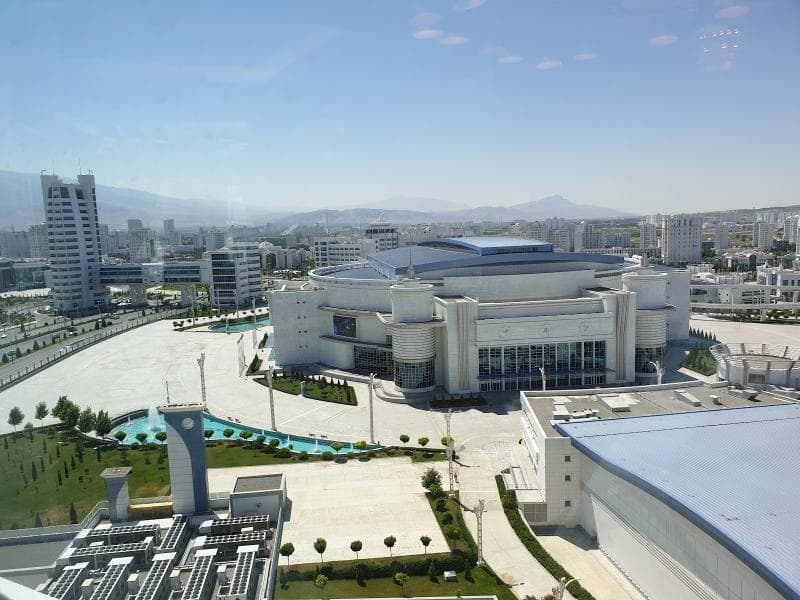
Discover Ashgabat's iconic Horse-head Stadium Facade within the Olympic Complex, a colossal tribute to Turkmenistan's revered Akhal-Teke horse.
Overview
In the heart of Ashgabat, Turkmenistan, within the sprawling Ashgabat Olympic Complex, stands a truly remarkable architectural marvel: the Horse-head Stadium Facade. This isn't just any stadium feature; it's a colossal sculpture of an Akhal-Teke horse's head, proudly crowning the main stadium. Far from a mere decorative element, it embodies Turkmenistan's profound national identity and its deep reverence for the Akhal-Teke horse breed. The facade has earned global recognition, holding a Guinness World Record as the largest architectural symbol of a horse on the planet. Its immense scale and striking design immediately capture attention, serving as a powerful emblem of the nation's cultural heritage and aspirations.
History & Cultural Background
The story of the Horse-head Stadium Facade is intertwined with Turkmenistan's ambitious vision for the 2017 Asian Indoor and Martial Arts Games (AIMAG), which Ashgabat hosted. The grand Ashgabat Olympic Complex, a multi-billion dollar project, was constructed for this event. The main stadium, now adorned with the iconic horse head, underwent a significant transformation. The original stadium was demolished in 2013 to make way for the new, state-of-the-art facility, designed by British architectural firms AFL Architects and Arup, and constructed by the Turkish company Polimeks. However, the inspiration behind the facade reaches back much further, into the very soul of Turkmen culture. The Akhal-Teke horse, often called 'heavenly horses,' holds an ancient and sacred place in Turkmen traditions. With a history spanning over three millennia, these horses are not merely animals but are considered symbols of nobility, wisdom, courage, and a deep connection to nature. They have been integral to the Turkmen people's spiritual world, folklore, and literature for centuries, signifying freedom, strength, and beauty.
What Makes It Special
The Horse-head Stadium Facade is truly special due to its monumental scale and rich symbolism. It measures an impressive 40.05 meters (131 feet 4.9 inches) in height, 37.69 meters (123 feet 7.9 inches) in length, and 40.24 meters (132 feet 0.6 inches) at its widest point, weighing a staggering 600 tonnes. These dimensions cemented its place in the Guinness World Records as the world's largest architectural horse symbol. The facade's pristine white marble, a characteristic feature of Ashgabat's architecture, gleams under the sun, reflecting the city's modern aesthetic. From the horse's head, a torch extends upwards, reaching 82 meters above ground, symbolizing the Olympic flame and the nation's aspirations. The intricate design of the Akhal-Teke, often depicted with an 'aladja' (a traditional Turkmen amulet) around its neck, transforms the stadium into a powerful monument, seamlessly blending contemporary architecture with ancient cultural reverence.
Stories, Fun Facts & Local Details
The reverence for the Akhal-Teke horse is deeply woven into the fabric of Turkmenistan. Ancient legends recount how Chinese emperors, upon first seeing these horses, exclaimed they were 'heaven horses' from Kunlun Mountain, believed to have wings. In Turkmen folklore, dreaming of a white or golden horse signifies journeys, honor, or divine guidance, and their foals' births are celebrated with rituals. The image of the Akhal-Teke is omnipresent in Turkmenistan, appearing not only on the stadium but also on the national emblem, as a symbol of freedom and state policy. It's such an integral part of the nation's identity that the Ashgabat Olympic Stadium, featuring this iconic horse head, is honored by being featured on the 100 Turkmen manat banknote and on commemorative coins issued in 2017. Even National Horse Day is celebrated annually on the last Sunday of April, highlighting the enduring importance of this magnificent breed. The facade, therefore, is more than just a structure; it's a living testament to a rich equestrian heritage, steeped in myth and national pride.
Visitor Perspective
Approaching the Ashgabat Olympic Complex, a visitor is immediately struck by the sheer scale and pristine white grandeur of the buildings. The Horse-head Stadium Facade dominates the skyline, a breathtaking sight that speaks volumes about Turkmenistan's commitment to its heritage and its future. The clean lines and immaculate marble, characteristic of Ashgabat, give the complex an almost surreal quality. Viewing the facade up close allows one to appreciate the intricate details of the Akhal-Teke's depiction, from its sleek form to the proud arch of its neck. It's a profound visual experience, offering a window into the deep cultural significance the Akhal-Teke horse holds for the Turkmen people. This impressive landmark is not just a venue for sporting events; it's a symbol of national spirit, an architectural masterpiece that tells a story of history, tradition, and ambition, making it an unforgettable stop for any curious traveler exploring Ashgabat.
Coordinates: 58.377086, 37.904425
View on Google Maps💬 How Travelers Describe This Place
Based on community votes
Must See
826Photogenic
494Beautiful
242Interesting
125Unique
82
Traveler Stories
Discover memorable experiences shared by travelers who have visited this place.
No traveler stories yet.
Be the first traveler to share what made this place memorable.

Tour
By
Spot
Discover amazing places around the world. Your journey starts here.
Explore
© 2026 TourBySpot. All rights reserved.