Hollywood Reservoir
Los Angeles, United States
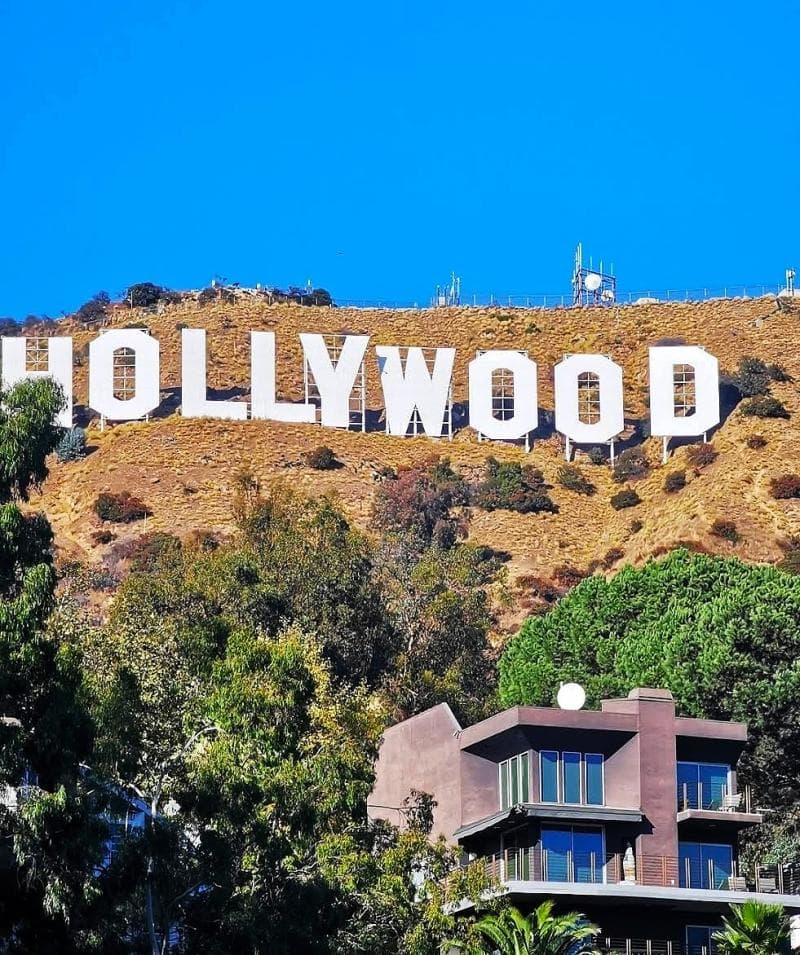
Discover Hollywood Reservoir, also known as Lake Hollywood, a serene oasis in Los Angeles, United States, offering iconic views of the Hollywood Sign and a rich history as a vital water source. Explore the 3.5-mile loop trail.
Overview
Nestled within the Hollywood Hills, the Hollywood Reservoir, often affectionately known as Lake Hollywood, offers a tranquil escape amidst the vibrant energy of Los Angeles, United States. This man-made lake, overlooked by the iconic Hollywood Sign, serves as both a vital piece of the city's water infrastructure and a beloved recreational haven for locals and visitors alike. Its picturesque setting, surrounded by lush vegetation and framed by the Santa Monica Mountains, provides a unique blend of natural beauty and urban landmark vistas. A paved 3.3 to 3.5-mile loop trail encircles the reservoir, inviting walkers, joggers, and cyclists to enjoy its serene pathways and breathtaking views.
While the reservoir's shimmering waters hint at a peaceful natural lake, it is, in fact, an artificial body of water created by the impressive Mulholland Dam. Maintained by the Los Angeles Department of Water and Power (LADWP), the Hollywood Reservoir continues to play a significant role in the city's water supply system. Its accessible perimeter paths provide an unparalleled perspective of the Hollywood Sign, making it a prime location for photography and a favorite spot for those seeking a unique Los Angeles experience.
History & Cultural Background
The story of the Hollywood Reservoir begins in the early 1920s, a period of explosive growth for Los Angeles that necessitated a robust water infrastructure. Construction of the Mulholland Dam, which created the reservoir, commenced in August 1923 and was completed by December 1924. Designed by the renowned Chief Engineer William Mulholland of the city's Bureau of Water Works and Supply, the dam was a curved concrete gravity structure, originally intended to store 2.5 billion gallons (7,900 acre-feet) of water. Its purpose was to store water from the Owens Valley Aqueduct and local groundwater sources, ensuring a reliable supply for the rapidly expanding Hollywood area.
The dam and reservoir were formally dedicated on March 17, 1925. However, a tragic event in 1928, the collapse of the St. Francis Dam (another project by Mulholland), led to a critical reassessment of dam safety. As a precaution and in response to public anxiety, the Hollywood Reservoir's water level was immediately lowered. Subsequently, in the early 1930s, significant reinforcement work was undertaken, involving the placement of approximately 300,000 cubic yards of earth against the dam's downstream face, visually screening the structure and enhancing its stability. Since then, the reservoir's operating level has been permanently reduced, typically maintained at around 2,800 acre-feet, with a maximum of 4,000 acre-feet, well below its original design capacity. Recognizing its architectural and engineering significance, the Mulholland Dam and Lake Hollywood Reservoir were designated Los Angeles Historic-Cultural Monument No. 421 in 1989.
What Makes It Special
What truly sets the Hollywood Reservoir apart is its harmonious blend of critical urban infrastructure with accessible natural beauty and unparalleled views. It is a working part of Los Angeles' water system, yet it welcomes the public to enjoy its serene surroundings. The most striking feature is undoubtedly its proximity to the Hollywood Sign, offering some of the most iconic and unobstructed viewpoints of the landmark. Walking across the Mulholland Dam itself provides a unique vantage point, with the reservoir stretching out in one direction and glimpses of the sprawling city in another. The dam also features distinctive decorative bear-head medallions, reflecting the city's early 20th-century desire to make its essential waterworks both functional and aesthetically pleasing.
The entire 3.5-mile loop trail is paved, making it an easy and enjoyable path for all fitness levels. Unlike many urban hiking spots, it offers a sense of peaceful seclusion, despite its location in the heart of Hollywood. The combination of historical engineering, continuous utility, and a recreational environment against a backdrop of cinematic fame creates an experience that is uniquely Los Angeles.
Stories, Fun Facts & Local Details
The Hollywood Reservoir, or Lake Hollywood, holds many interesting stories. For instance, its creation by William Mulholland, the architect of Los Angeles' ambitious water system, ties it directly to the dramatic 'water wars' that shaped the city's development in the early 20th century. The St. Francis Dam disaster, which indirectly led to the reservoir's reduced capacity and reinforcement, remains a somber but pivotal moment in California's engineering history, forever impacting how the Hollywood Reservoir is managed.
Beyond its utilitarian function, the reservoir has a surprising presence in popular culture. It has served as a filming location, appearing in movies like 'Earthquake' (1974) and featuring briefly in the opening scene of John Carpenter's horror classic 'Halloween' (1978). It even made an appearance in the TV series '9-1-1'. For keen observers, the original 'Hollywoodland' sign, promoting a 1923 subdivision, was being erected around the same time the dam was under construction, illustrating the parallel growth of real estate and water infrastructure in the Hollywood Hills. While the reservoir itself is secured as a water source, the adjacent Lake Hollywood Park is a popular spot for dog owners, where leashed pets can enjoy the open grassy fields with fantastic views of the Hollywood Sign.
Visitor Perspective
Visiting the Hollywood Reservoir is an experience that combines gentle outdoor activity with a deep dive into Los Angeles history and iconic views. The 3.3-mile paved loop around the reservoir is mostly flat, making it ideal for a leisurely stroll or an invigorating jog. The gates typically open at 6:30 AM and close around sunset, providing ample time to explore. While dogs are not permitted on the reservoir's paved walking trail, they are welcome (on leash) at Lake Hollywood Park, which is a great starting point and offers some of the best views of the Hollywood Sign.
Parking can be found on Lake Hollywood Drive, particularly near the north gate, though it's often advised to arrive early, especially on weekends, due to its popularity. As you walk, you'll encounter numerous opportunities for stunning photographs, especially from the Mulholland Dam, which provides unobstructed panoramic views of the water and the distant Hollywood Sign. It's a place where you can feel the pulse of nature and history simultaneously, reflecting on how water has shaped the destiny of this famous city, all under the watchful gaze of its most famous landmark.
Coordinates: -118.33111, 34.11778
View on Google Maps💬 How Travelers Describe This Place
Based on community votes
Beautiful
839Photogenic
445Must See
388Unique
289Interesting
141
Traveler Stories
Discover memorable experiences shared by travelers who have visited this place.
No traveler stories yet.
Be the first traveler to share what made this place memorable.

Tour
By
Spot
Discover amazing places around the world. Your journey starts here.
Explore
© 2026 TourBySpot. All rights reserved.