Ho Chi Minh Portrait
Ho Chi Minh City, Vietnam
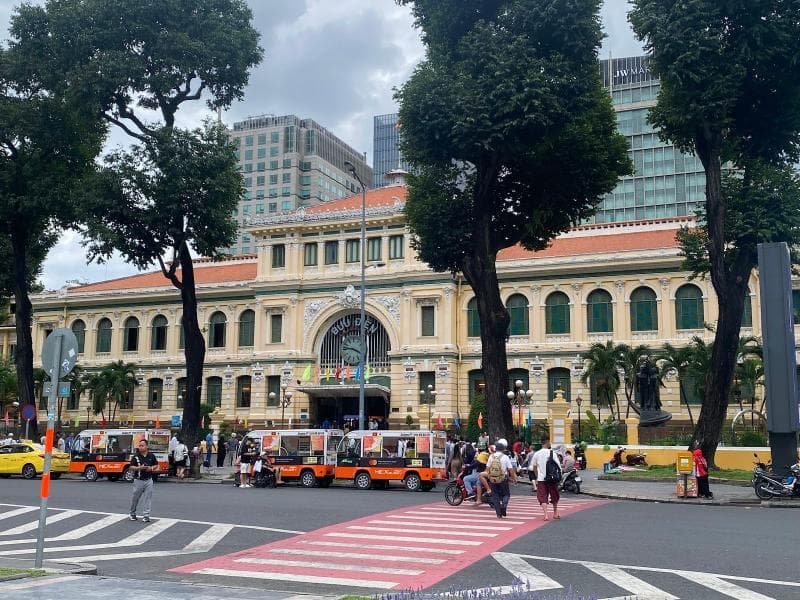
Discover the Ho Chi Minh Portrait inside Saigon Central Post Office, Ho Chi Minh City, Vietnam. A symbol of national pride blending history and architecture.
Overview
Deep within the grand, French colonial architecture of the Saigon Central Post Office in Ho Chi Minh City, a significant and often-photographed sub-spot awaits: the Ho Chi Minh Portrait. This prominent artwork, depicting Vietnam's revered leader, is strategically placed in the central hall, directly above the main counter, at the far end of the building. It serves not just as a decorative element but as a profound symbol, tying the historic, European-influenced structure to the vibrant national identity of modern Vietnam.
The Saigon Central Post Office itself is an architectural marvel, completed in 1891 and designed by Alfred Foulhoux, though often mistakenly associated with Gustave Eiffel. It stands as a testament to the city's rich history, continuing to operate as a functional post office today, blending its colonial past with its present-day purpose. The portrait of Ho Chi Minh inside this iconic landmark offers visitors a unique intersection of history, culture, and national pride, making it a powerful visual experience for anyone exploring Ho Chi Minh City.
History & Cultural Background
The Saigon Central Post Office was erected during the French colonial era, a period when Vietnam was part of French Indochina. Its magnificent design, featuring vaulted ceilings and intricate details, reflects the architectural trends of 19th-century Europe. However, the inclusion of the Ho Chi Minh Portrait within this distinctly French-designed space tells a compelling story of Vietnam's journey. It represents a poignant reminder of the nation's transition from colonial rule to independence, a visual narrative of overcoming the past while preserving aspects of its intricate heritage.
For many Vietnamese people, the portrait is far more than mere decoration; it embodies national pride, resilience, and the enduring spirit of independence. Its position ensures that as locals conduct their daily postal business and tourists marvel at the architecture, they are constantly reminded of the figure who played a pivotal role in shaping modern Vietnam. This blending of French colonial grandeur with Vietnamese national symbolism creates a unique cultural dialogue within the building's walls.
What Makes It Special
The Ho Chi Minh Portrait's special allure lies in its ability to encapsulate Vietnam's complex historical narrative in a single, prominent display. It offers a striking visual contrast: a powerful symbol of Vietnamese sovereignty placed within a building that vividly recalls the nation's colonial past. This juxtaposition creates a layer of meaning that deepens the visitor's understanding of Vietnam's history and cultural identity. It's a focal point that seamlessly connects different chapters of Vietnamese history, bridging the past and the present.
Furthermore, the portrait acts as a cultural anchor within a bustling, operational post office. Unlike many historical sites that are purely museums, the Saigon Central Post Office remains a vibrant hub where daily life unfolds. The presence of the portrait elevates this everyday setting into a place of contemplation and national reverence, offering a meaningful experience that combines architectural appreciation with historical reflection.
Stories, Fun Facts & Local Details
One fascinating aspect of the Saigon Central Post Office, often overlooked, is how local life intertwines with its historical grandeur. Visitors can still participate in the charmingly old-school tradition of sending postcards from this very office, placing a stamp and dropping it into a box, all while standing under the 'watchful portrait' of Ho Chi Minh. This simple act becomes imbued with historical significance when done from such a storied location.
While many visitors are captivated by the portrait and the architectural beauty, some might also notice other historical details within the hall, such as the antique maps of Saigon and its surrounding areas from the late 19th century. These elements, along with the portrait, paint a rich picture of the region's communication history and development. The presence of the portrait transforms the entire space into a living museum, where every corner tells a piece of Vietnam's enduring story.
Visitor Perspective
For curious travelers, encountering the Ho Chi Minh Portrait within the Saigon Central Post Office is a profound experience. It provides a tangible link to Vietnam's past and present, offering more than just a photo opportunity. It invites reflection on the country's struggle for independence and its journey to becoming the nation it is today. Standing in the central hall, beneath the gaze of the portrait, allows one to appreciate the layered history of the building and the city itself. It's a moment to pause and absorb the cultural resonance of this unique space. The blend of a working post office with such a powerful historical symbol makes a visit both educational and emotionally engaging, leaving a lasting impression of Vietnam's spirit and heritage.
Coordinates: 106.7, 10.78
View on Google Maps💬 How Travelers Describe This Place
Based on community votes
Beautiful
685Interesting
472Must See
446Unique
399Photogenic
92
Traveler Stories
Discover memorable experiences shared by travelers who have visited this place.
No traveler stories yet.
Be the first traveler to share what made this place memorable.

Tour
By
Spot
Discover amazing places around the world. Your journey starts here.
Explore
© 2026 TourBySpot. All rights reserved.