Historical Instruments
Salzburg, Austria
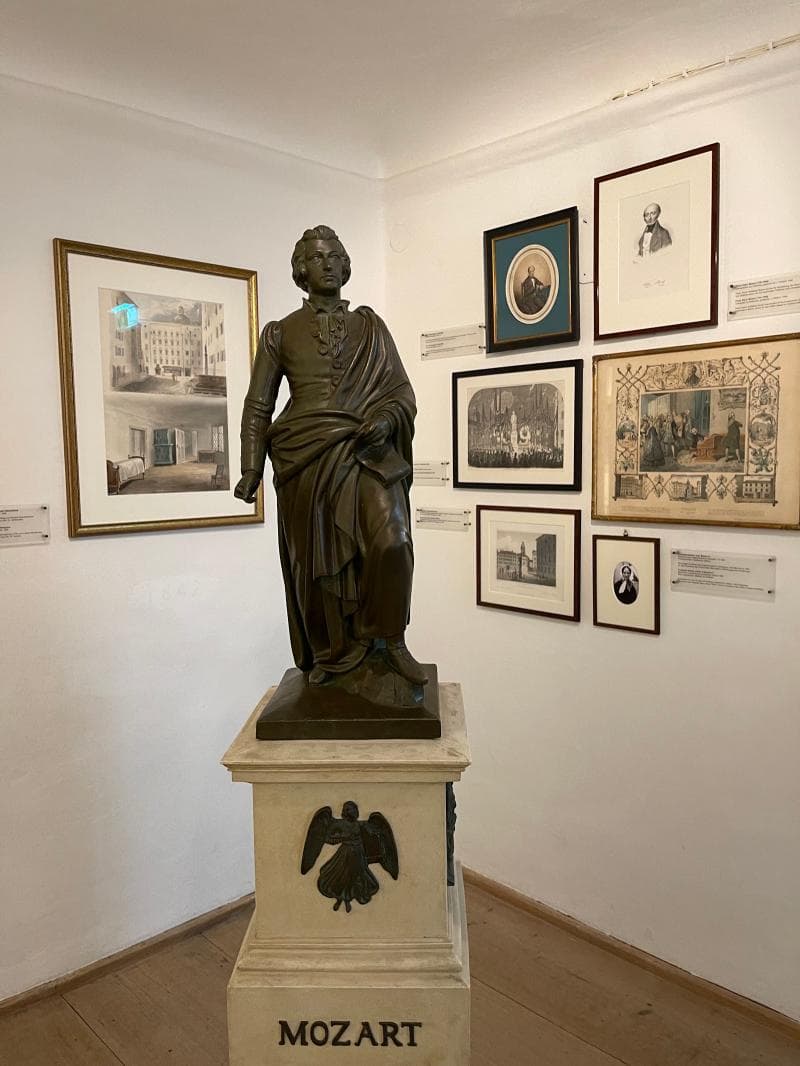
Explore the historical instruments at Mozart's Birthplace in Salzburg, Austria. Discover Mozart's childhood violin, clavichord, and more, offering a glimpse into his musical genius.
Overview
Stepping into Mozart's Birthplace at Getreidegasse 9 in Salzburg, Austria, is like journeying back to the 18th century, offering a profound connection to one of history's greatest musical prodigies, Wolfgang Amadeus Mozart. Among the most cherished exhibits within this historic house is the collection of historical instruments, providing an intimate glimpse into the sound world that shaped Mozart's genius. These aren't just antique pieces; they are tangible links to his formative years, his creative process, and the very melodies that would enchant the world.
The museum, maintained by the International Mozarteum Foundation, meticulously preserves the apartment where Mozart was born on January 27, 1756, and lived until 1773. Across its three floors, visitors can explore his childhood violin, the clavichord on which he composed operatic masterpieces, and a concert fortepiano used during his Vienna years. This unique ensemble of instruments, alongside family letters and portraits, brings to life the environment in which the young maestro honed his unparalleled talents.
History & Cultural Background
The house itself, known as the Hagenauer Haus, dates back to the 12th century and became the Mozart family's residence in 1747, with Leopold Mozart renting an apartment on the third floor. It was here that Wolfgang and his sister Nannerl spent their childhood and much of their youth, immersed in a vibrant musical household under their father's tutelage. The instruments displayed reflect the musical practices and instrument craftsmanship prevalent in 18th-century Europe. The International Mozarteum Foundation, established in 1880, recognized the immense cultural significance of preserving Mozart's legacy, acquiring many of his personal effects, including these invaluable instruments, from his widow Constanze Nissen and his sons.
This acquisition ensured that future generations could experience the authentic connection to Mozart's musical journey. The instruments stand as testaments to the transition of musical styles and technologies of the era. The clavichord, for instance, represents a more intimate, domestic instrument, while the fortepiano signifies the burgeoning era of public concerts and the development of louder, more expressive keyboard instruments. This evolution is central to understanding the soundscapes Mozart navigated and innovated within.
What Makes It Special
What truly distinguishes the 'Historical Instruments' collection is its direct provenance from Wolfgang Amadeus Mozart himself. Visitors don't just observe generic period instruments; they encounter the very violin Mozart played as a child, specially crafted for him by Andreas Ferdinand Mayr, the Salzburg court luthier. Imagine the tiny hands that once caressed its strings, producing the first notes of a genius. The clavichord on the second floor is particularly poignant, as it is believed to be the instrument on which Mozart composed significant works, including parts of 'The Magic Flute'.
Another highlight is Mozart's concert fortepiano, an instrument attributed to Anton Walter, acquired by Mozart before 1785 and frequently used in his public performances in Vienna. This instrument offers a stark contrast to the earlier clavichord, showcasing the advancements in keyboard technology during his lifetime and reflecting his evolving performance needs. The collection also includes a concert violin from the Klotz family workshop and a viola, further illustrating his mastery of string instruments. These objects are not merely museum pieces; they are relics imbued with the energy of Mozart's creative spirit.
Stories, Fun Facts & Local Details
A fun fact often shared is that Mozart's father, Leopold, himself a distinguished musician, was meticulous in documenting his son's prodigious talent and travels. The instruments were often part of their extensive European tours, showcasing young Wolfgang's abilities to royalty and eager audiences across the continent. While Mozart's Birthplace primarily focuses on his early life, the instruments bridge this period with his later successes, particularly the clavichord connected to 'The Magic Flute,' composed much later in his life.
Interestingly, some historical accounts suggest that Mozart's original instruments were treated almost as relics even shortly after his death, helping to preserve them in remarkable condition. The family's decision to entrust these precious items to the Mozarteum Foundation underscores their commitment to ensuring Mozart's legacy endured. The museum provides text guides for mobile phones, allowing visitors to delve deeper into the stories behind each instrument, imagining the melodies that once filled these very rooms.
Visitor Perspective
For any traveler passionate about music, history, or simply curious about the life of a true prodigy, the 'Historical Instruments' at Mozart's Birthplace offer an exceptionally moving experience. The carefully preserved atmosphere of the Mozart family home, combined with the presence of these deeply personal artifacts, creates an unparalleled sense of connection. Standing before Mozart's childhood violin, one can almost hear the nascent melodies of a boy destined for greatness, feeling the echoes of his youthful passion.
The museum's layout, spread across three floors, guides visitors through Mozart's early life, with the instruments strategically placed to illustrate different phases of his development. While the museum is not wheelchair accessible, the impact of being in the very rooms where Mozart composed and practiced, surrounded by the instruments he touched, is profound. It's an opportunity to not just read about history, but to truly feel it, to envision the legendary composer at work, and to gain a deeper appreciation for the musical genius that blossomed in this very house in Salzburg.
Coordinates: 13.04333, 47.8
View on Google Maps💬 How Travelers Describe This Place
Based on community votes
Photogenic
910Interesting
755Must See
481Beautiful
183Unique
28
Traveler Stories
Discover memorable experiences shared by travelers who have visited this place.
No traveler stories yet.
Be the first traveler to share what made this place memorable.

Tour
By
Spot
Discover amazing places around the world. Your journey starts here.
Explore
© 2026 TourBySpot. All rights reserved.