Historical Galleries
Vientiane, Laos
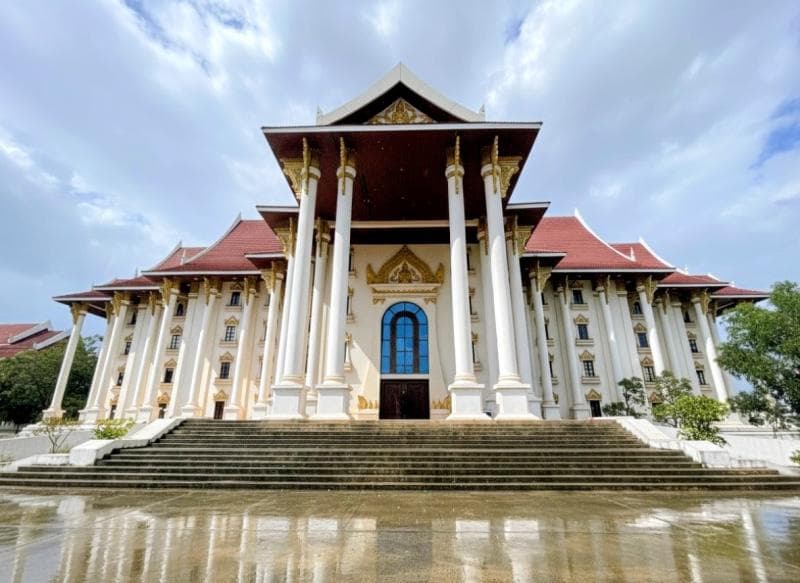
Explore the Historical Galleries of the Lao National Museum in Vientiane, Laos, tracing the nation's journey from ancient times to the present day.
Overview
Step into the heart of Lao history and culture at the Historical Galleries of the Lao National Museum in Vientiane. More than just a collection of artifacts, these galleries offer a chronological journey through the nation's profound past, from its ancient origins to its modern-day identity. Housed in a relatively new and purpose-built facility since 2017, the museum serves as the primary repository for Laos's rich heritage, inviting visitors to connect with the narratives that have shaped this resilient land and its people.
History & Cultural Background
The Lao National Museum traces its origins back to 1980, when it was initially established as the Lao Revolutionary Exhibition Hall. It was located in the elegant French Governor's Residence, a building constructed in 1925 that holds significant historical weight, as it was there that Laos formally declared its independence from France on October 12, 1945. Over time, the institution evolved, being renamed the Revolutionary Museum in 1985 and ultimately upgraded to the Lao National Museum in 2000. The constant expansion of its valuable collections necessitated a move, leading to the construction of a modern complex about six kilometers from central Vientiane, which opened its doors in 2017. This new home provides enhanced facilities for the preservation, research, and exhibition of Laos's historical and cultural treasures.
The Historical Galleries collectively present a comprehensive narrative that begins with prehistoric civilizations, showcases the grandeur of the Lan Xang Kingdom, navigates the complexities of the French colonial era, and commemorates the hard-won struggle for independence and the subsequent revolutionary period leading to the Lao People's Democratic Republic. Through archaeological finds, historical documents, and cultural artifacts, the museum chronicles the journey of the Lao people across millennia.
What Makes It Special
What truly sets the Historical Galleries apart is their extensive and diverse collection, which offers unparalleled insights into the country's multifaceted heritage. Visitors can marvel at archaeological discoveries, including ancient tools and intricate pottery that paint a picture of early human habitation. The galleries feature significant bronze artifacts and a captivating array of religious sculptures, most notably numerous Buddha images, some of which date back to the 6th to 13th centuries and are considered national treasures. These pieces not only highlight the deep spiritual roots of Laos but also showcase the artistic mastery of past eras.
Beyond ancient history, the museum meticulously documents the pivotal Lan Xang Kingdom, often referred to as the 'Kingdom of a Million Elephants', which was instrumental in shaping Lao culture and national identity. Furthermore, dedicated sections explore the rich tapestry of Laos's diverse ethnic groups, displaying their unique traditional costumes, handicrafts, and offering a glimpse into their distinct ways of life. The galleries also confront the more turbulent chapters of Lao history, including the French colonial period and the poignant narratives of the struggle for independence and the revolutionary movement. A particularly compelling part is the depiction of the American War (Vietnam War era) and its profound impact on Laos, with exhibits on unexploded ordnance (UXO) serving as a powerful reminder of the nation's resilience.
Stories, Fun Facts & Local Details
Among the many fascinating displays, travelers might encounter artifacts from the enigmatic Plain of Jars, an archaeological site steeped in mystery, showcasing the ingenuity of ancient civilizations. For those interested in the revolutionary era, the galleries hold personal items belonging to Comrade Kaysone Phomvihane, the revered revolutionary leader and the first Prime Minister of the Lao People's Democratic Republic, offering a very personal connection to a transformative period. You might even see photos of children being educated in underground caves during wartime, a testament to the perseverance of the Lao people. The museum does not shy away from presenting a candid perspective on history, including exhibits that reflect an anti-Western viewpoint, particularly concerning American involvement during the war, which provides a valuable local lens on these events.
Visitor Perspective
A visit to the Historical Galleries of the Lao National Museum is an enlightening experience, providing essential context for understanding modern-day Laos. It is a place for contemplation and learning, where the past speaks through relics and narratives. Expect to spend a couple of hours immersed in the exhibits, tracing the evolution of a nation and its enduring spirit. While not all exhibits may be presented with the most contemporary museum techniques, the sheer historical and cultural weight of the collections makes it an invaluable stop for any curious traveler wishing to delve deeper than the surface. It is a journey that offers profound insights into Lao traditions, revolutionary history, and national identity, leaving visitors with a richer appreciation for this captivating country.
Coordinates: 102.6452147, 18.0076133
View on Google Maps💬 How Travelers Describe This Place
Based on community votes
Interesting
926Unique
646Photogenic
482Beautiful
380Must See
291
Traveler Stories
Discover memorable experiences shared by travelers who have visited this place.
No traveler stories yet.
Be the first traveler to share what made this place memorable.

Tour
By
Spot
Discover amazing places around the world. Your journey starts here.
Explore
© 2026 TourBySpot. All rights reserved.