Historical Carpets
Ashgabat, Turkmenistan
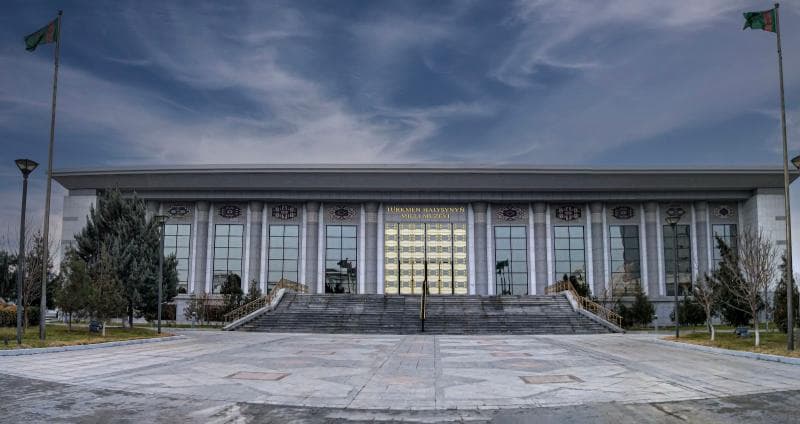
Discover the 'Historical Carpets' at the Turkmen Carpet Museum in Ashgabat, Turkmenistan. Explore ancient weaving traditions, record-breaking rugs, and the cultural soul of a nation.
Overview
Stepping into the Turkmen Carpet Museum in Ashgabat, Turkmenistan, offers a profound journey into the heart of a nation's soul. This esteemed institution is not merely a repository of textiles; it is a vibrant testament to Turkmenistan's rich cultural heritage, with its 'Historical Carpets' sub-spot being a particular highlight. Established on October 24, 1994, the museum is dedicated to preserving, studying, and showcasing the ancient art of Turkmen carpet weaving. It proudly houses the largest collection of Turkmen carpets found anywhere in the world, with over 1,000 pieces dating from the 18th and 19th centuries alone, alongside many from medieval times through to the 20th century.
The museum serves as the official authority on Turkmen carpets, playing a crucial role in safeguarding this treasured craft. Its comprehensive displays offer visitors an unparalleled opportunity to explore the intricate designs, vibrant colors, and profound symbolism woven into each piece.
History & Cultural Background
The art of Turkmen carpet weaving is deeply rooted in antiquity, with evidence suggesting its practice in the region for over two millennia. Archaeological finds in Turkmenistan have unearthed carpet fragments dating back more than 2,000 years, and some scholars propose that the region was among the first to perfect pile carpet weaving. Historically, carpets were indispensable to nomadic Turkmen tribes, serving not only as floor and wall coverings but also as essential items for warmth, transport (like chuvals, khurjuns, and torbas for bags), and social rituals.
The renowned 13th-century traveler Marco Polo admired Turkmen carpets, describing them as 'the most delicate and beautiful in the world'. Each Turkmen tribe—such as the Tekke, Yomut, Ersari, Saryk, and Salor—developed its own distinctive 'gul' (geometric pattern), which served as a unique identifier and a symbol of tribal memory and blessing. This enduring tradition was recognized in 2019 when the traditional Turkmen carpet making art was inscribed on the UNESCO List of Intangible Cultural Heritage of Humanity, affirming its global cultural significance.
What Makes It Special
The 'Historical Carpets' collection distinguishes itself through several extraordinary exhibits. Foremost among them are the world-record-holding carpets. The museum displays one of the largest handmade carpets globally, a monumental piece measuring 301 square meters (14 by 21.2 meters) and weighing 1.2 tonnes, which was woven in 2001 to commemorate Turkmenistan's independence. This impressive creation required the meticulous work of around 40 craftswomen. Another historic giant, 'The Soul of Turkmens', woven in 1942, spans 193 square meters and once served as a curtain for Moscow's Bolshoi Theatre.
Conversely, the museum also houses one of the world's smallest handwoven carpets, a miniature marvel designed as a keychain, showcasing the incredible range of Turkmen weaving artistry. Beyond these record-breakers, the collection features an array of antique carpets, including exquisite 18th-century Tekke carpets with traditional medallions and 19th-century Saryk carpets known for their geometric precision and rich colors. Some rare pieces even feature different patterns on each side, demonstrating advanced weaving techniques.
Stories, Fun Facts & Local Details
In Turkmenistan, the carpet is far more than just an object; it is considered the soul of the Turkmen people. A popular proverb encapsulates this sentiment: 'Water is the life, a horse is the wings, and a carpet is the soul of the Turkmens.' This deep cultural connection is visibly celebrated on the national flag of Turkmenistan, which proudly features five distinct carpet patterns, representing the five major tribes and symbolizing national unity and traditional values.
Historically, carpet weaving skills were passed down through generations, primarily from mother to daughter, preserving intricate techniques and tribal motifs. The patterns, or 'gols', are not merely decorative; they are dense universes of memory, blessings, and personal stories, often reflecting the weaver's environment, including local flora and fauna. These carpets accompanied Turkmen people from birth to old age, marking life's transitions and adorning their homes, be it a traditional yurt or a modern apartment.
Visitor Perspective
Visiting the 'Historical Carpets' section within the Turkmen Carpet Museum is an immersive cultural experience. The museum's architecture itself, said to resemble a rolled-up carpet, sets the tone for the journey inside. Guides are often available in Russian and English, offering deeper insights into the exhibits. Visitors can witness master weavers at work on traditional looms, gaining a tangible understanding of the craft's painstaking process. The scientific departments within the museum meticulously restore old carpets, ensuring their preservation for future generations, and study their historical and artistic value. This cultural deep dive allows travelers to not only admire beautiful artifacts but also to grasp the profound significance of carpets in Turkmen identity and history, leaving a lasting impression of a living art form.
Coordinates: 58.378, 37.924
View on Google Maps💬 How Travelers Describe This Place
Based on community votes
Photogenic
826Unique
800Must See
589Interesting
387Beautiful
90
Traveler Stories
Discover memorable experiences shared by travelers who have visited this place.
No traveler stories yet.
Be the first traveler to share what made this place memorable.

Tour
By
Spot
Discover amazing places around the world. Your journey starts here.
Explore
© 2026 TourBySpot. All rights reserved.