Historic Residence
Split, Croatia
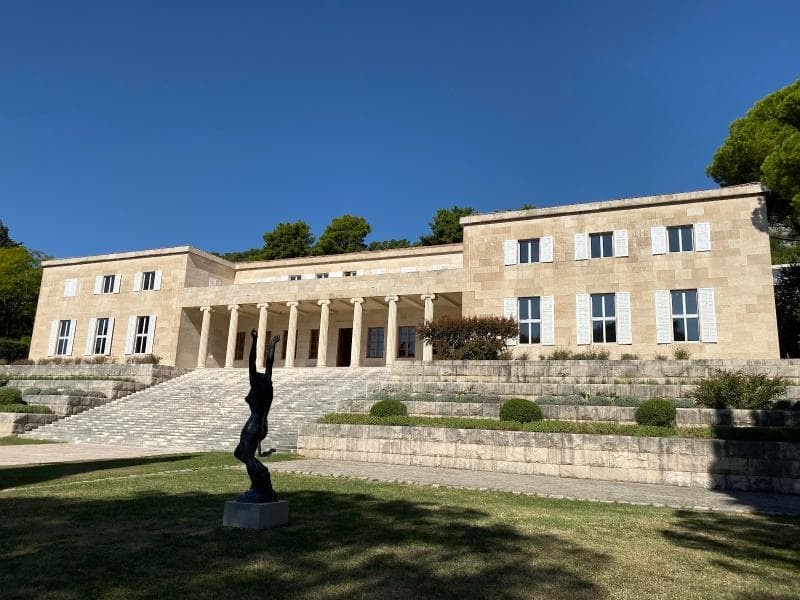
Explore the historic residence of Ivan Meštrović Gallery in Split, Croatia. Discover the sculptor's home, studio, and art collections.
Overview
Nestled on the verdant slopes of Marjan Hill in Split, Croatia, the Historic Residence within the Ivan Meštrović Gallery offers a unique glimpse into the life and work of one of Croatia's most celebrated sculptors. This grand neoclassical villa, now a museum, was not merely a gallery but Meštrović's carefully designed family home, working studio, and a space for displaying his art. Overlooking the shimmering Adriatic Sea, the residence embodies the artist's vision, combining functional living spaces with monumental exhibition halls and a sculpted Mediterranean garden. It stands as a testament to his architectural prowess as much as his sculptural genius, offering visitors an intimate understanding of the man behind the masterpieces.
The property includes the main villa and its expansive grounds, designed to integrate art and life seamlessly. Beyond the main gallery, visitors can also explore the nearby Crikvine-Kaštilac complex, a 16th-century fortified summer residence that Meštrović acquired and transformed. This ancillary site further showcases his profound connection to Split and his dedication to creating spaces that house and honor his significant religious works.
History & Cultural Background
Ivan Meštrović, born in 1883, envisioned and acquired the land for this residence in the 1920s, intending to create a summer home and a creative sanctuary in Split. Construction of the villa commenced in 1931 and was largely completed by 1939, based on his original designs. Meštrović collaborated with architects Harold Bilinić and Lavoslav Horvat, with builder Marin Marasović overseeing the construction, ensuring his vision was meticulously realized.
The Meštrović family resided in the villa from the summer of 1932 until 1941, when the onset of World War II forced Meštrović to leave for Zagreb. This period was formative, as the villa served as a hub for both his family life and artistic creation. In a profound gesture of patriotism and a desire to preserve his legacy for future generations, Ivan Meštrović donated the property, along with a significant collection of his artworks, to the state in 1952. This donation laid the foundation for the Ivan Meštrović Gallery, officially opened to the public that same year. Meštrović never returned to live in Croatia after moving to the United States, making this residence a poignant symbol of his connection to his homeland and his artistic contribution to the Croatian people.
What Makes It Special
What truly sets this Historic Residence apart is its dual identity as a personal dwelling and a purpose-built artistic institution. Meštrović, a sculptor who also trained as an architect, meticulously designed the space to accommodate both monumental artwork and daily family life. The wide, colonnaded terraces, high-ceilinged interior halls, and a garden structured to frame sculptures against the backdrop of the Adriatic Sea reveal his holistic approach to art and architecture.
The collection within the gallery includes 192 sculptures, 583 drawings, 4 paintings, and 291 architectural plans, offering a comprehensive overview of Meštrović's prolific career. The original dining room, complete with Meštrović's furniture and family portraits, preserves the intimate character of his home, allowing visitors to step into the artist's private world. The nearby Crikvine-Kaštilac complex further enriches the experience, showcasing Meštrović's powerful wooden reliefs depicting the 'Life of Christ' within a beautifully restored 16th-century chapel, offering a meditative space for reflection.
Stories, Fun Facts & Local Details
Imagine the daily life within these walls, where a world-renowned sculptor found inspiration and solace. It's said that Auguste Rodin, after seeing Meštrović's work, hailed him as a phenomenal sculptor, underscoring the international acclaim he garnered even before designing this home. The villa was conceived at the height of Meštrović's powers, a period when he was also engaged in significant public commissions across Yugoslavia.
A delightful detail is that the Mediterranean garden, designed under Meštrović's instructions, features local herbs and plants, framing his bronze sculptures with vibrant greenery and breathtaking sea views. The name 'Crikvina' for the nearby complex, meaning 'remains of old churches,' was Meštrović's own choice, stemming from his belief that ancient church ruins lay beneath the property. This adds a layer of mystical significance to the site, connecting it to deeper historical and spiritual roots.
Visitor Perspective
For the curious traveler, visiting the Historic Residence of Ivan Meštrović Gallery offers a profound journey into art, history, and a deeply personal narrative. It's an opportunity to escape the bustling city center of Split and immerse oneself in a tranquil environment where art and nature converge. The experience is not just about observing sculptures; it's about walking through the spaces where Meštrović lived, worked, and created, gaining a tangible sense of his artistic process and personal world.
The thoughtful layout of the gallery, combining intimate residential areas with grand exhibition spaces, allows for a fluid and engaging visit. The stunning views of the Adriatic, framed by the villa's architecture and the sculpted gardens, provide a serene backdrop to the powerful artworks. Exploring both the main gallery and the nearby Crikvine-Kaštilac complex offers a comprehensive understanding of Meštrović's multifaceted legacy, from secular masterpieces to profound religious expressions. It's a truly enriching cultural experience that resonates with both art enthusiasts and those seeking a deeper connection to Croatia's rich heritage.
Coordinates: 16.4258, 43.5042
View on Google Maps💬 How Travelers Describe This Place
Based on community votes
Unique
804Interesting
733Beautiful
563Photogenic
404Must See
63
Traveler Stories
Discover memorable experiences shared by travelers who have visited this place.
No traveler stories yet.
Be the first traveler to share what made this place memorable.

Tour
By
Spot
Discover amazing places around the world. Your journey starts here.
Explore
© 2026 TourBySpot. All rights reserved.