Historic Mansions
Odessa, Ukraine
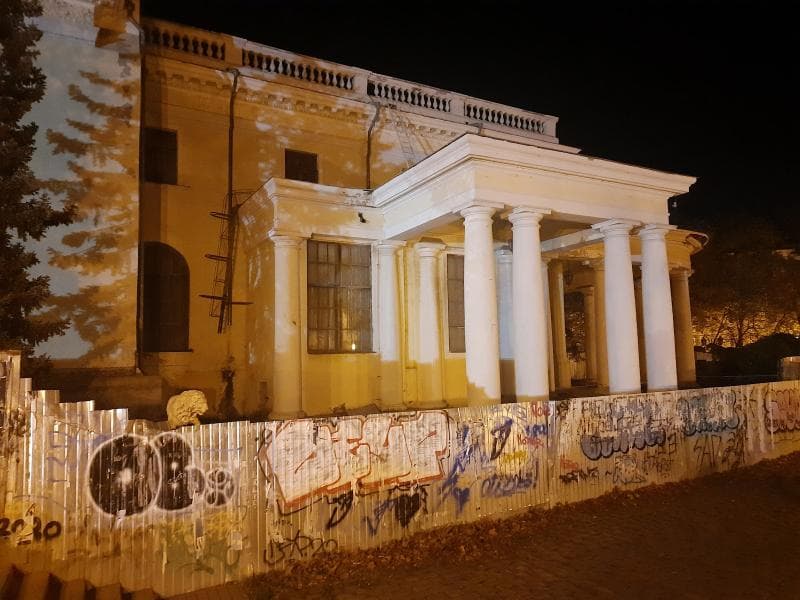
Explore the historic mansions of Primorsky Boulevard in Odesa, Ukraine. Discover neoclassical architecture, the Vorontsov Palace, and scenic Black Sea views.
Overview
Primorsky Boulevard, a jewel in the heart of Odesa, Ukraine, serves as a grand open-air museum, showcasing an array of historic mansions that define the city's architectural elegance. This picturesque promenade stretches for approximately 500 meters, elegantly linking the city's administrative center to the iconic Vorontsov Palace. More than just a street, it is a testament to Odesa's rich past and its enduring allure, recently recognized with the Historic Centre of Odesa's inscription on the UNESCO World Heritage List. The boulevard is celebrated for its harmonious blend of architectural styles, primarily neoclassical, and its breathtaking views over the Black Sea and Odesa Port.
History & Cultural Background
Odesa itself was founded in 1794 by Catherine II, driven by the need for a Black Sea port to foster trade with Europe. The area now occupied by Primorsky Boulevard holds layers of history, initially the site of the Khadjibey Turkish fortress. Under the visionary governorship of Prince Mikhail Semyonovich Vorontsov in the early 19th century, the boulevard began to take shape, first known as New Boulevard. This period marked a boom in Odesa's development, attracting wealthy merchants and aristocrats who commissioned magnificent residences. The construction of these grand palaces, particularly between the 1820s and 1830s, reflected Odesa's burgeoning prosperity and cultural prominence. The famed Sardinian-born architect Francesco Boffo played a pivotal role in shaping the boulevard's neoclassical aesthetic, responsible for many of the city's masterpieces, including the Vorontsov Palace and the Potemkin Stairs.
What Makes It Special
The historic mansions along Primorsky Boulevard are distinguished by their grand scale, sophisticated neoclassical design, and their strategic placement offering unparalleled views. The undisputed highlight is the Vorontsov Palace, a magnificent edifice completed around 1830. Its most recognizable feature is the stunning white colonnade, also known as the Belvedere, comprising ten pairs of columns that frame expansive vistas of the harbor and the Black Sea. Originally conceived as a greenhouse for tropical plants, this colonnade now stands as a symbol of Odesa's romantic charm. Beyond the Vorontsov Palace, the boulevard features other elegant buildings, forming a cohesive architectural ensemble. These include the stately Odessa City Council building, designed by Boffo, and a semi-circle of twin buildings at the boulevard's center. While not directly on Primorsky Boulevard, the nearby Potocki Palace, with its French classical architecture, also stands as a testament to the era's opulence and now houses the Odesa Museum of Art.
Stories, Fun Facts & Local Details
The Vorontsov Palace has a storied past, having endured cannon fire during the Crimean War from Anglo-French warships, with some impacts reportedly visible until later renovations. Over the years, it adapted to changing times, serving as an engineering school, the headquarters for Soviet Red Guards, and later as a Children's Palace. Sadly, the lavish Orlov Wing of the palace was demolished in 1929. In more recent history, a captivating 'Day and Night' fountain by sculptor Mikhail Reva was added to its courtyard in 1994, though it has not had water since 1999. Intriguingly, archaeological discoveries during the boulevard's restoration works unearthed remnants of an ancient Greek settlement dating back to the 6th-5th centuries BC, which are now preserved under glass domes, offering a unique glimpse into the region's millennia-old past.
Visitor Perspective
Strolling along Primorsky Boulevard is an essential Odesa experience, offering a journey through history and architectural grandeur. Visitors can begin near the Odesa City Hall and walk towards the majestic Vorontsov Palace, taking in the panoramic sea views that have inspired countless generations. The boulevard provides a peaceful setting for leisurely walks, allowing one to admire the intricate facades and imagine the lives of the aristocratic families who once resided here. The proximity to other major landmarks, such as the Potemkin Stairs and the Duke de Richelieu Monument, makes it a central point for exploration. Whether marveling at the Vorontsov Colonnade or simply enjoying the sea breeze, the historic mansions of Primorsky Boulevard offer a profound connection to Odesa's 'Southern Palmyra' elegance and its rich European heritage.
Coordinates: 30.73444, 46.48444
View on Google Maps💬 How Travelers Describe This Place
Based on community votes
Unique
674Beautiful
503Photogenic
261Must See
92Interesting
49
Traveler Stories
Discover memorable experiences shared by travelers who have visited this place.
No traveler stories yet.
Be the first traveler to share what made this place memorable.

Tour
By
Spot
Discover amazing places around the world. Your journey starts here.
Explore
© 2026 TourBySpot. All rights reserved.